Neck Filler for Neck Wrinkles: Real Before-and-After Results
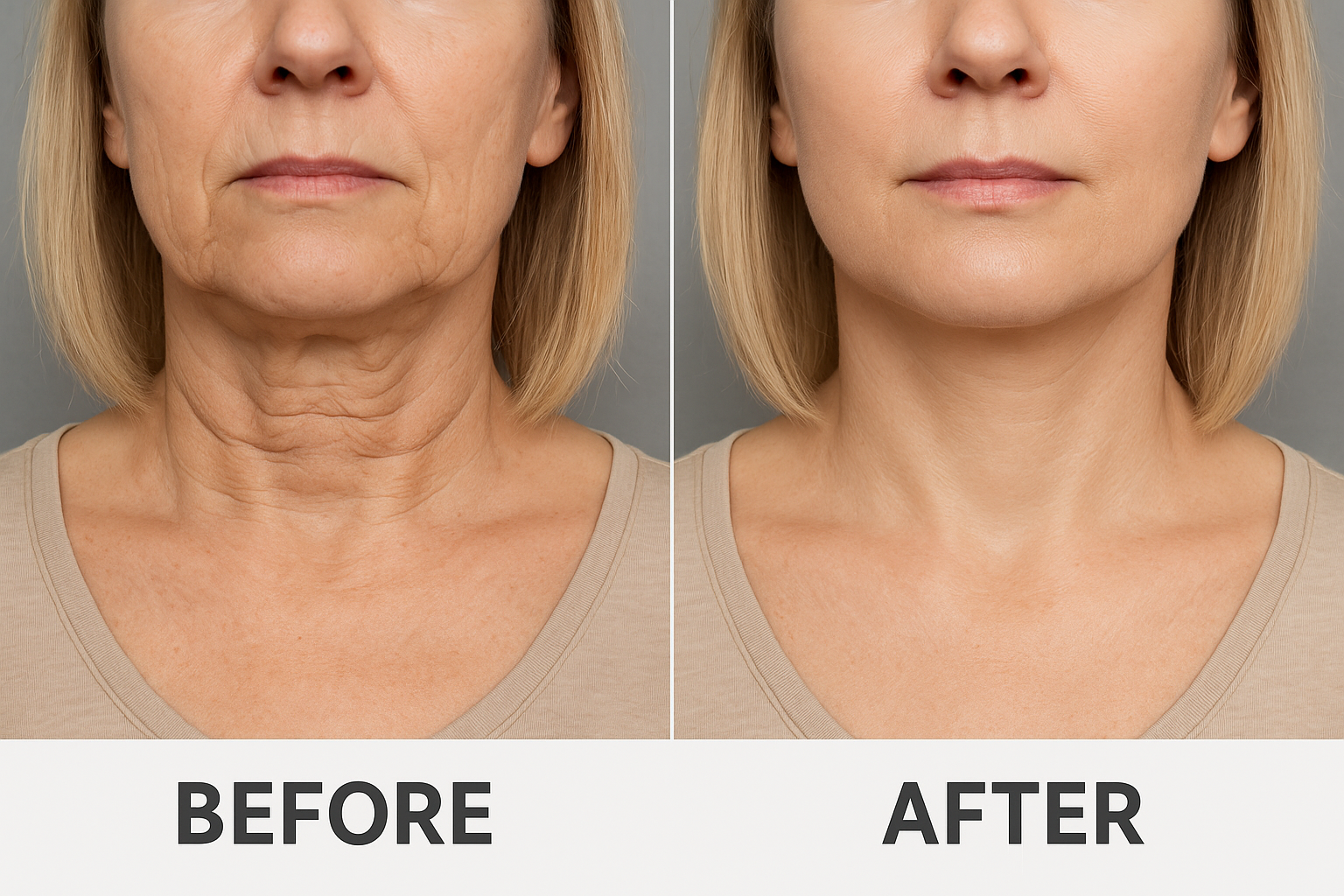
Neck filler for neck wrinkles is quickly becoming a go-to solution in aesthetic dermatology for those seeking a non-surgical way to treat signs of aging on the neck. Horizontal neck lines—often caused by aging, poor posture, or UV exposure—are notoriously resistant to topical skincare alone. While anti-aging serums and moisturizers can hydrate the skin, they rarely penetrate deep enough to smooth out deeper wrinkles.
That’s where hyaluronic acid–based fillers come in. By adding subtle volume beneath the skin’s surface, these injectable treatments smooth out fine lines, improve skin texture, and create a natural lifting effect—all without going under the knife. In many cases, the results are noticeable immediately and continue to improve over several weeks.
Clinical studies and real patient testimonials reveal significant improvements in neck appearance, along with boosts in confidence. With expert guidance from licensed medical professionals, neck fillers provide a safe, effective, and relatively low-maintenance solution for those seeking youthful, smoother skin.
Whether you’re frustrated by early signs of “tech neck” or just curious about your non-surgical options, neck filler offers a modern approach to neck rejuvenation—no downtime required.
What Is Neck Filler?
Neck filler is a minimally invasive procedure that uses hyaluronic acid–based injectables to restore volume and elasticity in the neck.[1pfrank: NECK LINE FILLER] It’s especially effective for addressing horizontal lines, also known as “tech neck,” and early signs of skin sagging.
As explained by dermatologist Dr. Rachel Nazarian, neck fillers work by both filling fine lines and encouraging natural collagen production. This dual action helps improve skin firmness and structure over time, making the neck look smoother and more youthful.
Popular FDA-approved fillers like Juvederm and Restylane are often used in these treatments. They’re known for their ability to smooth skin texture and target aesthetic concerns like acne scars and fine lines—not just on the face, but also the neck.[2American Society for Dermatologic Surgery: Dermal fillers.]
Advanced methods like GoodSkin Clinics’ Blanching™ technique combine skin treatments with low-viscosity filler injections. This approach targets micro-lines using shallow injections, avoiding puffiness while enhancing skin smoothness. It’s all about precision: the filler’s consistency, injection depth, and placement all play a role in achieving natural-looking results.
For those new to aesthetic treatments, neck filler offers a gentle introduction—non-surgical, customizable, and suitable for various skin types and concerns.
Top Benefits of Neck Filler for Younger-Looking Skin
Neck fillers offer a variety of aesthetic benefits, especially for people noticing the first signs of aging. Using hyaluronic acid—a naturally occurring substance in the body—this treatment helps hydrate and plump the skin, effectively smoothing out fine lines and wrinkles.
One of the biggest advantages is how fast you can see results. Most people notice smoother, more refreshed skin right after treatment, with minimal downtime. Depending on the product used and your body’s response, results can last anywhere from 6 to 18 months.
The procedure itself is quick—usually 15 to 30 minutes—and doesn’t require general anesthesia.[3Tseng F, Yu H. Treatment of horizontal neck wrinkles with hyaluronic acid filler: a retrospective case series. Plast Reconstr Surg Glob Open. 2019;7(8):e2366. doi:10.1097/GOX.0000000000002366.] Because it’s non-surgical and involves minimal risk, it’s become a favorite among those seeking subtle but noticeable improvements.
Beyond immediate smoothing, neck fillers also stimulate collagen production, helping your skin maintain its elasticity and structure over time. This adds long-term value, especially when combined with a consistent skincare routine.[4Phoenix Liposuction: Revitalize Your Skin: Exploring the Benefits of Collagen Biostimulators.]
If you’ve been looking for a way to refresh your neck area without going through invasive procedures, fillers offer a balanced solution: fast, effective, and tailored to your skin’s needs.
Filler vs. Botox vs. Laser: Which One Is Right for You?
When it comes to treating neck wrinkles, choosing between filler, Botox, or laser depends on the root cause of the issue and your skin’s condition.
Hyaluronic acid fillers are ideal for addressing volume loss and dryness-related lines. They plump up the skin, reducing the appearance of horizontal wrinkles and restoring a smoother texture. If your skin feels dehydrated or appears creased from long-term tech neck, filler might be your best bet.
Botox, on the other hand, works by relaxing muscle activity. It’s most effective for dynamic wrinkles—those caused by repetitive muscle movement, like platysma banding in the neck. However, if the wrinkles aren’t caused by muscle tension, Botox may not produce the desired results.
Laser treatments focus on resurfacing the skin by stimulating collagen regeneration. They’re useful for improving texture and firmness but may not be suitable for sensitive or inflamed skin, as noted by Dr. Stacey Tull.
Each option has its own strengths. The key is to consult a qualified provider who can assess your skin, lifestyle, and goals to build a personalized treatment plan that works for you.
1. Why Filler Is the Best Fix for Horizontal Neck Lines
Horizontal neck lines, often linked to frequent screen use and poor posture, have become a growing concern among younger adults. Known as “tech neck,” these lines can appear prematurely, even in your 20s or 30s. The good news? Filler offers a simple, non-surgical fix.
According to Dr. Stacey Tull, using soft, flexible fillers is ideal for smoothing these lines while maintaining a natural look. The procedure involves minimal discomfort—mild swelling or bruising may occur but typically subsides within a few days. Ice compresses and limiting intense physical activity for 24 hours post-treatment can help speed up recovery.
For added comfort, a topical numbing cream is often applied before the injection. Results are visible almost immediately and can last 9 to 12 months, depending on the filler type and your body’s metabolism.
If you’re starting to notice neck lines and want a low-risk, high-reward solution, filler is worth considering. It’s fast, effective, and blends seamlessly into your daily skincare and wellness routine—no drastic changes or downtime required.
2. Botox for Vertical Neck Lines
Botox is an effective treatment for vertical neck lines, especially those caused by overactive platysma muscles—often seen in individuals with slim or muscular necks.[5Skin Secrets Aesthetics: Does Botox Work on Neck Bands or Wrinkles?] According to Dr. Stacey Tull, Botox relaxes these muscles, which helps smooth the skin above them and reduce the appearance of tight, pulled lines.
The procedure involves quick, superficial injections with minimal discomfort. There’s no downtime, and most people return to normal activities right after. Early results appear within 5 to 7 days, with full effects visible by the second week.
While Botox isn’t permanent, its effects usually last 3 to 4 months, depending on muscle activity and lifestyle habits. Though temporary, the treatment can significantly improve a tense or creased neck caused by repetitive muscle movement.
Unlike fillers, which address volume loss and dehydration, Botox targets dynamic wrinkles caused by muscle contraction. That’s why it’s often used in combination treatments for a more comprehensive neck rejuvenation plan.
For those experiencing vertical lines rather than horizontal creases, Botox offers a safe, quick, and proven option.
3. Laser Treatments for Neck
If you’re dealing with uneven skin tone, thinning texture, or sun damage on your neck, laser treatments or energy-based technologies like RF microneedling may offer better results than filler or Botox alone.
These treatments work beneath the skin’s surface to boost collagen and elastin production, gradually improving firmness and tone. As Dr. Stacey Tull explains, laser therapy addresses skin aging at a structural level, helping reverse signs like dullness and fine lines.
Before the procedure, a numbing cream is applied to minimize discomfort. Afterward, mild redness or swelling may occur but typically resolves within a few days with cold compresses and moisturizers.
Also Read: What Is a TCA Peel? Benefits, Uses & Safety
One of the biggest advantages is the long-term result. Unlike treatments that offer a quick fix, laser rejuvenation supports lasting skin health and resilience. Still, aging continues—just more slowly.
To maintain these results, Dr. Tull recommends daily sun protection and a consistent skincare routine. Moisturizers and broad-spectrum sunscreen are must-haves for preserving your glow post-laser.
Who Should Consider Neck Filler?
Neck filler is generally safe for most healthy individuals, but it’s especially beneficial for those in their late 20s and beyond who are starting to notice horizontal lines on the neck. These fine lines, often caused by frequent screen use, are commonly referred to as “tech neck.”
Dr. Rachel Nazarian notes that hyaluronic acid fillers work well for these early signs of aging by adding hydration and volume beneath the skin, softening lines and improving overall texture.
However, neck filler isn’t the right choice for everyone. If you’re experiencing vertical bands or deeper lines caused by muscle movement, Botox may be more appropriate. Fillers don’t relax muscles—they fill in volume.[6Creekside Family Practice: Botox or Dermal Fillers? Which Is the Right Choice for You?]
Overall, neck filler is best suited for people with mild to moderate horizontal wrinkles, those looking to prevent early aging, or anyone seeking subtle neck contouring without surgery. It’s a smart, low-commitment option for improving skin quality in a delicate area.
How to Prepare for a Neck Filler Appointment
Getting ready for a neck filler treatment is simple but important. Proper preparation helps reduce side effects and ensures the smoothest possible outcome.
Two weeks before your appointment, avoid blood-thinning medications like aspirin, ibuprofen, and other NSAIDs.[7American Society for Dermatologic Surgery: Injectable hyaluronic acid.] These can increase your risk of bruising. If you’re taking any medications, talk to your practitioner first.
Stop using retinol or prescription retinoids at least two days prior to treatment. These ingredients can make the skin more sensitive and prone to irritation after injections. Also, try to minimize sun exposure—keeping your skin calm and not inflamed will support better healing.
In the days leading up to the procedure, keep your skin well-hydrated and avoid harsh exfoliants. Showing up with clean, product-free skin is ideal.
Good prep means less downtime, better comfort, and more natural-looking results.
What Happens During a Neck Filler Session?
Curious about what a neck filler appointment is like? Here’s what to expect from start to finish.
First, your practitioner will take “before” photos to track your progress. You’ll then go through a personalized consultation, where they assess your neck’s condition, review your skincare history, and decide on the best technique—like blanching, which uses precise injections for subtle line-smoothing.
The procedure itself is fast—typically under 20 minutes. A soft hyaluronic acid filler is injected into targeted points along the neck. Most patients describe the discomfort as minimal, especially compared to treatments like laser.
After the injection, your provider may gently massage the area to distribute the filler evenly and reduce swelling. You might notice mild redness, puffiness, or light bruising afterward, but these effects are temporary and usually fade within a week.
Many people see immediate improvements—smoother skin and a more lifted appearance—right out of the clinic.
Potential Side Effects of Neck Filler: What You Need to Know
While neck filler is considered a safe, non-surgical treatment, side effects can occur—especially if performed by someone without proper training. Dr. Rachel Nazarian warns that incorrect injection placement or unsuitable filler types may lead to uneven results, such as lumps, waves, or bumps under the skin.
The most common side effects are mild and temporary. These include redness, tenderness, swelling, and minor bruising, typically resolving within a few days.[8Eau Claire Bodycare: Neck Fillers 101: A Complete Guide to Restoring Sagging Skin.] The severity depends on your skin’s sensitivity and the injector’s technique.
Because the neck has thinner and more delicate skin than the face, it’s essential to choose a licensed and experienced professional. Proper anatomical knowledge is crucial to avoid complications and ensure a natural, symmetrical result.
Choosing a trusted practitioner can make all the difference—minimizing risk and maximizing satisfaction.
The Cost
The cost of neck filler can vary depending on your location, the clinic, and the type of product used. On average, one session ranges between USD $500–$1200.
While not cheap, many patients find the investment worthwhile—especially when the results can last 9 to 12 months and provide noticeable improvement in skin smoothness and contour.
Think of it not just as a cosmetic treatment, but as a long-term confidence boost with visible returns.
Neck Filler Aftercare
Proper aftercare is key to getting the best results from your neck filler treatment. To minimize swelling, bruising, or uneven filler placement, avoid blood thinners like aspirin, ibuprofen, and other NSAIDs for 24–48 hours. Alcohol should also be skipped, as it has similar blood-thinning effects.
Steer clear of intense workouts, massages, or sleeping positions that put pressure on your neck for at least one full day. Pressure or friction can affect filler distribution.
Also avoid extreme heat—like saunas, steam rooms, jacuzzis, or direct sun exposure—for a few days. Heat can worsen swelling and slow recovery.
To soothe the area, apply a cold compress and consider using Arnica gel to reduce bruising. If needed, paracetamol is a safe option for pain relief, as it doesn’t interfere with blood clotting.
Following these simple steps will help your skin heal quickly and keep the results looking smooth and natural.
Neck Filler Before and After
One of the biggest draws of neck filler is how quickly you can see a difference. Just minutes after the injection, many patients notice smoother, firmer skin—especially across the center of the neck, where horizontal “necklace lines” tend to be most visible.

These lines form over time from repeated movements like looking down at your phone. Hyaluronic acid filler not only fills in the creases but also hydrates the deeper layers of skin, improving elasticity and texture.
The result? A fresher, more youthful neckline—without surgery. The added volume subtly enhances your neck’s natural contours while keeping your appearance balanced and authentic.
Whether you’re prepping for a big event or just want to feel more confident in your skin, neck filler offers fast, natural-looking results that are easy to love.
Final Thoughts
Neck filler has proven to be an effective way to treat horizontal neck lines and refresh the skin’s appearance without going under the knife. Results often last between seven months to a year, depending on the filler type and your skin’s response.
Beyond the visible improvements, many people experience a confidence boost and greater ease in their appearance—especially in social or professional settings. The procedure is low-risk, quick, and offers real transformation with little downtime.
That said, neck filler isn’t a one-size-fits-all solution. A consultation with a dermatologist or certified aesthetic provider is essential to determine if it’s right for your skin type and goals.
For many, neck filler isn’t just about beauty—it’s a step toward self-care, rejuvenation, and a better quality of life.

 Acne
Acne Anti-Aging
 Business
 Digital Marketing
 Economics
 Exfoliation
 Hair Removal
 Movies
 Personal Finance
 Websites







You must be logged in to post a comment.