Is Alcohol Denat Bad for Skin? Experts Reveal the Truth
When people see the word “alcohol” on a skincare label, they often assume it’s harsh or damaging. But in dermatology, not all alcohols are created equal—some actually benefit the skin.
One of the most debated types is alcohol denat (short for denatured alcohol). It’s commonly found in toners, serums, creams, and masks. Its main functions include enhancing product absorption and delivering a lightweight, fast-drying feel.
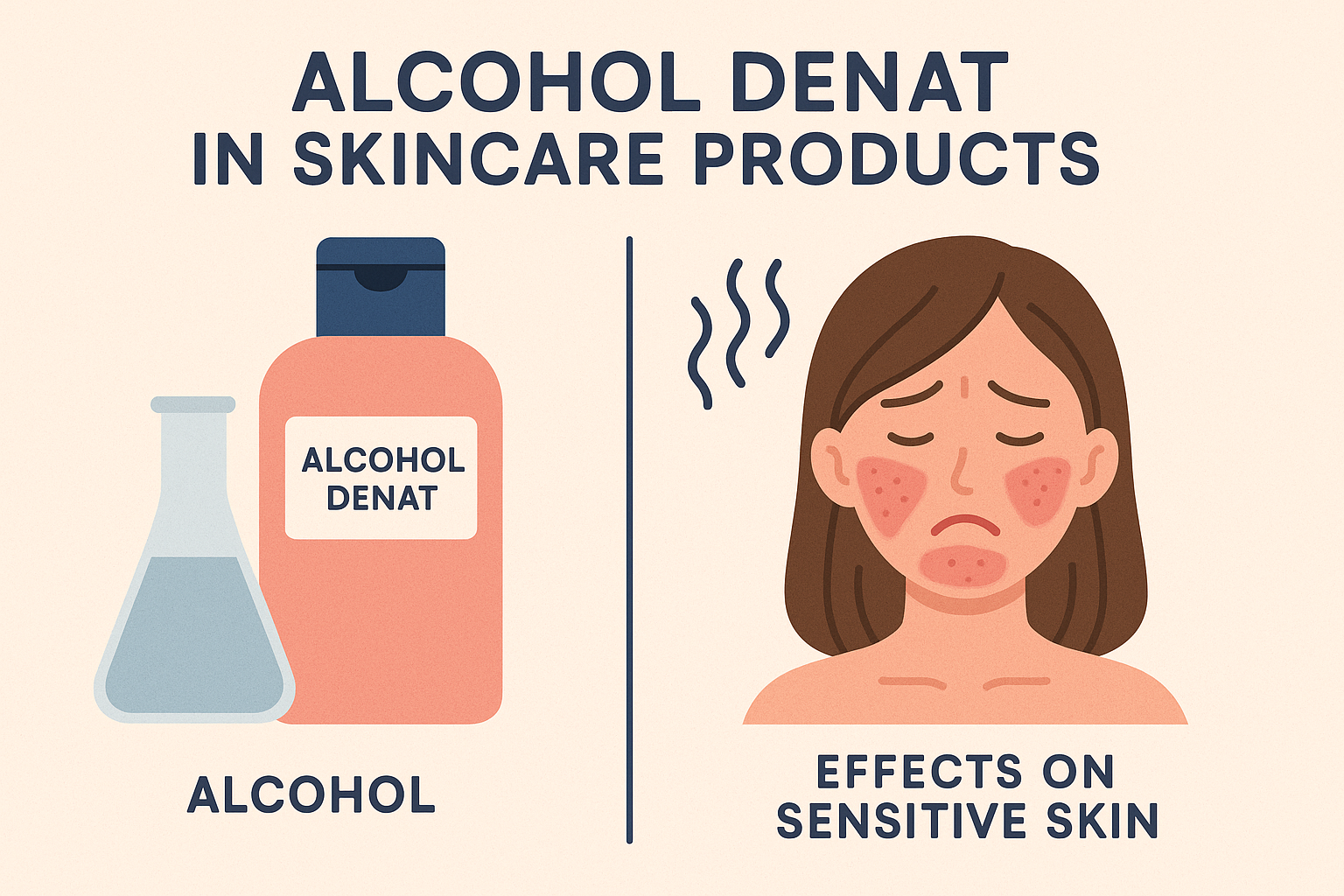
However, skincare experts warn that frequent or long-term use may lead to unwanted effects, especially for those with sensitive or dry skin. Alcohol denat can disrupt the skin’s natural protective barrier, potentially causing irritation and moisture loss when overused.[1Clinikally: Understanding Denatured Alcohol: Its Role in Skincare Explained.]
That’s why it’s essential to understand the role alcohol denat plays in your skincare products. Always check ingredient labels and, if unsure, consult with a dermatologist to see if it suits your skin type.
What Is Alcohol Denat—and Should You Avoid It?
Alcohol denat (denatured alcohol) is ethanol mixed with additives to make it undrinkable. In skincare, it’s valued for its quick-drying properties and its ability to create a weightless feel on the skin.[2ASCENDANT: What Is Denatured Alcohol? Everything You Need To Know.]
Experts say alcohol denat acts as an effective solvent. It’s often found in toners, serums, or gels to help remove excess oil and give a matte finish. However, its lipid-stripping nature can cause dryness and irritation, especially for sensitive skin types.
It’s important to distinguish between “bad” and “good” alcohols. For instance, fatty alcohols like stearyl and cetyl alcohol help retain moisture and support skin barrier health. Similarly, ingredients like propylene glycol work as humectants to draw water into the skin.
Bottom line: alcohol denat isn’t always harmful, but it should be used with care—especially if your skin is dry, reactive, or prone to sensitivity.
Benefits of Alcohol Denat in Skincare: What You Should Know
While alcohol denat doesn’t offer direct nourishment for your skin, it does bring some cosmetic benefits that appeal to certain users—especially those with oily skin. It provides a clean, matte finish and allows products to dry quickly without leaving a heavy residue.
That lightweight sensation is one reason alcohol denat is widely used in modern skincare, particularly in gel-based or fast-absorbing formulas. It gives a cooling feel and improves the texture, helping heavy creams feel more breathable on the skin.
However, these effects are short-term. Dermatologists caution that regular use can weaken the skin barrier, leading to dryness, irritation, and in some cases, redness. Ironically, this dryness can trigger more oil production, potentially worsening acne or clogged pores.
Though it’s sometimes included in acne spot treatments for its antibacterial properties, overuse can enlarge pores and disrupt the skin’s natural oil balance. The key is moderation—and choosing products wisely based on your skin’s needs.
Side Effects
The most common side effect of alcohol denat is excessive dryness. It strips away the skin’s natural oils and can weaken its protective barrier. Once this barrier is compromised, moisture escapes more easily, making your skin vulnerable to environmental stressors.
This can result in tightness, redness, stinging, and even flare-ups—especially for people with dry or sensitive skin, or skin conditions like eczema.
Even worse, when the skin becomes too dry, it may try to compensate by overproducing sebum. This response can worsen oily skin issues, increase the risk of breakouts, and cause clogged pores.
These reactions highlight why alcohol denat should be used with caution. Understanding your skin type and watching for early signs of irritation is crucial if you’re using products with this ingredient.
Should You Use Skincare Products with Alcohol Denat?
Despite its popularity in lightweight formulations, alcohol denat often brings more risks than benefits—especially for dry or sensitive skin types. While it can make products absorb faster and feel pleasant, the long-term effects can be harsh.
Surprisingly, many products labeled as “for sensitive skin” still contain alcohol denat, listed as “SD alcohol” or “ethyl alcohol.” That’s why reading ingredient lists is non-negotiable if you want to avoid unnecessary irritation.
Dermatologists typically advise against alcohol denat for those with dry, inflamed, or easily irritated skin. If you do choose to use it, watch for signs like flaking, tightness, or redness—and stop use if they appear.
For a safer, more skin-friendly approach, look for alcohol-free alternatives made with hydrating and soothing ingredients. These options still deliver results, without putting your skin barrier at risk.
Alcohol Denat vs. Fatty Alcohols: Which One Is Safer for Your Skin?
In skincare, not all alcohols are created equal. One of the most common misconceptions is assuming all types of alcohol are harmful. In reality, there’s a clear difference—especially between alcohol denat and fatty alcohols.
Alcohol denat (denatured alcohol) is ethanol mixed with additives to make it undrinkable. It’s commonly used in skincare to speed up drying and deliver a matte finish. However, dermatologists warn that it can weaken the skin’s barrier, leading to dryness, irritation, and increased sensitivity—particularly for dry or reactive skin types.
On the other hand, fatty alcohols such as cetyl, stearyl, and cetearyl alcohol act as emollients. They help lock in moisture, improve texture, and are often derived from plant-based oils. These alcohols are considered safe and beneficial, and are frequently found in products designed for dry or sensitive skin.
The key takeaway: don’t just scan for the word “alcohol.” Understand the type being used. Avoiding alcohol denat and choosing products with skin-friendly fatty alcohols can help maintain a healthier skin balance.
How to Choose Alcohol Denat-Free Skincare Wisely
If you have sensitive, dry, or easily irritated skin, steering clear of alcohol denat in your skincare routine is a smart move. Though this ingredient is common in many popular products, there are plenty of gentler alternatives available—if you know what to look for.
Here are expert-backed tips for choosing alcohol denat-free skincare:
- Read the ingredient list carefully. Avoid products that list “alcohol denat,” “SD alcohol,” or “ethyl alcohol” near the top—this usually signals a high concentration.
- Look for ‘alcohol-free’ labels. Be cautious, though—some brands use this label to exclude only certain alcohol types, not all.
- Prioritize hydrating ingredients. Opt for products with skin-loving ingredients like glycerin, panthenol, hyaluronic acid, or aloe vera to keep your skin moisturized and calm.
- Choose formulas for sensitive skin. While not always alcohol-free, these products tend to be milder and better suited for delicate skin.
By developing the habit of checking labels and understanding what’s inside your skincare, you can protect your skin from unnecessary dryness and irritation caused by alcohol denat.
Safer Alternatives to Alcohol Denat in Skincare
While alcohol denat is often used for its fast-absorbing and lightweight feel, many skincare experts recommend seeking gentler, skin-friendly substitutes—especially for dry or sensitive skin.
Here are some effective and safer alternatives to alcohol denat:
- Witch Hazel (alcohol-free): A natural astringent that helps control oil without excessively drying out the skin.
- Glycerin: A powerful humectant that draws moisture into the skin, helping to maintain hydration and support the skin barrier.
- Propylene Glycol: Despite its synthetic name, this ingredient aids hydration and improves ingredient absorption without stripping the skin.
- Aloe Vera: Soothes irritation and provides lasting moisture, making it ideal for sensitive or inflamed skin.
- Panthenol (Vitamin B5): Known to restore the skin barrier and reduce mild inflammation, while also providing a calming effect.
Thanks to advancements in skincare science, many brands now favor gentle ingredients over alcohol denat. Switching to products that use these alternatives can protect your skin’s natural balance without sacrificing texture or performance.
Final Thoughts
Understanding what goes into your skincare is key—especially when it comes to ingredients like alcohol denat. While it may offer short-term benefits like a lightweight feel and faster absorption, the long-term risks for dry or sensitive skin often outweigh those perks.
If you’re just starting your skincare journey, don’t let confusing ingredient names intimidate you. Instead, take the time to learn the difference between drying alcohols like alcohol denat and skin-friendly types like fatty alcohols. This small step can make a big difference in how your skin reacts and improves over time.
The safest bet? Look for alcohol-free or gentle formulations packed with hydrating and calming ingredients. Your skin will thank you later—and you’ll build a healthier, more balanced routine from the start.
Remember: great skincare isn’t just about trends. It’s about choosing ingredients that support your skin’s long-term health.
ARTICLE SOURCES
You might also like


 Acne
Acne Anti-Aging
 Business
 Digital Marketing
 Economics
 Exfoliation
 Hair Removal
 Movies
 Personal Finance
 Websites