Vaseline vs. Aquaphor: Which Is Better for Your Skin Type?
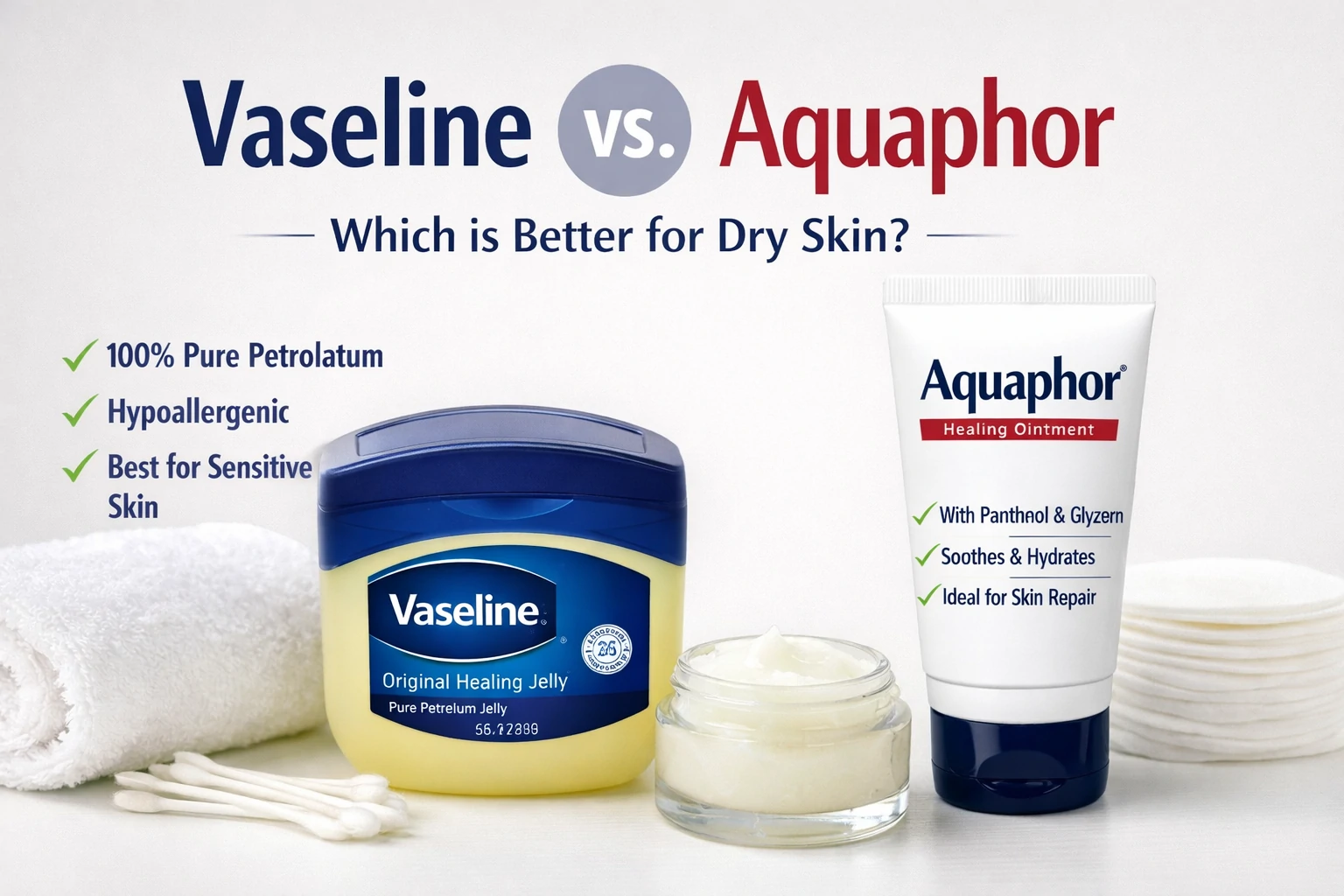
Choosing between Vaseline and Aquaphor can be confusing, especially since both are dermatologist-trusted solutions for dry, compromised, or irritated skin. Scientifically, they function as occlusives, meaning they seal in existing moisture. However, their formulations — and skin benefits — are notably different.
- Vaseline: 100% Petrolatum Occlusive
Vaseline is made from pure petrolatum with no added active ingredients. Its primary role is to form an airtight barrier that prevents transepidermal water loss. This makes it ideal for severely dry skin, post-procedure care, or areas needing maximum protection with minimal risk of irritation. - Aquaphor: Multi-Ingredient Healing Ointment
Aquaphor contains about 41% petrolatum, enhanced with lanolin and glycerin. This combination not only seals moisture but also supports skin repair and provides light hydration. It’s often preferred for compromised or healing skin that benefits from added conditioning.
Understanding their textures and ingredient profiles helps you protect your skin barrier effectively — without triggering sensitivity or over-occlusion.
What Is Aquaphor?
Aquaphor is more than a basic ointment — it works as a multi-functional moisture delivery system. From a clinical standpoint, it combines 41% petrolatum with supportive ingredients such as lanolin, glycerin, panthenol, and bisabolol. Together, these components create an occlusive shield while actively soothing stressed or inflamed skin.
According to Dr. Purvisha Patel, Aquaphor stands out due to its lighter texture and better spreadability compared to pure occlusives. This is reinforced by Dr. Richard Bottiglione, who highlights the role of glycerin in the formula. As a humectant, glycerin attracts water, giving Aquaphor a more hydrophilic feel and reducing the heavy, greasy residue often associated with traditional ointments.
Functionally, Aquaphor supports the skin in two key ways:
- Active Hydration: Draws moisture into the skin through humectants.
- Barrier Protection: Creates an optimal healing environment for cracked or compromised skin.
This dual-action approach makes Aquaphor especially suitable for repair-focused skincare routines.
What Is Vaseline?
Vaseline has long been considered the gold standard of occlusive skincare. Unlike blended formulas, Vaseline is made of 100% highly purified petroleum jelly. From a biological perspective, it functions as a powerful physical barrier that prevents moisture from evaporating from the skin’s surface.
Dr. Purvisha Patel explains that Vaseline’s strength lies in its absolute occlusivity. It doesn’t add hydration on its own, but it effectively seals in the moisture already present within the skin. This makes it especially valuable for individuals with severely damaged skin barriers, where the skin struggles to retain water naturally.
Key benefits of Vaseline include:
- External Protection: Shields the skin from pollutants and harsh environmental exposure during healing.
- Formula Safety: Free from fragrance and preservatives, minimizing the risk of chemical irritation.
- Recovery-Focused Care: Highly effective for minor wounds, cracked skin, and extremely rough areas.
Because of its simplicity and reliability, Vaseline remains a dermatologist-approved staple for intensive skin repair.
How to Choose Based on Your Skin’s Needs
Choosing between Aquaphor and Vaseline ultimately depends on your specific skin concern and your tolerance for texture. Dr. Richard Bottiglione notes that both products are safe to use on irritated skin, with the main difference being how they feel and perform on the surface.
From a clinical perspective, the choice comes down to two key factors:
- Occlusive Strength: If you’re dealing with severely compromised skin, extreme dryness, or post-procedure recovery, Vaseline is often the preferred option. Its heavier, airtight barrier provides maximum moisture retention and protection.
- Comfort and Absorption: For daily use or areas where excessive greasiness feels uncomfortable, Aquaphor tends to be more user-friendly. Its added hydrating agents allow it to absorb more easily while still supporting the skin barrier.
It’s important to remember that both are protective ointments, not medicated treatments. As Dr. Bottiglione emphasizes, choosing Aquaphor for its added ingredients is largely a matter of personal preference — clinically, both are reliable options for maintaining skin barrier health.
1. Vaseline for Sensitive and Extremely Dry Skin
Vaseline is a primary solution for individuals with highly sensitive and severely dry skin. According to dermatologist Dr. Purvisha Patel, its high-purity formula makes it safe even for delicate areas such as chapped lips, cracked skin, and skin fissures. More than a basic moisturizer, Vaseline functions as a protective skin barrier, limiting direct contact between the skin and external irritants.
In dermatological practice, Dr. Patel emphasizes Vaseline’s role as a powerful occlusive agent. By sealing in moisture and shielding the skin, it helps reduce skin-to-skin friction (chafing), making it especially effective for folds and high-friction areas. For minor wounds, Vaseline also supports optimal healing by creating a controlled, protective environment that offers key benefits:
- Mechanical Protection: Forms a stable physical barrier over minor cuts.
- Prevention of Maceration: Protects skin from excess moisture that can weaken tissue.
- Reduced Irritation: Minimizes friction during daily movement.
Its stable, non-reactive nature makes Vaseline an essential skincare staple for maintaining skin integrity during recovery—especially for compromised or sensitized skin.
2. Aquaphor Healing Ointment for Skin Repair
Aquaphor stands out as a multifunctional healing ointment specifically formulated to support skin regeneration. According to dermatologist Dr. Purvisha Patel, its key strength lies in accelerating the recovery of skin affected by minor trauma, such as light cuts, scrapes, or mild burns. Rather than simply sealing the surface, Aquaphor creates an optimal micro-environment that allows skin cells to repair more efficiently.
From a clinical perspective, Aquaphor is highly recommended for the following uses:
- Texture Rehabilitation: Effectively smooths extremely rough, dry skin caused by chronic dehydration.
- Lip Recovery: Delivers deep hydration and fast comfort for inflamed or severely chapped lips.
- Minor Wound Care: Acts as a soothing agent that reduces stinging while preserving skin elasticity during healing.
Its added ingredients, such as panthenol and bisabolol, provide measurable anti-inflammatory benefits. This makes Aquaphor more biologically active than a pure occlusive, especially when irritated or compromised skin needs extra support to recover safely and comfortably.
Slugging: Which Is Better for the Face?
Slugging—the technique of applying an occlusive ointment over your nighttime skincare routine—has become a global method for strengthening the skin barrier. However, choosing between Vaseline or Aquaphor for facial slugging requires careful consideration, as facial skin has more complex needs than body skin.
From a dermatological perspective, here are the key clinical considerations:
- Vaseline Benefits:
Made from 100% pure petrolatum, Vaseline is non-comedogenic. Its molecules are too large to penetrate pores, making it one of the safest options for sensitive, acne-prone, yet severely dehydrated skin. It creates an absolute moisture seal with minimal risk of irritation or allergic reaction due to its additive-free formula. - Aquaphor Benefits:
Aquaphor offers a dual-action effect by hydrating and sealing at the same time, thanks to ingredients like panthenol and glycerin. However, its lanolin content may trigger sensitivity in some individuals.
Professionally speaking, Aquaphor is ideal when the skin is inflamed and needs extra healing support. If your priority is a low-risk, pure occlusive to lock in facial moisture, Vaseline remains the gold standard—simple, honest, and effective.
Safety for Sensitive Skin: The Lanolin Issue
When choosing between Aquaphor and Vaseline for sensitive skin, lanolin becomes a critical factor. Lanolin is a natural fat derived from sheep’s wool and is widely known as a highly effective skin-softening emollient. Clinically, however, lanolin is classified as a potential allergen for certain individuals.
From a medical standpoint, their safety profiles differ clearly:
- Vaseline (Minimal Risk):
As pure petrolatum, Vaseline is hypoallergenic and free from organic proteins that could trigger immune reactions. This makes it the safest option for people with atopic dermatitis, compromised barriers, or extremely reactive skin. - Aquaphor (Special Consideration):
While deeply moisturizing, Aquaphor contains lanolin alcohol, which may cause contact dermatitis in users sensitive to animal-derived ingredients.
From an honest, professional perspective, if you have a complex history of skin allergies, Vaseline offers a more stable and predictable safety profile. For most users without specific sensitivities, lanolin in Aquaphor provides an added level of softness and comfort that pure petrolatum alone cannot replicate.
As always, a small patch test is strongly recommended before full facial or body application.
Use on Post-Procedure Wounds (Tattoos & Minor Surgery)
During the healing phase after tattoos or minor surgical procedures, maintaining proper wound moisture is essential to prevent hard scab formation. Clinically, choosing the right occlusive ointment plays a major role in supporting epithelial regeneration while reducing the risk of visible scarring.
Aquaphor is frequently recommended within professional tattoo communities. Its ingredients, such as panthenol and bisabolol, actively help calm inflammation and soothe skin that has undergone needle trauma. This formulation supports a moist healing environment while offering slightly better skin comfort compared to a pure occlusive.
On the other hand, for minor surgical cuts or incisions, many surgeons continue to rely on Vaseline. Its 100% pure petrolatum formula ensures no chemical interaction with open tissue, which is critical for minimizing the risk of contact dermatitis that could delay wound closure.
From a professional standpoint, if you have a history of skin allergies or sensitivities, Vaseline remains the safest and most predictable option. Aquaphor, meanwhile, excels at providing additional comfort and anti-inflammatory support during active recovery—especially when the skin feels sore or inflamed.
Final Thoughts
Choosing between Vaseline and Aquaphor ultimately depends on your specific skin health goals. From a scientific standpoint, Vaseline is the clear winner for extremely sensitive skin or post-surgical care. Its 100% pure petrolatum formula is hypoallergenic and works honestly as a pure occlusive barrier, preventing moisture loss without adding irritation risk.
On the other hand, Aquaphor offers added value for active skin recovery. With ingredients like glycerin and panthenol, it not only protects but also hydrates and calms inflammation, making it especially beneficial for tattoo aftercare or severely rough skin.
Professionally, anyone with a known lanolin sensitivity should approach Aquaphor cautiously. Regardless of your choice, both products are proven essentials for maintaining a strong, healthy skin barrier when used appropriately for your skin’s unique needs.
 Acne
Acne Anti-Aging
 Business
 Digital Marketing
 Economics
 Exfoliation
 Hair Removal
 Movies
 Personal Finance
 Websites