Electrolysis vs. Laser: Best Permanent Facial Hair Removal?
Finding the right facial hair removal method isn’t always straightforward. While dermaplaning, tweezing, and waxing are widely accessible, these options only deliver temporary results and demand frequent upkeep—often irritating sensitive facial skin over time.
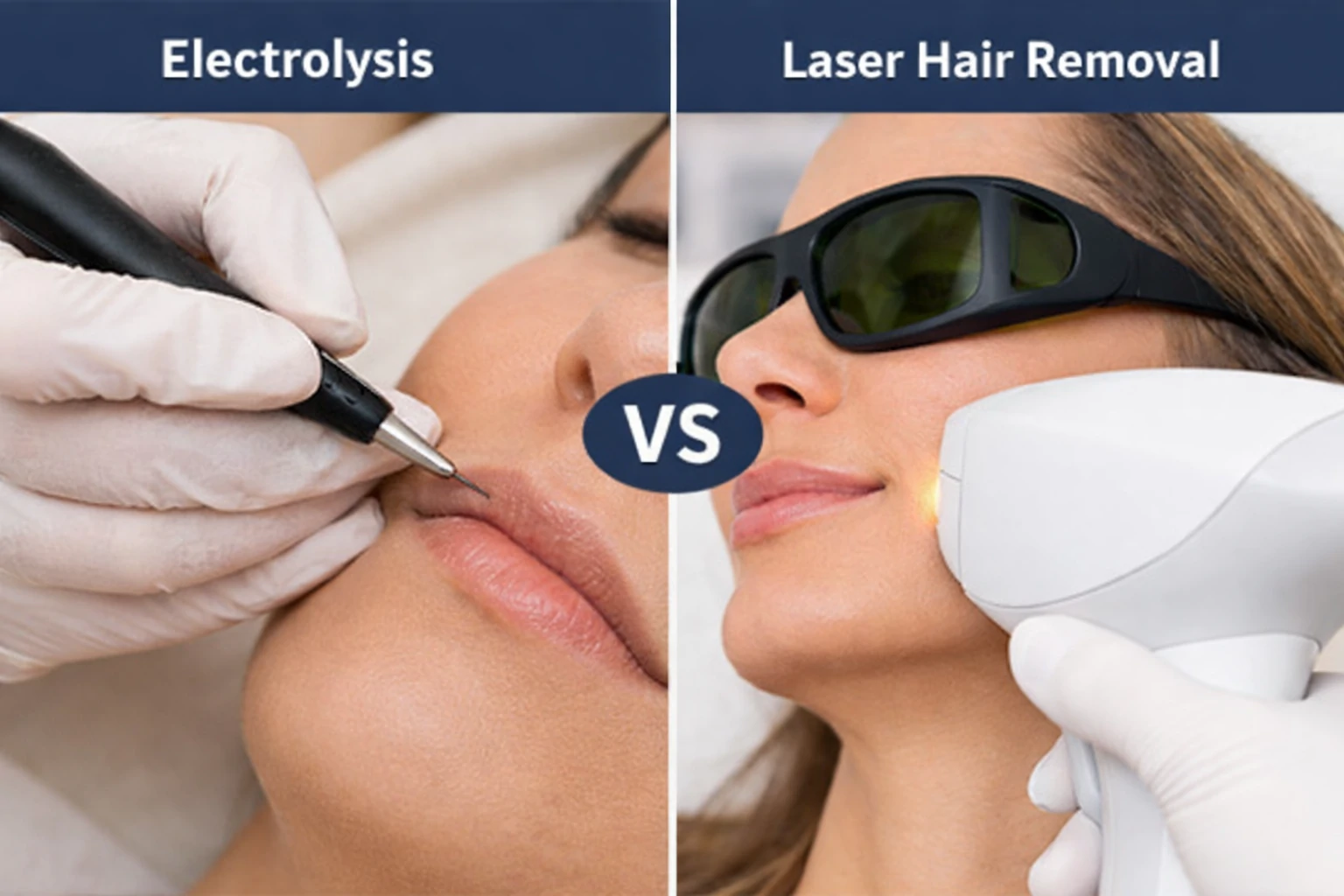
For those seeking long-term or permanent facial hair removal, electrolysis and laser hair removal remain the gold-standard medical treatments. Electrolysis works by destroying each hair follicle individually using controlled electrical currents, making it the only FDA-recognized method for permanent hair removal. Laser hair removal, on the other hand, uses concentrated light energy to target pigment in the hair follicle, significantly reducing regrowth over multiple sessions.
Because facial skin is delicate and highly reactive, choosing the right procedure requires expert evaluation. Safety, skin tone compatibility, hair type, and long-term skin health all play a critical role in determining outcomes.
To provide a clear, evidence-based comparison, we gathered insights from four board-certified dermatology experts. Below, we break down how electrolysis and laser hair removal differ in mechanism, effectiveness, and safety—helping you decide which approach best aligns with your skin biology and aesthetic goals.
What Is Electrolysis for Permanent Facial Hair Removal?
Electrolysis is a medical-grade dermatology procedure designed to permanently stop hair growth at the root.[1Cleveland Clinic. Electrolysis: Definition & Treatment. Oktober 2025.] According to Dr. Husain, the treatment involves inserting an ultra-fine metal probe into each individual hair follicle. A low-level electrical current is then delivered to destroy the follicle’s growth cells, preventing future hair regeneration entirely.
The strength of electrolysis lies in its unmatched precision and reliability, especially for facial areas:
- High Precision: Ideal for small, sensitive facial zones such as the upper lip, chin, and jawline.
- Permanent Results: When completed through a structured treatment plan, electrolysis offers true, long-term hair removal.
- Universally Effective: Works on all skin tones and hair colors since it does not rely on pigment.
In terms of comfort, Dr. Husain notes that patients may feel brief warmth or a mild pinching sensation as the current is applied. While slightly uncomfortable, electrolysis remains the medical gold standard for those who prioritize accuracy, safety, and clinically proven permanent facial hair removal.
Benefits and Effectiveness of Electrolysis for Facial Hair
In clinical dermatology, electrolysis is widely recognized as the most effective method for permanent hair removal. Dr. St. Surin-Lord explains that its success comes from the electrical current precisely destroying the hair follicle structure down to the root, ensuring the growth cells can no longer regenerate.
Key advantages of electrolysis include:
- Safe for Sensitive Facial Areas: Highly suitable for precision work such as eyebrow shaping and detailed facial contouring.
- Complete Follicle Destruction: Unlike temporary methods, electrolysis fully deactivates hair growth at the source.
It’s important to note that optimal results require time and consistency. A single session typically lasts between 15 and 60 minutes. Due to natural hair growth cycles, most patients need approximately 12 to 30 sessions, usually scheduled once a month. While the process demands patience, Dr. St. Surin-Lord emphasizes that the long-term payoff—permanently smooth skin without shaving or waxing—is well worth the commitment.
Strategic Advantages of Electrolysis for Permanent Hair Removal
Choosing electrolysis as an aesthetic solution offers long-term benefits supported by strong clinical validation. From a medical perspective, this procedure stands out for its versatility, predictability, and proven outcomes. Below are the key advantages worth considering:
- Clinically Proven Permanent Results: Electrolysis is the only hair removal method medically recognized to permanently stop hair growth at the follicular level.
- Universal Effectiveness: Its results are not influenced by hair color or skin tone, making it safe and effective for all individuals.
- High Safety for Targeted Areas: Particularly suitable for delicate and precise facial zones that require maximum control.
- Long-Term Cost Efficiency: While it requires an upfront commitment across multiple sessions, electrolysis is more economical over time compared to lifelong spending on temporary methods.
From a professional standpoint, electrolysis is a smart investment for those who value definitive, lasting results. An honest commitment to the treatment process upfront is ultimately rewarded with lasting freedom from repetitive hair removal routines.
Challenges and Considerations of Electrolysis Treatment
Despite its permanent results, electrolysis comes with several important considerations that should be evaluated honestly before starting treatment. Clinically, the two most common challenges are comfort level and overall treatment duration.
Dr. Sobel notes that electrolysis can be more uncomfortable than newer hair removal technologies. As a long-established method that has seen limited technological evolution, its mechanism presents specific challenges:
- Pain Sensation: Because electrical current is applied directly to each hair follicle, discomfort levels vary and pain tolerance plays a significant role.
- Time Commitment: Since every hair is treated individually, achieving full follicle elimination requires multiple sessions and frequent visits.
From a professional standpoint, discussing pain management options with your provider is strongly recommended before treatment begins. Having a realistic understanding of the process helps set proper expectations and ensures you are mentally prepared to complete the full treatment plan for optimal, lasting results.
Electrolysis Risks and Side Effects
Clinically, electrolysis is considered a safe procedure, but it does carry a risk profile that should be understood transparently. Dr. St. Surin-Lord explains that the most common reactions include temporary redness and mild swelling at the treatment site. In some skin types, short-term melanin disruption may occur. While usually transient, issues such as post-inflammatory hyperpigmentation or prolonged discoloration can develop if the technique lacks precision.
Ramirez, an aesthetic specialist, also highlights key contraindications that require careful screening:
- Implanted Medical Devices: Individuals with pacemakers or internal medical implants should avoid electrolysis due to the electrical current used.
- Pregnancy: Medical consultation is essential to assess safety for both mother and fetus.
- Keloid-Prone Skin: Patients with a history of hypertrophic scarring or keloids should proceed with caution, as mechanical skin trauma is involved.
Understanding your personal medical history is critical to minimizing risks and achieving optimal aesthetic outcomes—without compromising long-term skin health.
What Is Laser Hair Removal for Facial Hair?
Unlike electrolysis, laser hair removal works by emitting specific wavelengths of light that target melanin within the hair follicle. Dr. Husain explains that this approach is more efficient because it treats multiple follicles at once, allowing larger facial areas to be addressed in a shorter time using focused photonic energy.
Several key points define how laser hair removal works and who benefits most:
- Selective Targeting: Dr. St. Surin-Lord notes that lasers are most effective on dark hair, such as black or deep brown. Results are typically less optimal for blonde, red, or gray hair due to lower melanin content.
- Advanced Technology: Dr. Sobel highlights that modern systems, including newer-generation lasers, have evolved to safely treat a wider range of skin tones—overcoming earlier limitations with darker complexions.
In terms of comfort, laser hair removal is generally easier to tolerate than electrolysis. Patients often describe the sensation as a quick rubber-band snap against the skin. Dr. Husain adds that today’s devices feature integrated cooling systems to reduce heat and enhance skin comfort throughout the treatment.
Benefits of Laser Hair Removal for Facial Hair
From a medical efficiency standpoint, laser hair removal offers clear advantages in speed and visible results. Dr. St. Surin-Lord explains that its high selectivity allows patients to see noticeable hair reduction faster compared to traditional methods.
Although the per-session cost may appear higher upfront, laser hair removal is often more cost-effective over time. Most patients achieve optimal results within six to eight sessions, reducing the need for prolonged treatment plans. Key benefits include:
- Time Efficiency: Sessions are relatively quick, making this option ideal for individuals with busy schedules.
- Significant Hair Reduction: Laser technology can dramatically reduce hair density in a short period.
It’s important to be realistic: laser hair removal delivers long-term hair reduction rather than complete permanence. Some follicles may regenerate over time, which is why occasional maintenance sessions are recommended. This balanced approach helps maintain smooth skin while preserving results at a professional, clinically acceptable standard.
Laser Hair Removal Pros for Facial Hair
Laser hair removal stands out for its efficiency and streamlined treatment process. Clinically, it requires fewer sessions than most hair removal methods, with visible improvement appearing relatively quickly. This makes it a preferred option for individuals with busy schedules who still want noticeable, professional results.
Key advantages of laser hair removal include:
- Time Optimization: Each session is short, allowing larger facial areas to be treated within minutes.
- Pigment-Based Effectiveness: Laser technology performs best on hair with higher melanin levels, such as dark brown or auburn shades.
- Targeted Precision: The laser selectively focuses on hair follicles while preserving surrounding skin tissue.
This method is especially well-suited for those who prioritize speed, practicality, and predictable outcomes. Being honest about your hair growth patterns and biological response is essential when choosing this approach. With the right candidate profile, laser hair removal delivers smoother skin through a structured, medically guided process that aligns with modern aesthetic standards.
Limitations and Challenges of Laser Hair Removal
While laser hair removal is known for its efficiency, it does come with limitations that should be evaluated objectively. One key consideration is hair regrowth. Some patients experience partial regrowth even after completing the recommended treatment cycle, making periodic maintenance sessions necessary to sustain smooth results.
Important factors to consider include:
- Melanin Dependency: Laser technology is significantly less effective on light-colored hair such as blonde, gray, or white, due to insufficient pigment for the laser to target.
- Pigmentation Risks: Post-treatment hyperpigmentation or dark spots may occur, particularly in sensitive or melanin-rich skin types. Clinically, this risk is generally higher compared to electrolysis when parameters are not carefully adjusted.
From a professional standpoint, individual skin and hair biology play a major role in long-term outcomes. Results vary, and laser hair removal should be approached as long-term hair reduction rather than absolute permanence. A thorough consultation is essential to assess suitability, reduce potential side effects, and align expectations with the realistic capabilities of current laser technology.
Laser Hair Removal Risks and Side Effects
Clinically, laser hair removal is a well-established medical procedure with a strong safety record. However, from a professional and honest standpoint, it’s important to understand that risks can arise if the treatment is not performed by a properly trained provider.
Dr. St. Surin-Lord emphasizes that incorrect device selection or improper energy settings may lead to dermatologic complications. Potential risks include:
- Pigmentation Changes: The development of hypopigmentation (light spots) or hyperpigmentation (dark spots), particularly in melanin-rich skin.
- Thermal Injury: Burns or scarring may occur if laser intensity exceeds the skin’s tolerance level.
- Inflammatory Reactions: Mild swelling or redness can appear post-treatment, similar to normal inflammatory responses seen with electrolysis.
The most critical factor in risk reduction is strict adherence to medical protocols. Proper alignment between your skin type and laser parameters is essential to achieve safe, effective results—without compromising long-term skin health. A qualified provider and thorough pre-treatment assessment make all the difference.
Which Is Best for Facial Hair Removal?
Choosing between laser hair removal and electrolysis depends largely on your skin biology and long-term goals. Dr. Husain explains that laser hair removal performs best on individuals with high contrast—lighter skin paired with dark hair—and is especially efficient for treating larger facial areas.
Electrolysis, however, offers broader clinical versatility. Dr. Husain emphasizes that it is effective across all skin tones and hair types, making it the preferred option in specific cases:
- Small, Sensitive Areas: Ideal for precise work around the eyebrows or eye area.
- Fine or Light Hair: Capable of targeting hairs that laser devices often miss.
- True Permanence: The top choice for those seeking complete, permanent hair removal.
From a professional perspective, electrolysis is recommended when precision and total permanence are the priority, particularly in limited facial zones. Laser hair removal remains a strong option if speed and coverage are your main concerns. Being honest about your skin characteristics and expectations is key to achieving long-term satisfaction with either treatment.
Cost-Benefit Analysis: Investment vs. Long-Term Savings
When comparing electrolysis and laser hair removal, cost should be evaluated beyond the price per session. The real difference lies in long-term value. Laser hair removal typically has a higher upfront cost, but its efficiency often limits treatment to around six to eight sessions for visible hair reduction, making it financially practical over time.
Electrolysis, by contrast, is usually more affordable per session but requires a significantly higher number of visits—often between 12 and 30 sessions. When factoring in time, consistency, and travel, the total investment can eventually exceed that of laser treatment.
Key budgeting considerations include:
- Laser Hair Removal: Higher initial investment with minimal maintenance costs once the treatment cycle is complete.
- Electrolysis: Gradual spending spread over months, ideal for those who prefer smaller, incremental payments without a large upfront expense.
From a professional standpoint, the best choice aligns with both your cash-flow comfort and your permanence goals. A clear financial plan ensures sustainable results without compromising long-term satisfaction.
Pre-Treatment Protocol: How to Prepare Your Skin
Successful facial hair removal—whether with laser or electrolysis—starts with proper skin preparation. Optimizing skin condition before treatment allows energy or electrical currents to work effectively while minimizing irritation, burns, or post-treatment complications.
Dermatology experts recommend the following pre-treatment steps:
- Avoid UV Exposure: Protect the treatment area from direct sun exposure for at least two weeks prior. UV exposure increases skin sensitivity and raises the risk of pigmentation issues or thermal injury.
- Stop Hair Removal by Pulling: Avoid waxing, threading, or tweezing before your session. Hair follicles must remain intact for laser energy or electrolysis probes to properly target the root.
- Pause Strong Actives: Discontinue retinoids, chemical exfoliants (AHA/BHA), and other potent actives several days before treatment to maintain a healthy skin barrier.
Maintaining good skin hydration also supports faster healing after the procedure. Following these protocols consistently improves treatment outcomes, reduces downtime, and ensures your hair removal process remains safe, controlled, and professionally executed.
The Role of Hormonal Imbalance (PCOS) in Facial Hair Growth
Understanding internal biological factors is essential before choosing any facial hair removal method. Conditions such as Polycystic Ovary Syndrome (PCOS) are a common cause of hirsutism—excess facial hair growth driven by elevated androgen levels. In these cases, treatment success is closely tied to hormonal stability.
Dermatology experts consistently emphasize that without proper hormonal management, new hair follicles may continue to be stimulated—even after laser or electrolysis sessions. This is why an honest, professional approach often requires combining aesthetic treatments with medical or endocrine care.
Key hormonal considerations include:
- Treatment Resistance: Facial hair linked to PCOS tends to be more persistent, often requiring more sessions than in hormonally balanced individuals.
- Ongoing Maintenance: Periodic touch-up treatments are usually necessary to manage hormonally driven regrowth.
- Medical Integration: Hormone-regulating therapies are frequently recommended to improve overall treatment effectiveness.
Addressing the hormonal root cause alongside hair removal procedures helps deliver more stable, realistic, and satisfying long-term results—protecting both your skin and your investment.
Final Thoughts
Choosing between electrolysis and laser hair removal is a personal decision shaped by skin type, hair characteristics, hormonal health, and long-term expectations. Electrolysis remains the gold standard for those seeking truly permanent facial hair removal, especially in small, sensitive areas and across all hair and skin tones. Laser hair removal, meanwhile, offers superior speed, comfort, and efficiency for larger facial areas—particularly for individuals with darker hair.
Honest evaluation of internal factors, such as hormonal imbalance related to PCOS, plays a critical role in treatment success. Equally important is strict adherence to pre-treatment and maintenance protocols. While the upfront investment differs, both procedures are medically proven, safe, and effective when performed correctly. A personalized consultation with a qualified dermatologist ensures the chosen method aligns with your biology, lifestyle, and budget—delivering smooth, confident results that last.
ARTICLE SOURCES
You might also like




 Acne
Acne Anti-Aging
 Business
 Digital Marketing
 Economics
 Exfoliation
 Hair Removal
 Movies
 Personal Finance
 Websites