Pluck Eyebrows Like a Pro: The Ultimate Guide to Perfect Shape
Have you ever felt eyebrow trauma after a bad tweezing session? You’re not alone. Many people experience over-plucking at least once, often leading to uneven brows or long-term thinning. The good news: eyebrow grooming doesn’t have to be risky. With the right dermatology-approved techniques, you can shape your brows safely without damaging hair follicles.
The foundation of perfect eyebrows is self-control. Over-plucking is the most common mistake and the hardest to fix. To avoid irritation, asymmetry, or sparse regrowth, it’s essential to follow clinically and aesthetically validated eyebrow-plucking methods.
Expert-Backed Eyebrow Plucking Tips
- Joey Healy, a renowned eyebrow specialist, emphasizes preserving the natural brow shape based on your facial bone structure rather than chasing trends.
- Naomi Torres, a professional hair-removal expert, recommends plucking in the direction of hair growth to reduce irritation and prevent ingrown hairs.
When precision meets patience, at-home eyebrow grooming can deliver clean, professional results—while keeping your skin calm and your brows healthy.
1. Buy a Good Pair of Tweezers
Using low-quality tweezers is one of the most common reasons eyebrow grooming goes wrong. If the grip isn’t strong or precise, you’ll end up pulling the same hair repeatedly. From a dermatological standpoint, inefficient pulling often causes the hair to snap halfway instead of being removed from the follicle—leading to rough texture and uneven regrowth.
For clean, controlled results, the tool itself matters. Naomi Torres recommends the Tweezerman Slant Tweezer, known for its angled tip and strong grip that allows precise removal with minimal skin stress. The brand also offers complimentary re-sharpening, helping maintain hygiene and performance over time.
Meanwhile, Joey Healy suggests his Pro Sculpting Tweezer, designed for versatility. It features a slanted tip for detailed plucking and a built-in comb on the opposite end to keep brows aligned while shaping.
With the right tweezers, eyebrow plucking becomes faster, less painful, and significantly more precise—setting the foundation for naturally polished brows.
2. Pull or Pin Hair Back
One critical step often overlooked in eyebrow grooming is clearing your visual field. From a technical standpoint, maximum visibility is essential for mapping facial symmetry accurately. Any obstruction around the forehead or temples can easily lead to uneven shaping or over-plucking.
Naomi Torres recommends securing your hair away from the face using a hair tie or clips before you start. This simple step serves two important purposes:
- Visual Accuracy: You can see your natural brow line clearly, without distraction from stray hairs or shadows that distort shape perception.
- Procedural Safety: It prevents accidentally pulling scalp hair near the hairline, keeping each pluck intentional and controlled.
Creating a clean working area allows you to focus fully on precision rather than correction. Eyebrow grooming isn’t just about removing hair—it’s about shaping in harmony with your facial anatomy. Clear visibility helps ensure every movement supports a balanced, natural-looking result rather than working against it.
3. Set Up a Comfortable Work Area
Many eyebrow-shaping mistakes happen when the process feels rushed or the environment isn’t supportive. From a professional standpoint, creating an ergonomic grooming setup helps prevent uneven results and keeps your brow shape looking natural and balanced. Your surroundings directly affect the precision of every pluck.
Pay close attention to your visual tools. Joey Healy advises avoiding magnifying mirrors. Both technically and psychologically, these mirrors distort perspective, making it easy to lose sight of your full facial proportions and over-pluck without realizing it.
Ideal Brow-Grooming Setup
- Optimal Lighting: Work in a well-lit space. Natural daylight is best because it reveals hair texture and density accurately.
- Proper Perspective: Use a standard mirror so you can assess brow balance in relation to your entire face.
- Controlled Pace: Move slowly and deliberately to maintain precision and avoid unnecessary removal.
A thoughtfully prepared work area reduces aesthetic errors and supports skin health around the delicate eye zone. Good eyebrow grooming isn’t rushed—it’s intentional, calm, and controlled.
4. Wash with Warm Water
One of the most important steps for a comfortable eyebrow-plucking session is starting with clean skin. Naomi Torres recommends washing your face with warm water beforehand. From a physiological perspective, gentle warmth helps relax pores and soften hair follicles, reducing resistance during removal and minimizing unnecessary skin trauma.
After cleansing, pat the area dry with a clean towel—never rub. Joey Healy emphasizes that brows must be completely clean and dry before tweezing. Residue from skincare products such as moisturizer or sunscreen can make hairs slippery, reducing tweezer grip and precision.
For higher dermatological standards, consider the following:
- Clean the brow area and apply toner before plucking to remove excess oil.
- Reapply toner after finishing to calm the skin and reduce inflammation.
This simple preparation step improves comfort, precision, and skin safety—ensuring eyebrow grooming supports healthy skin, not irritation.
5. Reduce Irritation with Proper Skin Prep
Minimizing skin trauma is essential for maintaining a healthy skin barrier during eyebrow plucking. One physiologically effective approach is grooming right after a shower. Warm water and steam hydrate the skin and soften hair cuticles, which lowers pain sensitivity and significantly reduces post-plucking inflammation.
Beyond temperature, the right topical support can further protect the skin. Joey Healy recommends applying a targeted facial mist containing witch hazel and aloe vera before starting. This combination offers two clinically relevant benefits:
- Antiseptic Action: Witch hazel acts as a natural astringent, helping keep freshly opened follicles clean and reducing the risk of bacterial irritation.
- Soothing Effect: Aloe vera calms redness, cools the skin, and supports hydration throughout the process.
Proper skin preparation isn’t just about comfort—it’s a preventive step. When the skin is well-conditioned, eyebrow plucking becomes gentler, more controlled, and far less reactive. The result is not only better-shaped brows, but skin that stays calm, resilient, and irritation-free long after grooming is complete.
6. Trim Brows if Necessary
Trimming is a smart alternative when your brows need refinement without long-term risk. Joey Healy explains that trimming preserves shape precision while protecting hair follicles. Over-plucking, on the other hand, can cause permanent follicle trauma and may eventually stop hair growth altogether.[1Woods DW, Houghton DC. Diagnosis, evaluation, and management of trichotillomania. Psychiatr Clin North Am. 2014;37(3):301-317.]
To trim brows like a professional, follow these steps:
- Brush Up: Use a spoolie or fine-tooth comb to brush brow hairs upward.
- Identify Excess Length: Notice which hairs extend beyond your natural brow line.
- Trim Precisely: Use small, sharp eyebrow scissors to carefully cut only the tips.
If your brows are thick or naturally long, reduce length gradually rather than trimming too much at once. This controlled approach allows you to maintain fullness while improving shape and texture.
Prioritizing trimming over excessive tweezing helps keep brows healthy, balanced, and natural-looking. It’s a safer technique that delivers clean results without compromising future hair growth—ideal for maintaining strong, well-groomed brows over time.
7. Select the Hairs You’re Removing
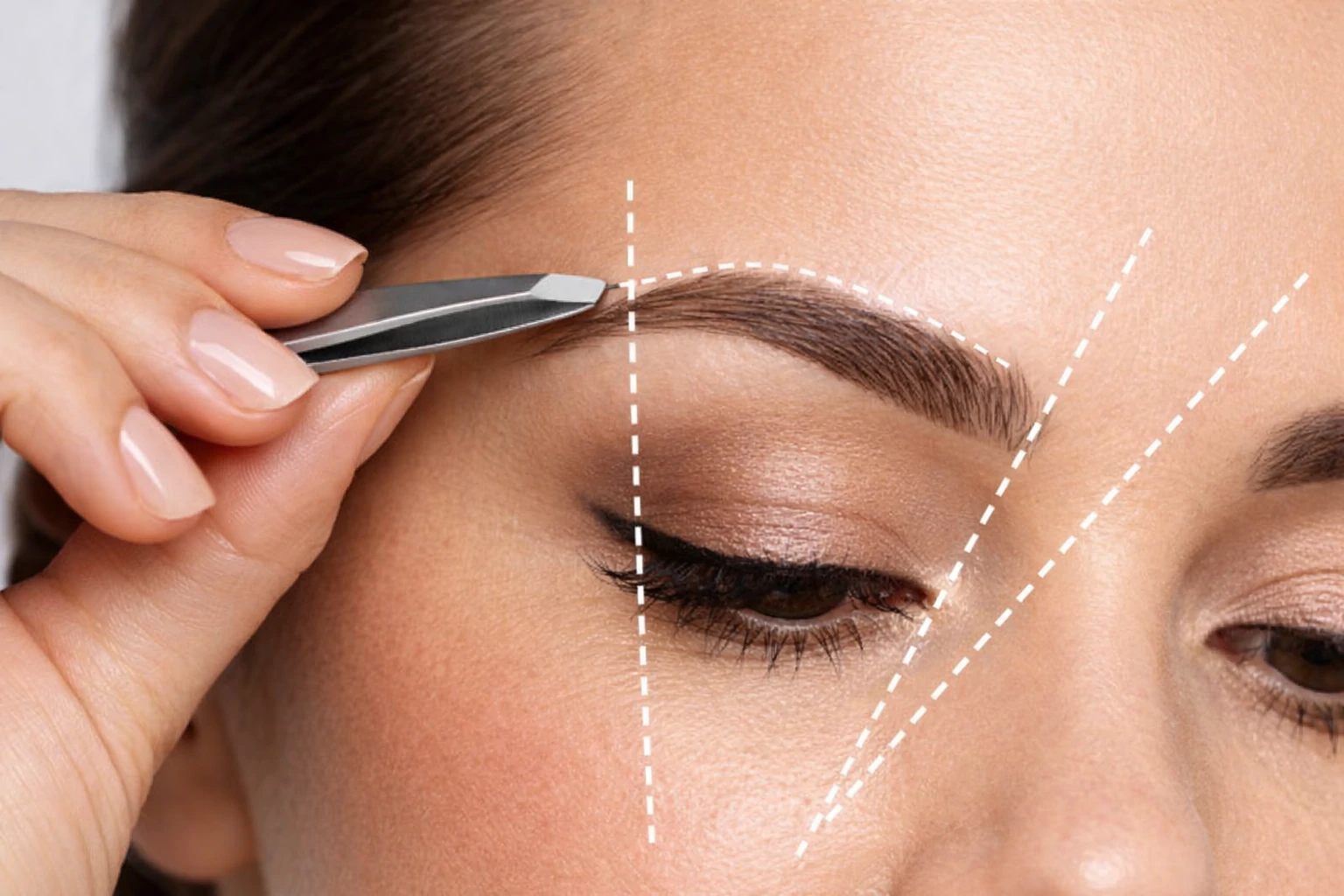
In eyebrow grooming, visual planning prevents mistakes that can’t be undone. Just like mapping in professional treatments, marking the area before tweezing helps maintain control. Using a white eyeliner pencil to highlight the hairs you plan to remove is a highly effective technique.
This method creates visual clarity, making it easier to distinguish essential brow hairs from those that are unnecessary. Key benefits include:
- Decision Confidence: Eliminates hesitation during plucking, so every move feels intentional.
- Shape Consistency: Helps maintain symmetry between both brows by following a clear guide.
- Over-Plucking Prevention: Reduces the risk of removing hairs that are critical to your natural brow structure.
If identifying ideal brow boundaries still feels challenging, refer to professional brow-mapping guidelines based on facial bone structure. A well-planned approach leads to cleaner, more precise results—and brows that look balanced rather than overworked. Planning first is what separates careful grooming from costly correction.
8. Start In Between the Brows
The first tweezing step is defining where your brows should begin. Accurate starting points are essential for balanced facial proportions. Joey Healy recommends a simple alignment method: hold your tweezers vertically along the side of your nose. Where the tool meets the brow marks the ideal starting point to preserve.
Any hair growing between the brows up to this reference point can be safely removed to create a cleaner, more polished look. That said, restraint is key.
Healy emphasizes the following safety guidelines:
- Focus on Maintenance: At home, refine stray hairs rather than attempting to reshape the entire brow.
- Target Priority Areas: Clean up the space between the brows, upper eyelids, temples, and upper bridge of the nose.
- Respect Safe Zones: Avoid overworking the brow bone area to prevent altering your natural structure.
By staying within these anatomical boundaries, your brows will look naturally defined—fresh, balanced, and professionally groomed without appearing overdone.
9. Tweeze the Arches
This step plays a major role in defining your overall facial expression. To reduce skin trauma, gently stretch the skin around the arch with your free hand before plucking. Mechanically, this stabilizes the tissue and helps minimize discomfort by reducing tension on surface nerves.
For best results, grip each hair as close to the root as possible and pull in the direction of natural growth. This prevents hair breakage and lowers the risk of ingrown hairs.
Experts recommend a strategic approach:
- Prioritize Pigmented Hairs: Start with thicker, darker hairs. Once these are removed, finer vellus hairs often don’t need to be touched to maintain natural fullness.
- Work in Parallel: Naomi Torres advises alternating between the left and right brow rather than finishing one side first. This helps maintain visual balance and symmetry throughout the process.
A measured, systematic technique allows the arches to look clean and defined—without compromising follicle health or creating an over-sculpted appearance.
10. Work on the Top of the Brows
The final step is refining the upper brow area—a zone that requires extra caution. This section plays a critical role in framing the face, so the goal here is clean-up, not reshaping. Technically, you should only remove fine hairs that sit clearly outside your natural brow line.
Unlike arch tweezing, this area demands tighter control and restraint. A safer, professional approach includes:
- Minimal Intervention: Target only isolated stray hairs. Removing too much from the top can flatten the brow and disrupt its natural lift.
- One Side at a Time: Complete one brow fully before moving to the other. This makes it easier to monitor shape continuity and avoid accidental over-plucking.
Working slowly and selectively keeps the brow structure intact while enhancing definition. When done correctly, this step creates a cleaner outline and a subtly lifted appearance—without compromising balance or fullness.
Precision at the top of the brows is what separates polished grooming from overworked results. Finish conservatively, step back often, and let your natural brow shape do most of the work.
11. Stand Back and Fine-Tune
The final—and most critical—step is visual calibration. Naomi Torres recommends stepping back about one meter from the mirror before making any final adjustments. From an optical standpoint, this distance allows you to assess overall facial balance instead of getting misled by close-up details that often distort perception.
Make final corrections conservatively, focusing only on balancing both brows rather than perfecting every hair. Once the overall shape looks harmonious, move closer to the mirror for precise clean-up.
Final Refinement Steps
- Micro Clean-Up: Remove any remaining fine or vellus hairs that fall clearly outside the main brow structure.
- Area Sanitation: Gently pat the skin with a clean towel to remove loose hairs and reduce surface irritation.
This step ensures your brows look polished not just up close, but also from a natural viewing distance. Proper fine-tuning creates strong, balanced definition that complements your facial features—without tipping into overworked territory.
12. Soothe Irritated Skin
Post-plucking skin recovery is just as important as the shaping itself. Mild redness after tweezing is normal—it’s a response to mechanical stress on the follicles. To calm the skin, apply a soothing toner or lightweight moisturizer using a soft cotton pad or swab.
Joey Healy recommends tea tree oil as an effective aftercare option, especially for acne-prone skin. Clinically, tea tree oil offers three key benefits:
- Anti-Inflammatory Properties: Helps reduce redness and swelling quickly.
- Antibacterial Action: Protects freshly opened follicles from bacterial buildup.
- Soothing Effect: Calms irritation and supports skin comfort post-grooming.
Use sparingly and avoid over-layering products. Giving the skin time to breathe is essential—skip makeup immediately after plucking to prevent pore congestion and added irritation.
Allowing this recovery window helps the skin rebalance naturally, reduces the risk of breakouts, and supports healthy regeneration. Thoughtful aftercare ensures your brows look clean and refined—while the surrounding skin stays calm, clear, and resilient.
13. Schedule Your Next Grooming Session
Consistent brow shape starts with a smart grooming schedule. Regular maintenance helps prevent impulsive daily tweezing, a habit that often leads to long-term shape damage and thinning.
Joey Healy recommends grooming your eyebrows about once a month. Biologically, this timing allows brow hairs to re-enter the growth (anagen) phase, making it easier to identify which hairs truly need removal—rather than guessing too early.
Benefits of a structured grooming routine include:
- Clear Hair Identification: Easier to distinguish permanent regrowth from fine, unnecessary hairs.
- Aesthetic Efficiency: Keeps the brow line clean without frequent corrective work.
- Follicle Health: Gives both skin and follicles enough recovery time between sessions.
By spacing out your grooming sessions, you maintain a polished, professional brow shape while protecting long-term hair growth. Thoughtful timing reduces over-plucking, supports healthier regrowth, and keeps your brows looking balanced—without constant intervention.
Understanding Your Face Shape for Personalized Arch Mapping
Knowing your face shape is the foundation of safe, effective eyebrow grooming. From an aesthetic perspective, brows act as facial balance points—the right shape can create a subtle, natural “lift” without invasive procedures. Beauty professionals agree that eyebrow shaping is never one-size-fits-all, as bone structure determines ideal proportions.
Use this simple guide to align your brows with your facial anatomy:
- Round Face: Opt for a higher, more defined arch to create length and structure.
- Square Face: Choose softer, gently curved brows to balance a strong jawline.
- Oval Face: Naturally balanced—soft, natural arches enhance your features effortlessly.
- Long Face: Flatter brow lines help visually widen and balance facial proportions.
Experts consistently recommend following your orbital bone structure as the primary guide, rather than forcing a trendy shape. Respecting your natural framework ensures brows look organic, symmetrical, and professionally shaped.
When eyebrow grooming works with your face—not against it—the results appear polished, intentional, and uniquely yours.
Professional Advice: When to See an Expert vs. DIY
DIY brow grooming offers flexibility, but there are moments when professional care is the smarter aesthetic—and skin-safe—choice. If you’re planning a major brow shape change for the first time, consulting an expert is strongly recommended. Professionals understand facial symmetry and bone structure in ways that are difficult to assess at home.
You should seek a brow specialist if you experience any of the following:
- Initial Brow Mapping: You’re unsure where your brows should start, arch, or end based on your bone structure.
- Follicle Damage Correction: Brows have thinned significantly due to chronic over-plucking.
- Abnormal Growth Issues: Persistent ingrown hairs, inflammation, or irritation around the eye area.
- High-Stakes Moments: Special events where precision matters and mistakes aren’t an option.
A skilled professional doesn’t just shape brows—they protect long-term follicle health. Knowing when to hand things over is a form of smart self-care. Once the foundational shape is set, maintenance can safely return to DIY with precision tools like Tweezerman.
The Science of Brow Growth: Serums and Nutrition
Understanding the eyebrow hair growth cycle is essential if you want fuller brows long term. Biologically, brow hair has a much shorter anagen (growth) phase than scalp hair. That’s why a combined approach—topical serums and internal nutrition—is critical for improving follicle density.
Eyebrow serums formulated with peptides and biotin are widely recommended to strengthen hair roots and reduce premature shedding. Premium formulas containing prostaglandin analogs work by extending the anagen phase, allowing each brow hair to grow longer, thicker, and more resilient.
However, follicle health also depends heavily on daily nutrient intake:
- Protein & Iron: Essential building blocks for keratin production.
- Vitamin E & Omega-3: Help maintain skin hydration around follicles, reducing breakage.
- Zinc: Supports hair tissue repair and healthy oil gland function.
Dermatology experts emphasize consistency. Because brow hair follows a natural regeneration cycle, visible improvement typically appears after 8–12 weeks of regular use. Patience, paired with the right ingredients, delivers sustainable results—not quick fixes.
Avoiding Permanent Damage: The Risks of Over-Plucking
Over-plucking isn’t just a temporary beauty mistake—it poses a real risk to follicle health. Medically, repeated forceful tweezing can lead to traction alopecia. When follicles experience ongoing mechanical trauma, scar tissue may form beneath the skin, gradually blocking the hair’s ability to regrow.
Dermatologists warn that every follicle has a regeneration limit. Aggressive or frequent plucking can permanently damage the root, leaving sparse or bald areas that may never recover.
To prevent long-term brow damage, follow these professional guidelines:
- Stop During Inflammation: Never tweeze if the skin is red, swollen, or irritated.
- Pluck with Growth Direction: Always remove hair in the direction it grows to reduce root stress.
- Allow Recovery Time: Avoid daily tweezing—monthly maintenance gives follicles time to heal.
A conservative approach is the smartest investment. Protecting follicle integrity now is far easier—and far less costly—than correcting permanent brow loss later with medical procedures.
ARTICLE SOURCES
You might also like
 Acne
Acne Anti-Aging
 Business
 Digital Marketing
 Economics
 Exfoliation
 Hair Removal
 Movies
 Personal Finance
 Websites