5 Best Bikini Wax Styles & Types: Esthetician Recommended
Deciding to get your first bikini wax can feel intimidating. The idea of hair removal on such a sensitive area often sounds more painful than it actually is. In reality, most people are surprised by how quick and manageable the process feels, especially when done by a skilled professional. While a brief sting is normal, the smooth, clean result is usually worth it.
Pain perception varies, but proper technique and choosing the right bikini wax style make a noticeable difference. That’s why understanding your options matters before booking an appointment. From light clean-ups along the bikini line to complete hair removal, each style offers a different level of coverage and comfort.
According to Gina Petak, licensed esthetician, many first-timers feel more confident once they know what each bikini wax type involves. Selecting a style that matches your comfort level, lifestyle, and skin sensitivity helps reduce irritation and post-wax discomfort.
With the right preparation and realistic expectations, bikini waxing can be a safe, effective way to maintain smooth skin. Knowing the differences upfront allows you to walk in relaxed and leave feeling confident.
Understanding the Different Bikini Wax Styles
Choosing the right bikini wax style can feel confusing, as salons often use different terms and pricing for similar services. A quick check before booking helps ensure the technique matches your expectations and comfort level.
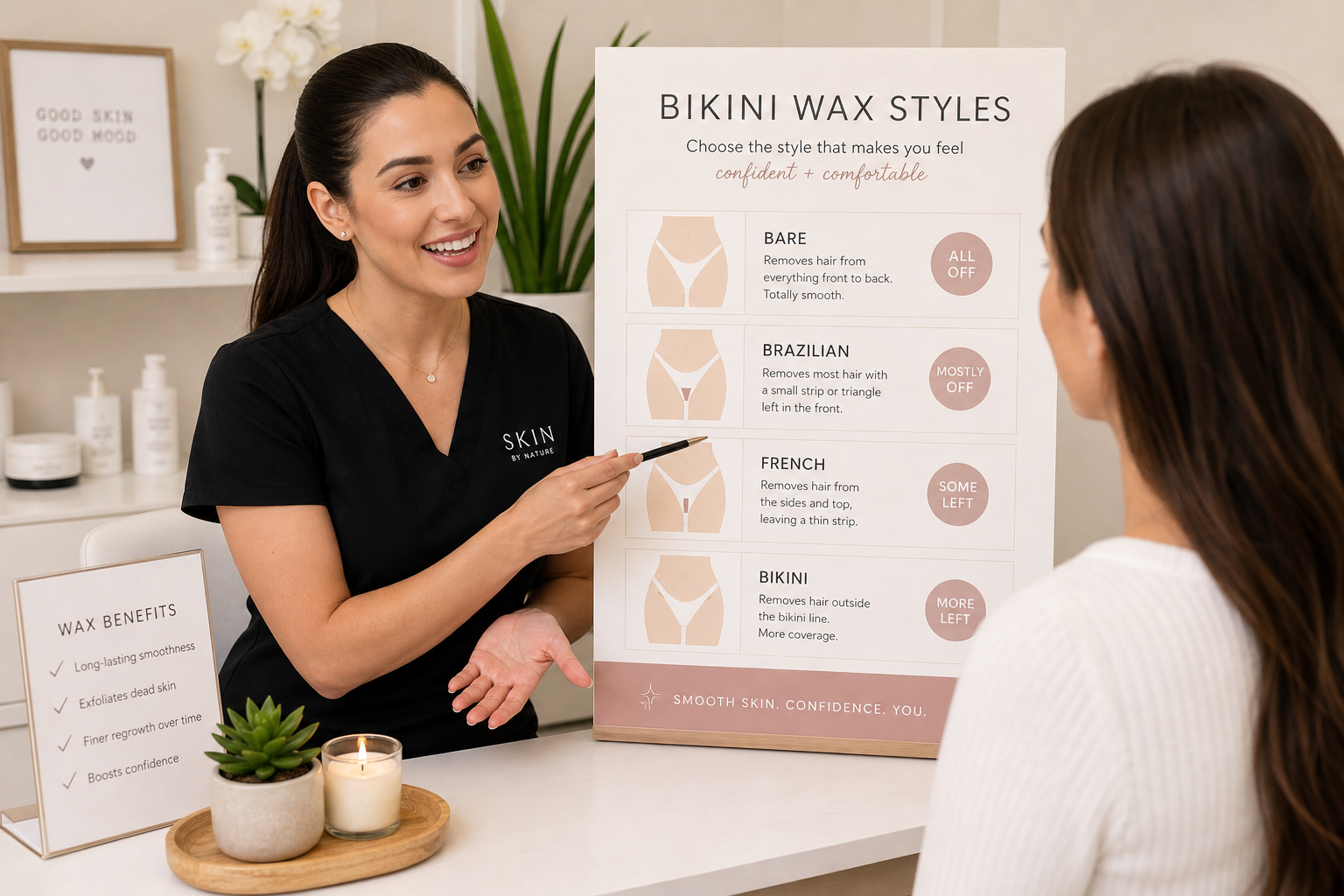
In general, most salons offer five common options: Standard, Full, French, Brazilian, and Hollywood. However, Gina Petak explains that these names aren’t always used consistently. Instead of relying on menu labels alone, clear communication with your therapist is far more important.
To avoid misunderstandings, keep these points in mind during your consultation:
- Visual clarity: Be specific about which areas you want waxed or left untouched.
- Personalization: You can request a strip or shape even with near-total removal styles.
- Service confirmation: Always confirm the exact coverage before the session begins.
An open, honest conversation helps ensure precise results, minimizes discomfort, and leaves you confident with the final outcome.
1. Standard Bikini Wax
If this is your first bikini wax, the Standard Bikini Wax—often called a bikini line wax—is the most beginner-friendly option. It focuses on cleaning up the edges and a small portion on top, targeting only the hair that would be visible outside a swimsuit or regular underwear.
Gina Petak notes that this style is ideal for anyone who prefers a natural look or wants to keep most hair intact in the intimate area. Comfort is the biggest advantage. Because the waxed area is minimal, this option is typically the least painful compared to other bikini wax types.
The process itself is quick and efficient. Petak explains that a standard bikini wax usually takes under 15 minutes to complete. With fewer pulls and limited coverage, it’s a practical choice for first-timers who feel nervous about discomfort but still want a cleaner, polished result.
2. Full Bikini Wax
If you want a cleaner look beyond basic edge clean-up, a Full Bikini Wax offers more control and flexibility. Gina Petak explains that this style allows you to decide how much hair is removed from the front. You can choose complete removal in that area or keep a defined shape, such as a neat strip or triangle, depending on your preference.
This option works well for those who want a polished, intentional appearance without committing to total hair removal, especially toward the back. Any remaining hair is typically trimmed to look tidy and balanced, rather than left untouched.
Because the coverage is wider than a standard bikini wax, it’s normal to experience slightly more sensitivity. Petak notes that the sensation can feel more intense due to the larger amount of hair removed. That said, the session is still efficient and usually takes around 15 minutes. It’s a smart transition choice for anyone ready to level up from a bikini line wax while keeping some customization.
3. French Bikini Wax
The French bikini wax strikes a balance between a clean look and personal comfort. Gina Petak explains that this style removes almost all hair from the front while leaving a slim vertical strip for a refined finish. The key difference from a Brazilian wax is the back area, which remains untouched in a French bikini wax.
Because the term is sometimes used interchangeably with a Full Bikini, clear communication is essential. Petak recommends telling your therapist exactly how much hair you want to keep in front. In many salons, this style is treated as a customized version of a Full Bikini rather than a separate service. It’s a popular choice for those who want a smooth, polished appearance without full removal.
In terms of experience, it’s similar to a Full Bikini Wax. The session is efficient, usually around 15 minutes. Sensitivity is moderate due to the wider front coverage, but still manageable. The result is ideal if you want a sleek, well-defined look while keeping a small amount of hair for comfort and confidence.
4. Brazilian Bikini Wax
The Brazilian bikini wax is one of the most requested styles because it delivers the most thorough hair removal. Unlike other options, this technique covers both the front and the back, including the butt strip. Gina Petak explains that the result is fully customizable—you can remove all hair in the front or keep a defined shape such as a strip, triangle, or square.
Interestingly, Petak notes that waxing the back area is often barely noticeable in terms of discomfort. This style is especially popular for those who wear thong swimwear or want complete confidence with any bikini cut.
Key things to know about a Brazilian bikini wax include full front-to-back coverage, an efficient treatment time of around 15 minutes, and a sensitivity level comparable to French or Full Bikini waxes. If you’re looking for a completely smooth, hair-free finish with flexibility in styling, this option delivers a clean, polished result.
5. Hollywood Wax
If you want a completely hair-free result, the Hollywood wax delivers the cleanest finish possible. Unlike a Brazilian wax, which still allows optional shaping, this style removes all hair from the entire intimate area, front to back. Gina Petak explains that it’s ideal for those who value simplicity and don’t want to think about leftover hair at all.
In many salons, including European Wax Center, Hollywood waxes are often grouped under Brazilian services. That’s why Petak advises being very clear with your therapist that you want total removal, including the front and back.
This option isn’t usually recommended for first-timers, as the coverage is extensive and can feel more intense if you’re sensitive to pain. That said, the session itself remains efficient, typically around 15 minutes. The payoff is ultra-smooth skin with no maintenance worries, which is why many people see the Hollywood wax as the end goal of their bikini waxing journey.
Essential Preparation Before a Bikini Wax
A smooth, comfortable bikini wax starts with proper skin preparation. Gina Petak emphasizes that the right pre-care not only reduces irritation but also improves results.
First, let the hair grow. Stop shaving at least 5–7 days before your appointment. The ideal length is about 0.5 cm—roughly a grain of rice—so the wax can grip and remove hair cleanly from the root.
Arrive with clean skin, and exfoliate gently 48 hours beforehand using a non-comedogenic product. This helps remove dead skin cells without clogging pores. On the day of your wax, wear loose, breathable clothing to prevent friction on freshly waxed skin.
Sensitivity management also matters. If you’re on your period, use a tampon or menstrual cup, as the area may feel more sensitive. Limiting caffeine beforehand can also help keep nerves and heart rate steady.
For pregnancy or postpartum waxing, consult your doctor first. Keep in mind, the first session often feels the most intense. With regular waxing, hair grows back finer, and discomfort usually decreases noticeably by the third visit.
Bikini Wax Aftercare
Proper aftercare is just as important as the waxing itself. Gina Petak emphasizes that regardless of the bikini wax style you choose, the post-wax routine remains the same to keep pores clear and prevent inflammation.
Right after your session, give your skin a break. Avoid intense workouts or anything that causes heavy sweating on the same day. Open pores are more vulnerable, and sweat can increase the risk of irritation or breakouts.
Heat and chemicals should also be avoided. Skip sun exposure, tanning beds, swimming pools, and hot tubs for at least 24 hours, as freshly waxed skin is more sensitive to UV rays and chlorine. Wearing loose, breathable clothing helps reduce friction and soothes the area during recovery.
To prevent ingrown hairs, gentle exfoliation is key once the skin has calmed. Use a non-comedogenic, oil-free exfoliant to remove dead skin cells and allow new hair to grow out naturally instead of getting trapped under the skin.
With consistent aftercare, your skin stays smooth, calm, and comfortable—making each bikini wax experience better than the last.
Hard Wax vs. Soft Wax: Which Is More Comfortable?
Knowing the type of wax your therapist uses can make a big difference in comfort during a bikini wax. The two main options in the beauty industry are Hard Wax and Soft Wax, each working differently and affecting skin sensitivity.
Gina Petak explains that Hard Wax is usually the preferred choice for sensitive areas like the bikini zone. It hardens around the hair only, without sticking to the skin, minimizing trauma to the epidermis and reducing pain significantly.
Soft Wax, on the other hand, is applied thinly and removed with cloth or paper strips. While effective at removing fine hair, it can also pull on dead skin cells, sometimes causing more redness on sensitive skin.
Here’s a quick comparison:
- Hard Wax: Best for intimate areas, less painful, highly effective for coarse hair.
- Soft Wax: Suitable for larger body areas like legs, but requires caution in the bikini zone to avoid irritation.
Choosing a salon that uses quality Hard Wax can be a game-changer, making your bikini waxing experience smoother and more comfortable.
Pain Management Tips for Bikini Waxing
Feeling nervous about pain is completely normal, but there are science-backed ways to minimize discomfort. The key lies in preparing your body and managing your pain threshold right before your session.
Gina Petak recommends paying attention to your cycle. Avoid scheduling waxing a few days before or during menstruation, as hormonal changes make nerve endings more sensitive. Staying well-hydrated also relaxes hair follicles, making hair easier to remove.
Here are practical tips to reduce pain:
- Mild Pain Relief: For low pain tolerance, taking ibuprofen 30–60 minutes before your session can help calm nerve inflammation.
- Breathing Techniques: Inhale deeply as the wax is applied, then exhale sharply when it’s removed. This diverts your nervous system’s reaction to the brief sting.
- Avoid Stimulants: Limit caffeine and alcohol beforehand, as both increase sensitivity and tension.
Being honest with your therapist about your comfort level allows them to adjust technique and speed, ensuring a calmer, more controlled experience.
Regular Schedule: When to Go Back
Timing your next bikini wax isn’t just about convenience—it’s key for long-term results. Gina Petak emphasizes that consistency helps hair texture soften over time, making each session progressively easier and less uncomfortable.
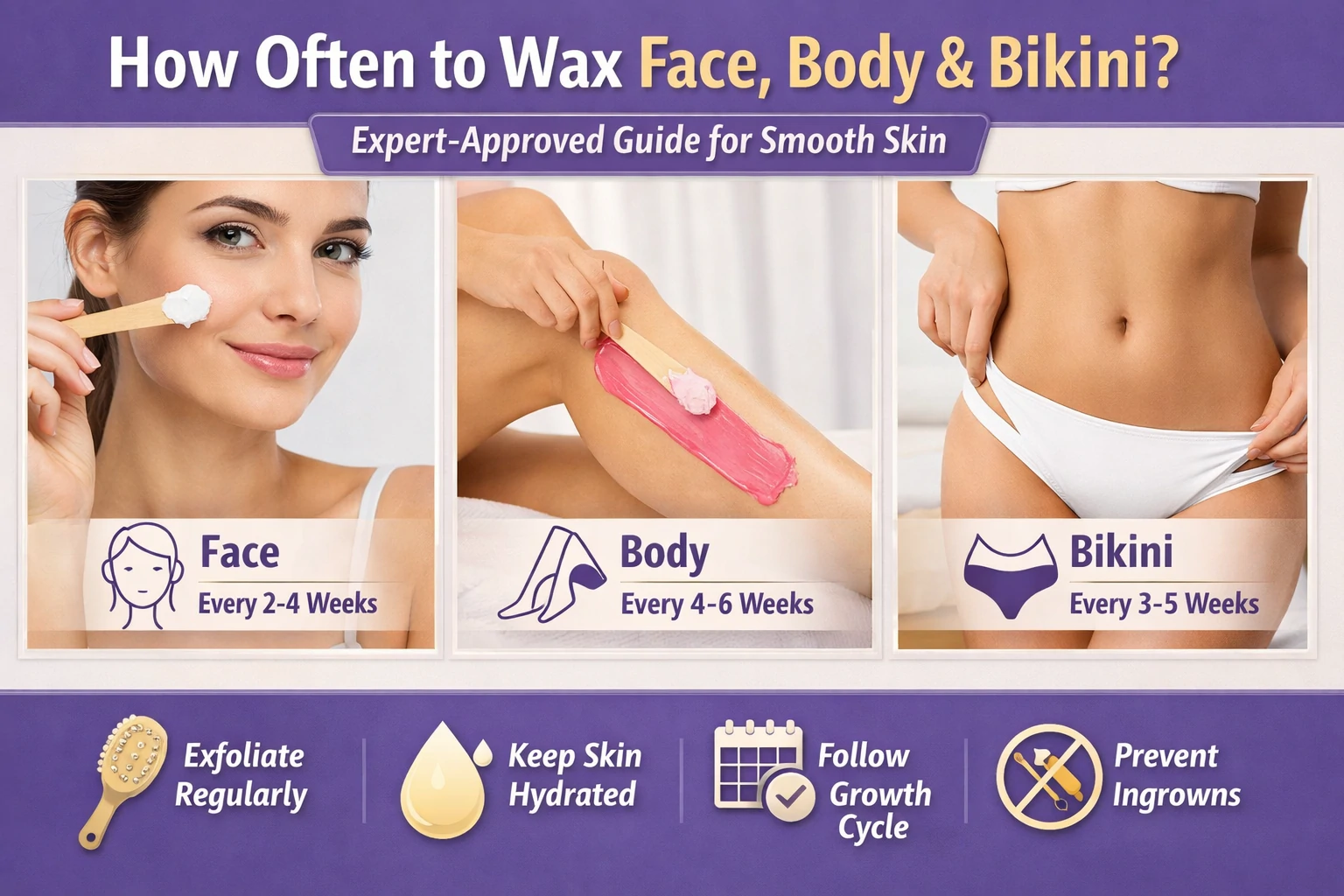
Scientifically, the ideal interval between waxes is every 4–6 weeks. This aligns with the natural hair growth cycle. Returning too soon means hair may not be long enough to remove effectively, while waiting too long allows roots to strengthen, making the experience feel like your first session again.
Maintaining a regular schedule offers several benefits:
- Weaker Roots: Follicles gradually weaken, slowing hair regrowth.
- Smoother Texture: Hair that grows back after waxing is usually softer than shaved hair.
- Increased Comfort: Your body adapts, and pain tolerance typically improves by the third session.
Sticking to a consistent waxing routine ensures smoother, longer-lasting results with less discomfort over time.
Recognizing Normal Reactions vs. Infection
After a bikini wax, it’s important to know the difference between a natural skin response and a sign of infection. Being aware helps you take proper action quickly if issues arise.
Gina Petak explains that small red bumps or warmth and tenderness in the first 24–48 hours are completely normal. These mild inflammatory reactions occur as hair follicles adjust to having hair removed. However, persistent or worsening symptoms may indicate an infection, such as folliculitis.
Here’s how to tell them apart:
- Normal Reaction: Mild redness, slight swelling, or tightness that fades within a day or two.
- Infection Signs: Pus-filled bumps, throbbing pain, prolonged heat, or oozing wounds.
If infection is suspected, consult a doctor promptly for proper care. Preventive steps include keeping the area clean with gentle products and avoiding friction to maintain healthy, smooth skin.
Alternative for Sensitive Skin: Sugaring
For those with highly reactive skin or frequent irritation from traditional waxing, sugaring is a gentle alternative worth considering. This ancient method has gained popularity among professionals for its natural, skin-friendly formula. Unlike synthetic wax, sugaring paste is made from simple ingredients: sugar, lemon, and water.
Gina Petak explains that the main difference lies in the hair removal direction. While waxing pulls hair against its growth, sugaring removes it in the direction of growth. This reduces the risk of ingrown hairs and minimizes follicle trauma.
Key benefits of sugaring for sensitive skin include:
- Low Temperature: The paste is applied at room or slightly warm temperature, minimizing the risk of burns.
- Hypoallergenic: Free of chemicals and resins, making it safe for allergy-prone skin.
- Easy Cleanup: Being water-based, residue washes off easily without harsh rubbing.
Sugaring delivers a smooth, clean finish with redness that fades faster, making it an ideal choice for delicate skin types.
You might also like
 Acne
Acne Anti-Aging
 Business
 Digital Marketing
 Economics
 Exfoliation
 Hair Removal
 Movies
 Personal Finance
 Websites