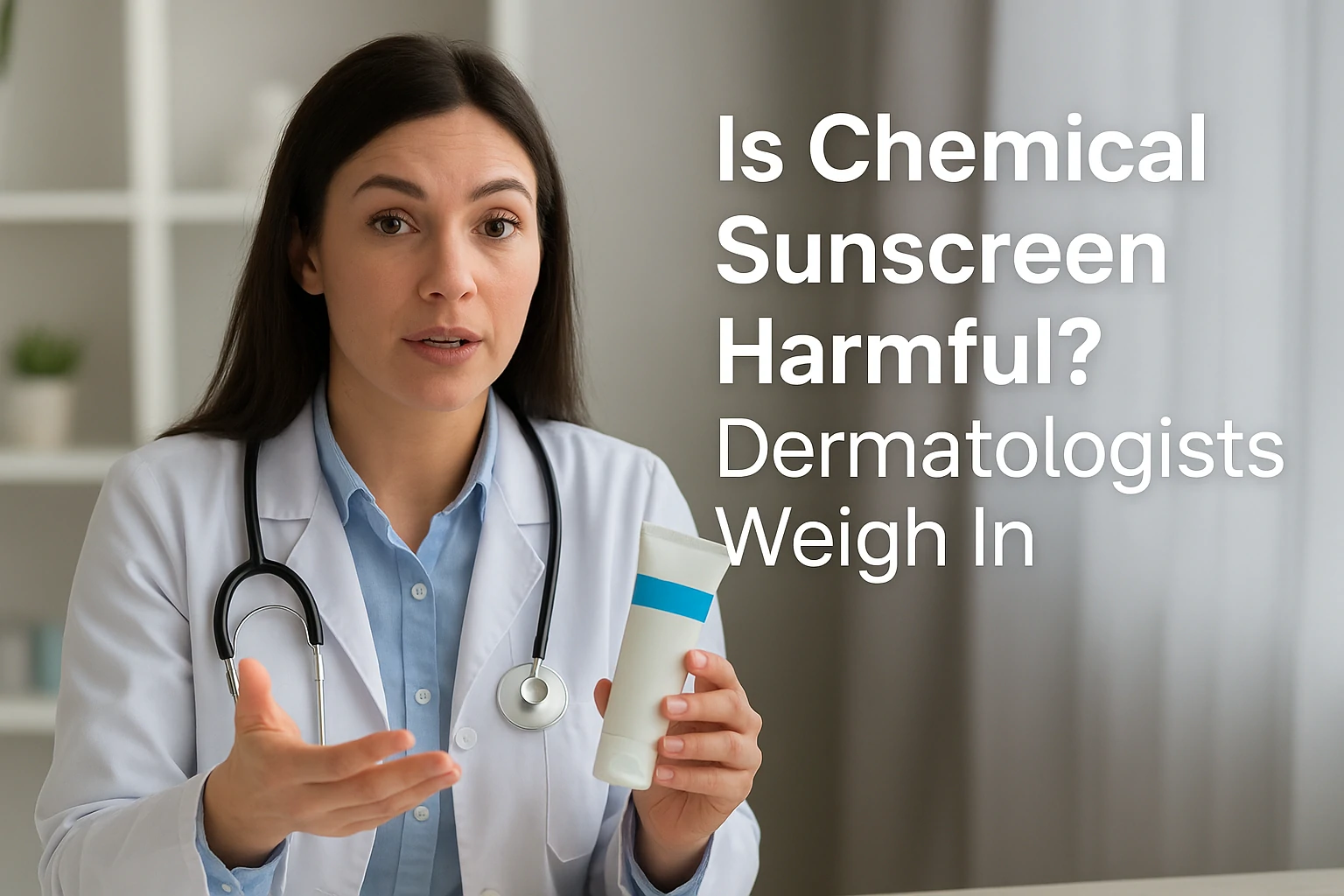
Is Chemical Sunscreen Harmful? Dermatologists Weigh In
Enjoying the sun feels great, but dermatologists stress the importance of daily sun protection. Excessive UV exposure accelerates skin aging, dark spots, and increases skin cancer risk.
Choosing the right sunscreen can feel overwhelming, especially with chemical sunscreens being so popular. Their lightweight, fast-absorbing formulas make them convenient, yet some studies raise concerns about certain chemicals affecting hormone balance and harming marine life.
Experts clarify these claims. Dermatologists note that the safety and effectiveness of chemical sunscreens depend on the ingredients and correct usage. Dr. Rachel Goldman advises reading labels carefully and considering mineral alternatives for sensitive skin.
By understanding the facts from a medical perspective, you can make safer choices without compromising sun protection. Knowing how chemical sunscreens work, their benefits, and potential risks empowers you to enjoy the sun confidently while keeping your skin healthy.
What Is Chemical Sunscreen?
Chemical sunscreen protects skin by absorbing UV rays. According to Dr. Lisa Bailey, “Each chemical sunscreen molecule absorbs ultraviolet energy, undergoes a reaction, and prevents skin damage. This is why reapplication is essential—UV exposure gradually breaks down the molecules.”
Unlike chemical options, mineral sunscreens—containing zinc oxide or titanium dioxide—sit on the skin’s surface, reflecting and scattering UV rays. This offers immediate protection without chemical reactions.
Dr. Bailey adds that chemical sunscreens need time to work: “Apply 15–30 minutes before sun exposure for maximum effectiveness.” Understanding this helps you choose products based on your skin type, sensitivity, and daily sun exposure.
By knowing how chemical and mineral sunscreens differ, you can make an informed choice that balances comfort, efficacy, and safety.
Is Chemical Sunscreen Safe?
Chemical sunscreens are generally safe, according to Dr. Paredo: “Most harmful ingredients have been banned.” Still, for sensitive skin, children, pregnant women, or those with melasma, mineral sunscreens are often safer.
Common chemical ingredients—avobenzone, octocrylene, homosalate, oxybenzone—absorb UV rays but may contain preservatives, fragrances, or dyes that can irritate. Dr. Murphy-Rose emphasizes that mineral sunscreens with zinc oxide or titanium dioxide offer reliable, immediate protection and reduce inflammation, pigmentation, and sensitivity risks.
Dr. Bailey highlights, “Chemical sunscreens may sometimes underperform, whereas mineral formulations protect instantly upon application.”
For optimal skin safety, choose products with zinc oxide or titanium dioxide, avoid PABA or trolamine salicylate, and apply consistently. This approach ensures effective sun defense that is safe for both your skin and the environment.
The Environmental Controversy Surrounding Chemical Sunscreen
Chemical sunscreens can harm marine ecosystems when washed off into oceans, particularly coral reefs. Many chemical sunscreens are not “reef-safe,” prompting bans in Australia, Hawaii, Galapagos, and the Virgin Islands.
Dr. Bailey notes harmful chemicals like oxybenzone, octinoxate, octocrylene, and nano forms of titanium dioxide and zinc oxide can damage marine life. Environmental and dermatology experts recommend safer alternatives.
Mineral sunscreens are more eco-friendly. Zinc oxide and titanium dioxide, especially non-nano forms, are FDA-recognized as safe and effective (GRASE) and have lower allergy risks. Beyond skin protection, mineral sunscreens also safeguard coral reefs, making them a sustainable choice.
Understanding environmental risks helps consumers choose sunscreens that protect both their skin and the planet, combining efficacy, safety, and eco-consciousness.
How to Choose Sunscreen: Chemical vs Mineral — Dermatologists’ Tips
Choosing the right sunscreen depends on skin type, daily activity, and health conditions. Dermatologists stress that no single product suits everyone; the choice between chemical and mineral sunscreen should match individual needs.
Chemical sunscreens, containing ingredients like avobenzone, octocrylene, and homosalate, are lightweight and absorb quickly, making them ideal for oily skin or under makeup. Dr. Lisa Bailey advises checking labels carefully, especially for sensitive skin, as preservatives or fragrances may cause irritation.
Mineral sunscreens with zinc oxide or titanium dioxide form a physical barrier on the skin, providing immediate protection. “Mineral sunscreens are effective for all skin types, including sensitive skin, children, and pregnant women,” says Dr. Murphy-Rose. Non-nano formulations are also environmentally friendly.
Dermatologists recommend a practical approach:
- Choose a sunscreen suited to your skin type and activity level.
- Check active ingredients and environmental safety.
- Apply generously and consistently for maximum protection.
This ensures skin remains protected, healthy, and eco-conscious, while enjoying the sun confidently.
Reef‑Safe Sunscreen & Environmental Impact: Choosing Eco-Friendly Sunscreens
Sunscreen affects not only your skin but also marine ecosystems. Chemicals like oxybenzone and octinoxate can wash into oceans, causing coral bleaching and disrupting marine life. Regions like Hawaii, Australia, the Galapagos, and the Virgin Islands have banned certain chemical sunscreens to protect coral reefs.
Dr. Bailey highlights that mineral sunscreens containing zinc oxide or titanium dioxide, particularly non-nano forms, are safer for the environment. These create a physical barrier on the skin without leaving harmful residues in water. Both ingredients are FDA-classified as GRASE (Generally Recognized as Safe and Effective).
To stay eco-conscious, dermatologists recommend:
- Use mineral, non-nano sunscreens labeled “reef-safe.”
- Avoid products containing oxybenzone, octinoxate, or synthetic chemicals.
- Apply the right amount correctly for maximum protection without excess.
By choosing wisely, you protect your skin and support sustainable marine ecosystems, combining safety, efficacy, and environmental responsibility.
Safe & Effective Sunscreen Use — How to Apply, Reapply, and Maximize Protection
Proper sunscreen use is as important as choosing the right product. Dr. Lisa Bailey notes that many people apply too little or not often enough, reducing protection.
Tips for effective sunscreen use:
- Amount: Apply roughly one teaspoon for the face and neck, and one shot glass for the body.
- Timing: Chemical sunscreens need 15–30 minutes to absorb; mineral works instantly.
- Reapply: Every 2 hours, or after swimming, sweating, or towel-drying.
- Broad-spectrum SPF: Use SPF 30 or higher for UVA and UVB protection.
- Skin considerations: Sensitive or allergy-prone skin benefits from fragrance-free, non-nano mineral sunscreen.
Dr. Murphy-Rose emphasizes, “Consistency is key. Regular, proper application provides maximum protection against sunburn, pigmentation, and long-term skin damage.”
Following these steps ensures skin stays safe, healthy, and well-protected under the sun.
Chemical Sunscreen Safety: Risks, Controversies, and What Science Says
Chemical sunscreen safety is widely discussed. Dr. Paredo states, “Chemical sunscreens are generally safe since most harmful ingredients have been banned.” Still, for sensitive skin, infants, children, or pregnant women, mineral sunscreens are often recommended.
Active ingredients like oxybenzone, octocrylene, and avobenzone absorb into the skin and take 10–20 minutes to start working. Dr. Bailey warns that chemical sunscreens may occasionally fail to provide optimal protection, leaving skin vulnerable to sunburn, pigmentation, or DNA damage.
Environmental concerns and potential irritation from preservatives, dyes, or fragrances add to the controversy. Dr. Murphy-Rose highlights that mineral sunscreens with zinc oxide or titanium dioxide act physically, provide instant protection, and carry a lower risk of allergic reactions.
In summary, chemical sunscreens can protect your skin, but dermatologists recommend choosing the right product, reading ingredient labels, and considering mineral options for reliable, eco-friendly sun protection.
You might also like
 Acne
Acne Anti-Aging
 Business
 Digital Marketing
 Economics
 Exfoliation
 Hair Removal
 Movies
 Personal Finance
 Websites