Dry Skin and Acne: How to Treat and Prevent Both

Dealing with acne can be tough—but if you also have dry skin, it’s a double challenge. While acne is usually linked to oily skin, it can absolutely show up on dry skin too. The cause? It’s not excess oil, but a weakened skin barrier, irritation, or reaction to the wrong products.
Many people feel lost when trying acne solutions that actually make their skin drier. The key lies in a tailored approach: treating breakouts without stripping away moisture.
If you’re struggling with dry skin and persistent acne, don’t worry. This guide will walk you through expert-backed steps to calm your breakouts while restoring hydration—so your skin can look and feel its best.
Why Does Dry Skin Still Get Acne?
It may sound surprising, but dry skin can still break out. Acne forms when dead skin cells and oil clog pores, leading to inflammation—whether or not your skin feels oily.
Dry skin can trigger acne when the skin barrier is damaged. Think of your skin like a brick wall: the cells are bricks, and ceramides and lipids are the glue. When that glue breaks down, skin loses moisture, becomes irritated, and lets in bacteria that cause acne.
Hormonal shifts, stress, climate, and even age can make things worse. According to dermatologists, acne on dry skin needs gentle, strategic care. The goal: use non-comedogenic products that also hydrate, so you avoid making dryness or breakouts worse.
How to Prevent and Treat Acne on Dry Skin
1. Stick to a Gentle, Consistent Routine
When it comes to treating acne on dry skin, consistency is everything. Switching products too often can throw your skin off balance and make acne worse.
Start with a simple, hydrating routine. If you’re introducing active ingredients like salicylic acid or retinoids, go slow—one product at a time.
Try this:
- Test one product for 3–5 days
- Watch for redness, flaking, or breakouts
- Stop using it if irritation appears
This slow method, known as “skin cycling,” allows your skin time to adjust. It’s a dermatologist-approved approach that helps protect the skin’s barrier and reduce flare-ups.
2. Choose a Hydrating Cleanser
Washing your face twice a day is ideal—but harsh cleansers can strip away natural oils your skin needs to stay hydrated. If your face feels tight or dry after washing, it’s time to switch.
Look for a creamy or milky cleanser with hydrating ingredients like ceramides or hyaluronic acid. These formulas gently clean without over-drying.
Pro tips:
- Wash your face at night only
- In the morning, rinse with lukewarm water
- Avoid foaming cleansers with sulfates
A balanced cleanse helps reduce acne while keeping dryness under control.
3. Use Retinol Carefully—And Always with Moisturizer
Retinol is a powerful acne fighter—it speeds up cell turnover, unclogs pores, and smooths skin texture. But for dry skin, it can be irritating if not used properly.[1Leyden J, Stein-Gold L, Weiss J. Why Topical Retinoids Are Mainstay of Therapy for Acne. Dermatol Ther (Heidelb). 2017;7(3):293-304. doi:10.1007/s13555-017-0185-2.]
Experts recommend starting with retinol 1–2 nights per week. To minimize side effects, try the “moisturizer sandwich” technique:
- Apply a moisturizer
- Follow with a thin layer of retinol
- Seal with another layer of moisturizer
This layering protects your skin and lets you enjoy retinol’s benefits without the dryness. Used right, retinol can be a game-changer for dry, acne-prone skin.
4. Alternate Your Active Ingredients Wisely
Mixing too many active ingredients—like retinol, AHA, and BHA—can damage dry, acne-prone skin. Dermatologists warn that overloading your routine may disrupt your skin barrier, cause irritation, and worsen breakouts.
The solution? Start with one active, such as retinol, and let your skin adjust for a few weeks. If there’s no irritation, slowly introduce others like glycolic acid or salicylic acid—no more than once a week at first.
This slow and steady method prevents over-exfoliation, which can lead to flaking, redness, and more acne. A patient, step-by-step approach ensures your skin gets the benefits of multiple actives without the side effects. Think of it as building a skincare strategy, not just stacking products.
5. Moisturize—And Don’t Be Afraid of Oils
Many people with acne fear moisturizers or facial oils, thinking they’ll clog pores. In reality, hydration is essential—especially for dry skin struggling with breakouts.
Keeping your skin barrier healthy means less inflammation, fewer flare-ups, and better resilience. Lightweight oils like squalane or jojoba are dermatologist-approved for dry, acne-prone skin. They’re non-comedogenic, anti-inflammatory, and can even help fade post-acne marks.
Look for labels like “non-comedogenic” or “for sensitive skin.” A well-chosen facial oil can soothe irritated areas while sealing in moisture—helping your skin heal without triggering more breakouts.
6. Strengthen Your Skin Barrier
A damaged skin barrier is one of the main triggers for acne in dry skin. When this protective layer is weakened, your skin loses moisture and becomes vulnerable to irritation and bacteria.
To restore and reinforce it, use products labeled “barrier-repairing” or “soothing.” Key ingredients to look for:
- Ceramides: Help lock in hydration and rebuild skin structure
- Squalane: Moisturizes without clogging pores
- Panthenol & Allantoin: Calm inflammation and support skin healing
Apply a barrier-focused moisturizer morning and night. Combining hydration and barrier care creates a strong foundation that helps prevent future breakouts.
7. Don’t Over-Exfoliate—Less Is More
Exfoliation removes dead skin cells, but doing it too often can backfire—especially on dry, acne-prone skin. Over-exfoliating weakens your barrier, causing dryness, redness, and irritation.
Avoid physical scrubs, loofahs, or cleansing brushes. These tools can cause micro-tears and worsen inflammation. Likewise, skip high-alcohol toners, which strip the skin and increase sensitivity to actives like retinoids.
Instead, opt for gentle chemical exfoliants like lactic acid or PHA, and use them no more than once or twice a week. Gentle, mindful care protects your skin—and keeps breakouts under control long-term.
8. Use Spot Treatments for Active Breakouts
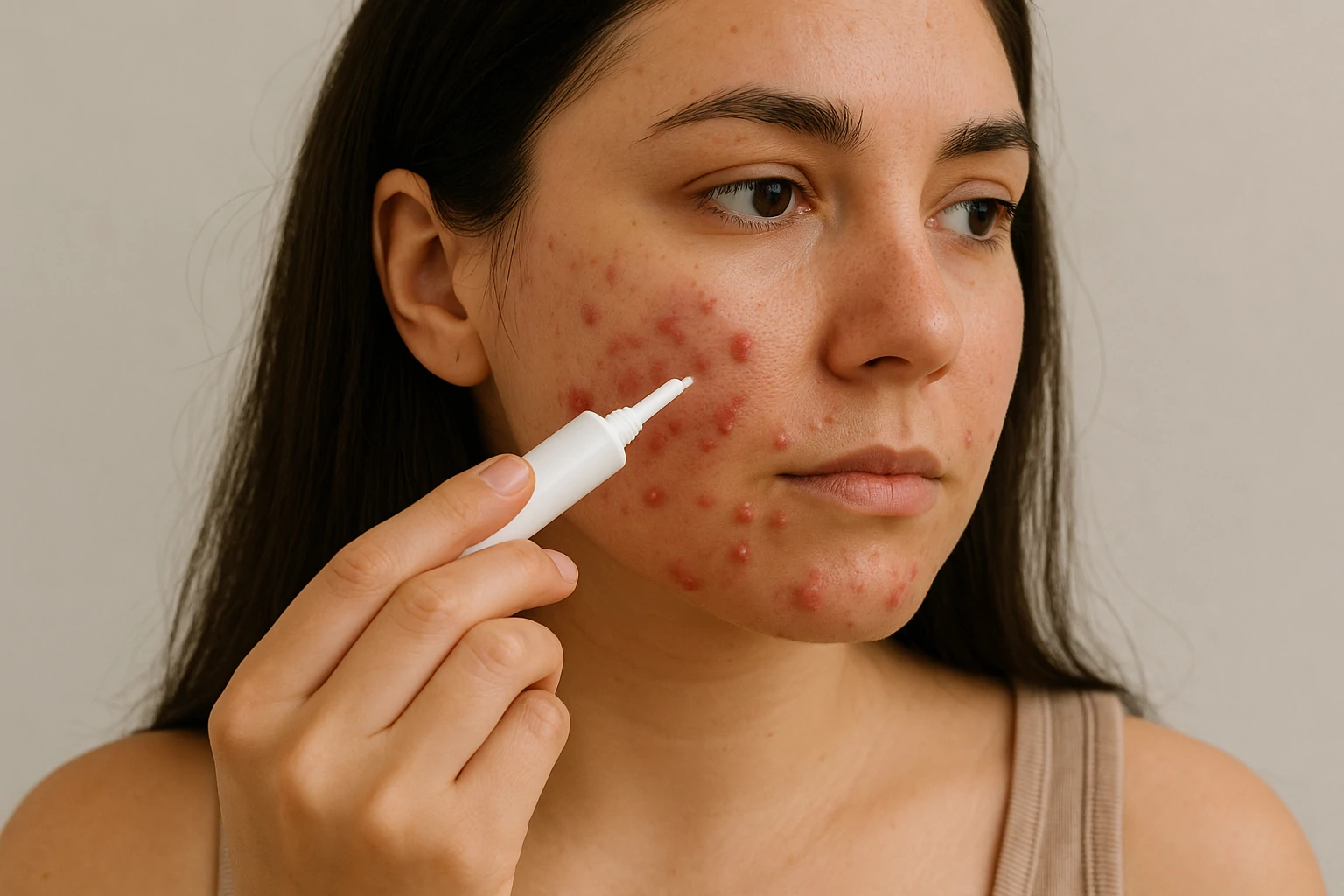
For dry skin, treating acne with a targeted spot treatment is ideal. This focused approach delivers acne-fighting ingredients directly to problem areas without drying out the rest of your face.
Look for spot treatments containing salicylic acid or benzoyl peroxide—but stick to low concentrations (1%–2.5%) to avoid irritation. Higher strengths don’t improve results and may increase dryness.
Use spot treatments only when needed. Always follow with a gentle moisturizer to maintain hydration. This way, you address blemishes efficiently without sacrificing skin comfort.
9. Consider Oral Medications (With a Dermatologist’s Guidance)
If your acne persists despite a good skincare routine, oral medication may offer a more effective, balanced solution—especially for hormonal or cystic acne.
Two commonly prescribed options:
- Spironolactone: Regulates hormones, especially effective for adult women with jawline breakouts
- Oral antibiotics: Like doxycycline or minocycline, which reduce inflammation and bacteria from the inside out
These treatments are usually short-term and monitored by a dermatologist. Unlike some harsh topical products, oral medications often offer relief without drying out already-dehydrated skin.
Skincare Ingredients to Avoid for Dry, Acne-Prone Skin
Treating dry skin with acne requires extra care—especially when choosing skincare products. Some ingredients, while common, can worsen dryness or trigger irritation.
Dermatologists recommend avoiding:
- Denatured alcohol: Common in toners and astringents, it strips away natural oils too aggressively.
- Synthetic fragrances: Often irritating for sensitive skin and a known allergen.
- Certain essential oils (like peppermint or citrus): Natural but potentially harsh and drying.
- Alcohol-based witch hazel: Can tighten and dehydrate already dry skin.
According to skin experts, these ingredients may weaken the skin barrier, making it more prone to inflammation and acne. The safer choice? Look for products labeled non-comedogenic, alcohol-free, and formulated for sensitive or acne-prone skin. Protecting your barrier is step one in calming and balancing your complexion.
Is It Safe to Get a Facial with Dry, Acne-Prone Skin?
Wondering if facials are safe when your skin is both dry and acne-prone? The short answer is yes—if done gently and professionally.
Avoid aggressive treatments like harsh extractions or deep exfoliation. Instead, choose facial options tailored to hydrate and soothe:
- Hydrating facials: Focus on moisture and restoring the skin barrier
- Gentle acne facials: Use calming ingredients like niacinamide or tea tree in low concentrations
- LED therapy or oxygen facials: Reduce redness and calm inflammation without irritation
Dermatologists advise consulting a licensed esthetician or dermatologist first. With the right method, facials can unclog pores, reduce redness, and support your at-home skincare—not replace it. Think of it as a bonus, not a cure-all.
Sample Morning and Night Skincare Routine for Dry, Acne-Prone Skin
Consistency is key when building a skincare routine for dry, breakout-prone skin. Harsh routines often worsen both problems—so keeping it simple and gentle is your best strategy.
Morning Routine:
- Gentle, SLS-free cleanser
- Hydrating toner or essence (with panthenol or hyaluronic acid)
- Lightweight serum (like niacinamide or ceramides)
- Cream or gel-based non-comedogenic moisturizer
- Alcohol-free sunscreen (SPF 30+), fragrance-free
Night Routine:
- Mild cleanser to remove impurities and sunscreen
- Spot treatment (only on active breakouts)
- Repairing moisturizer with squalane or allantoin
- Optional: Retinol 1–2x per week using the moisturizer sandwich technique
According to skin experts, a simple routine done consistently is more effective—and less irritating—than piling on too many products at once.
Final Thoughts
Dry, acne-prone skin needs a balanced approach: hydrate without clogging pores, and treat breakouts without stripping the skin. The foundation? A healthy skin barrier.
Stick to gentle, alcohol-free, and non-comedogenic products. Introduce actives like retinol or salicylic acid slowly and sparingly—pairing them with techniques like the moisturizer sandwich for added protection.
Supportive treatments like calming facials and expert consultations can enhance results, but your daily routine is the real MVP. Cleanse gently, moisturize consistently, and always wear sunscreen.
With a little patience and a lot of care, you can manage breakouts and dryness—without sacrificing comfort or skin health.
ARTICLE SOURCES
You might also like

 Acne
Acne Anti-Aging
 Business
 Digital Marketing
 Economics
 Exfoliation
 Hair Removal
 Movies
 Personal Finance
 Websites