Effective Brainstorming Techniques Every Entrepreneur Should Know
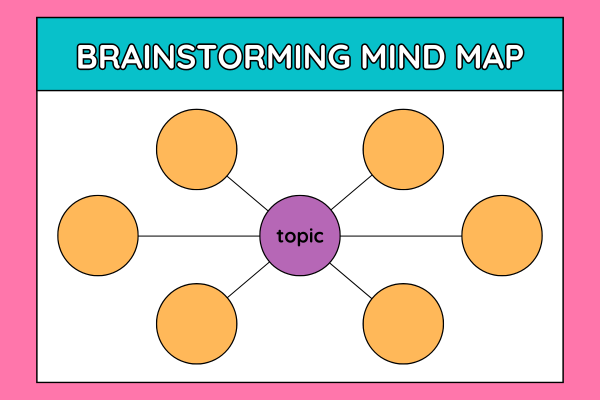
Coming up with a business idea isn’t easy, especially when looking for a promising home-based business that can be run independently or in a team. It’s also challenging to find creative ideas that can boost an existing business’s income. However, there’s a solution—brainstorming. This method is highly effective and widely used to generate creative ideas.
The goal of brainstorming is to help identify business ideas with real potential that align with market trends. It also helps solve problems in existing businesses, particularly when profits become stagnant or fail to grow—a common challenge for many entrepreneurs.
That’s why brainstorming is an effective way to develop innovative ideas for starting or expanding a business. It can be done individually or in groups, but group brainstorming is recommended for better results and broader perspectives.
Key Benefits of Brainstorming for Entrepreneurs. Brainstorming offers at least three major benefits:
- Helps discover unique and extraordinary ideas that might not have been considered before.
- Identifies business challenges by breaking down problems, analyzing internal and external factors, and finding innovative solutions.
- Determines areas for improvement and growth within a business.
Several brainstorming techniques can help generate creative ideas. Some of the most popular methods used by entrepreneurs worldwide include Mind Mapping, the SCAMPER Method, and Brainwriting. We will explain these techniques in more detail.
9 Powerful Brainstorming Techniques for Entrepreneurs
These nine techniques can help you generate creative ideas and develop business strategies. Understand each method and choose the one that best fits your business needs. Additionally, we’ve included key factors to enhance the brainstorming process, ensuring you come up with outstanding ideas.
Ask the Right Questions: A Powerful Brainstorming Technique for Entrepreneurs
There’s an old saying: “If you don’t ask, you’ll lose your way.” In business, asking questions is one of the most effective brainstorming techniques for generating new ideas. The right questions can reveal opportunities, provide insights into market needs, and lead to innovative solutions.1
The Common Challenge for Entrepreneurs
Many entrepreneurs struggle to find ideas that align with both their personal goals and market conditions. As a result, their businesses fail to grow or become outdated. However, by asking the right questions, they can overcome these challenges.
Practical Examples
Finding a Business That Matches Personal Goals
- If someone wants to work from home while spending time with family, they can ask: “What kind of business allows me to work flexibly without sacrificing family time?”
- Possible answers: Freelancing, running an online store, or starting a small home-based catering business.
Aligning Business with Lifestyle
- If the dream is to travel the world, the question might be: “What home-based business can I run while traveling?”
- Possible answers: Becoming a digital nomad, launching a dropshipping business, or creating travel-related content.
Overcoming Business Challenges
- If attracting customers is a struggle, an entrepreneur can ask: “What do my customers want the most?” or “Where do they look for solutions to the problem I solve?”
- Possible answers: Conducting market research, improving online marketing, or offering special promotions to attract new customers.
As seen in the examples above, simply asking the right questions can help solve problems and generate creative ideas that align with market needs and personal goals. Try using this brainstorming technique in your business—whether to tackle challenges or drive growth!
Mind Mapping: A Powerful Tool for Organizing Ideas

Great thinkers throughout history have used mind maps in the form of drawings and diagrams to develop their ideas. One famous example is Leonardo da Vinci. The use of mind mapping continued into the modern era, with Tony Buzan popularizing it in learning and creativity. This proves how valuable and effective mind maps can be.
Mind mapping helps connect different concepts and organize scattered thoughts into structured branches. It is especially useful for those who process information visually. You can create a mind map using digital tools or simply with a pencil and paper.
How to Create a Mind Map
- Write a main word, question, or image in the center of the page.
- Draw lines extending outward and add related words, questions, or concepts.
- Create as many branches as needed.
- From the main branches, add subtopics for more specific ideas.
- Keep drawing lines and adding keywords as long as new ideas come to mind.
Example: Marketing Strategy Mind Map
If you’re brainstorming marketing strategies, start with “Marketing Strategy” in the center.
From there, create main branches such as:
- Digital Marketing
- Content Marketing
- Sales Strategy
From the “Digital Marketing” branch, you can add subcategories like “SEO & Blogging” and “Paid Advertising” (e.g., Google Ads, Facebook Ads). From the “Content Marketing” branch, you can include “Video Marketing” (e.g., YouTube, TikTok) and “Email Marketing.”
From the “Sales Strategy” branch, you can add “Promotions & Discounts” and “Referral Programs” to increase customers through recommendations.
By using a mind map, you can break down complex ideas into clear, organized steps—making it easier to plan and execute strategies effectively.
Word Mapping: A Simple Brainstorming Technique
Word mapping is similar to mind mapping. It’s a visual brainstorming technique used to generate and develop ideas, such as naming a business or creating a slogan. The process is simple—start with a main keyword related to your business or goal, then connect it with other relevant words.
Example: Word Map for a Coffee Business
- Main keyword: Coffee
- Add related words:
- Types of coffee: espresso, latte, americano, robusta, arabica
- Ambiance: warm, relaxed, cozy, modern
- Flavors: bitter, sweet, creamy, strong
- Lifestyle: hangout, work, friends, inspiration
- Natural elements: beans, nature, organic, fresh
By creating a word map based on coffee and related words, you can develop business name ideas like:
- Relaxed Coffee Time
- Inspiration Beans
- Creamy Brew
- Strong & Smooth
Or slogans such as:
- A Cup of Inspiration in Every Sip
- Enjoy the Aroma, Feel the Comfort
Using word mapping for brainstorming can help generate unique and relevant business ideas. More importantly, it ensures that the ideas stay aligned with your original business goals.
SWOT Analysis: A Strategic Brainstorming Method
SWOT analysis2 is a strategic evaluation method used in various projects, including business. It focuses on four key aspects: Strengths, Weaknesses, Opportunities, and Threats. This method helps create a more effective and solution-oriented business plan, making it a popular tool for brainstorming.
Understanding the SWOT Components
- Strengths – Internal factors that provide an advantage, such as expertise, strong resources, or a good reputation.
- Weaknesses – Internal challenges or limitations, such as limited capital, lack of experience, or outdated technology.
- Opportunities – External factors that can be leveraged for growth, such as market trends, favorable regulations, or potential partnerships.
- Threats – External risks or obstacles, such as strong competition, economic downturns, or unfavorable policy changes.
Benefits of SWOT Analysis
- Helps gain a clear understanding of a business or project, including strengths, weaknesses, opportunities, and threats.
- Supports strategic decision-making by setting priorities, optimizing opportunities, reducing risks, and planning for the future.
- Identifies ways to maximize strengths and opportunities while addressing weaknesses and threats.
- Can be applied in various fields, including business, education, career development, and personal growth.
The Four Key Factors in SWOT
- Strengths – Positive aspects or advantages.
- Weaknesses – Limitations or challenges.
- Opportunities – External chances for growth.
- Threats – External risks or obstacles.
How to Create a SWOT Analysis for Brainstorming
Draw a box divided into four sections with vertical and horizontal lines.
Label each section with a SWOT category.
Fill in each section with words, ideas, or concepts relevant to your business or project.
Example: SWOT Analysis for a Small Coffee Shop
- Strengths: Strategic location, high-quality coffee.
- Weaknesses: Limited budget, low brand awareness.
- Opportunities: Growing coffee consumption trends, social media as a free marketing tool.
- Threats: Competition from large coffee chains, fluctuating ingredient prices.
Using SWOT analysis in brainstorming provides a clearer perspective on a business or project, making it easier to generate new ideas for growth and development.
Aligning Business Ideas with Customer Needs
Focusing only on what the business owner thinks is important is a common mistake. Customer needs should also be a priority. When business ideas or products align with customer expectations and desires, they become more relevant and appealing.
Both the business owner’s perspective and customer interests must be considered to ensure that the business idea resonates well. This approach makes the business not only innovative but also truly connected to its target audience. When this connection is established, products and services become more relevant to customer needs and problems.
Understanding customer needs is the best way to ensure that a business idea connects with the market. A business that prioritizes only personal preferences is less likely to attract interest or attention. The main issue is irrelevance, and the solution is to create a strong connection between the business and its customers.
To achieve this, you must understand customer preferences, concerns, and expectations. This allows you to refine your product ideas to better match their needs. One effective way to do this is through surveys or market research.
The benefit of this approach is that it builds customer trust and loyalty, increasing the chances that they will not only return but also recommend your product to others. The reason is simple—your product or service truly meets their needs.
Using Questions to Unlock Business Ideas
One of the biggest challenges for creative entrepreneurs and business owners is figuring out the right questions to ask. In brainstorming, questions help guide thinking, spark creativity, overcome mental blocks, clarify problems, and evaluate ideas.
But don’t worry—there’s a simple solution! You can use the six basic question words: Who, What, Why, When, Where, and How. These fundamental questions make idea exploration easier, more specific, and more relevant.
How to Use This Method
Start by writing down a list of questions on paper or a computer. If you prefer a visual approach, try the Starbursting method, which works like a mind map. In this method, you place a main idea in the center and surround it with different questions to explore it further.
Steps for Starbursting
- Write your main idea in the center of a page.
- Draw six lines outward from the main idea and label them with the six basic questions: Who, What, Why, When, Where, and How.
- Expand each question by adding more specific questions related to your business idea.
Example: Brainstorming for a Coffee Business
- How – “How can I attract my first customers?”
- Who – “Who is my target market for this coffee shop?”
- What – “What makes my coffee stand out from competitors?”
- Why – “Why should people choose my coffee?”
- When – “When is the best time to launch my business?”
- Where – “Where is the best location for a coffee shop?”
Don’t stop at just one question per category. Write as many questions as possible to expand your ideas and discover new opportunities!
Overcoming Mental Blocks in Brainstorming
To keep moving forward despite challenges, you need to adopt the mindset that obstacles should never stop you from thinking creatively and finding solutions.
Common brainstorming roadblocks include limited resources, time constraints, or lack of experience. These challenges often lead people to dismiss valuable ideas before fully exploring them, preventing true innovation.
Some questions can unintentionally restrict thinking and hinder problem-solving, such as:
- “How can I start a business with the smallest budget possible?”
(This limits thinking to financial constraints rather than exploring creative opportunities) - “What business idea has no risk?”
(No business is completely risk-free—this mindset can prevent bold, innovative ideas) - “Can I really compete with big companies?”
(This question fosters self-doubt instead of focusing on strengths) - “How can I succeed if I have no experience?”
(Rather than seeking solutions, this reinforces the obstacle) - “Is this idea too difficult to execute?”
(Focuses on difficulty rather than problem-solving) - “Is this really a good idea?”
(Creates self-doubt before the idea is fully tested or refined)
To overcome mental blocks, ask open-ended and positive questions that encourage limitless imagination. Here are some examples:
- “What is the first step I can take to bring this idea to life?”
(Shifts focus from obstacles to actionable steps) - “How can I make this business appealing to customers?”
(Encourages exploration of ways to attract an audience) - “What are some creative ways to secure funding?”
(Shifts focus from financial limits to alternative solutions) - “If I had no fear of failure, what would I try?”
(Eliminates mental barriers that hinder innovation) - “How can I make my product or service stand out?”
(Encourages differentiation rather than worrying about competition) - “What hidden opportunities can I leverage in this situation?”
(Redirects focus to potential advantages rather than challenges) - “If I had unlimited resources, what’s the best idea I could create?”
(Encourages unrestricted thinking before finding realistic ways to execute the idea)
Avoid limiting assumptions and negative thought patterns that hinder imagination. Instead, ask open and constructive questions that lead to new possibilities and practical solutions. A positive mindset makes even the most challenging ideas feel achievable.
Essential Tools for Effective Brainstorming
Brainstorming can be done using various tools, one of the simplest being a piece of paper and a pencil. However, since brainstorming is a creative process, relying solely on these tools may feel limiting.
Fortunately, there are other tools that can help generate and organize ideas more effectively. Here are some of them:
- Idea Notebook – A great way to store and organize ideas in one place for easy reference.
- Colored Pens/Pencils – Makes brainstorming more engaging and helps categorize ideas using different colors.
- Mind Mapping Apps – Allows users to create digital mind maps for structuring and expanding ideas.
- Whiteboard or Large Paper – Ideal for both individual and group brainstorming, providing plenty of space to write down ideas.
- Sticky Notes – A flexible tool for writing, organizing, and grouping ideas easily.
- Voice Recorder – Useful for those who prefer speaking their ideas out loud; also great for capturing discussions and mentoring sessions.
Using these tools can make brainstorming more effective, engaging, and enjoyable, helping you develop business ideas or other projects with ease.
The Purpose of Brainstorming and How to Do It Effectively
The goal of brainstorming is to generate as many ideas as possible before selecting the best one. However, there is a challenge—our brains naturally tend to filter and judge ideas before writing them down. As a result, creative ideas that initially seem weak might be overlooked, even though they have great potential.
To prevent your brain from evaluating ideas too soon, follow these key brainstorming rules:
A. Don’t Judge or Dismiss Ideas
- Write down every idea, even if it seems unrealistic.
- Unusual ideas can lead to surprisingly practical solutions.
Example: If you think about promoting your business on a national TV show, write it down! Later, you can refine it—perhaps by starting with a local event first.
B. Avoid Immediate Evaluation
- Focus on collecting as many ideas as possible.
- Don’t worry about whether an idea is good or bad.
- Evaluation should come later, after all ideas have been gathered.
These rules help keep your mind open and creative. Let ideas flow freely without restrictions. The more ideas you generate, the higher the chance of finding a great solution!
NOTE
(This article is the result of a collaboration between HUMANS and AI. We use AI to check and correct any writing errors and to clarify difficult-to-understand sentences)




 Acne
Acne Anti-Aging
 Business
 Digital Marketing
 Economics
 Exfoliation
 Hair Removal
 Movies
 Personal Finance
 Websites