European vs Korean Sunscreens: Which Really Works Better?
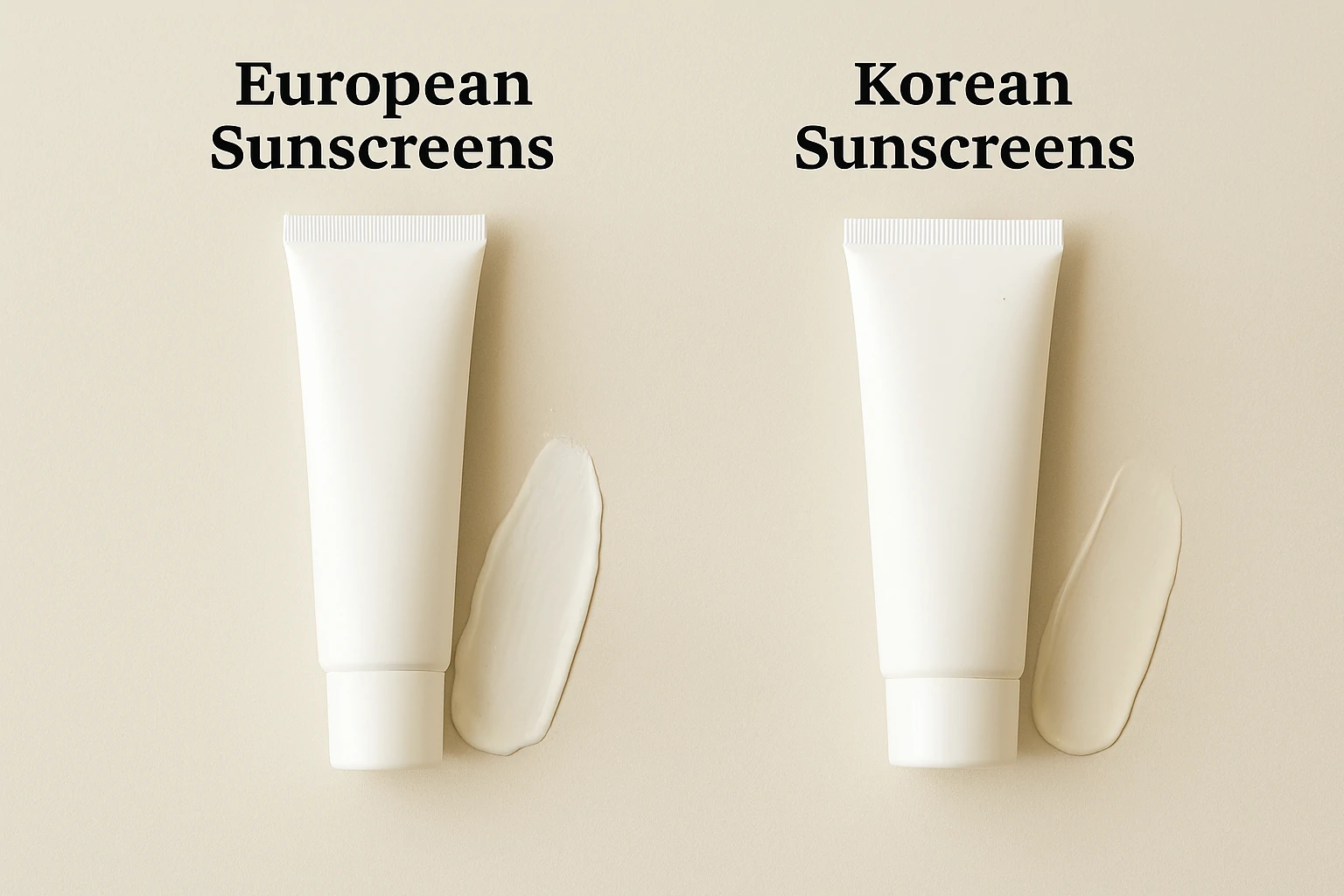
Ever wondered why sunscreen textures from Paris or Seoul look effortlessly silky while many U.S. formulas still feel thick or chalky? This contrast has sparked a global debate about whether European and Korean sunscreens are truly more advanced—or simply benefit from more flexible regulations.
Consumers worldwide notice the same pattern: E.U. and K-beauty sunscreens often offer lightweight, elegant textures with strong UVA and UVB protection. Meanwhile, the U.S. market progresses more slowly due to strict FDA approval requirements for UV filters.
Dermatologists frequently highlight this gap. Dr. Hadley King, MD, FAAD, notes that varying regulatory systems heavily influence innovation, especially when new UV filters require decades of data in the U.S. Dr. Adam Friedman, MD, FAAD, adds that formulators outside the U.S. have greater freedom to develop modern, aesthetically pleasing textures.
This introduction sets the stage for understanding how science, regulations, and consumer demands shape sunscreen performance across continents—helping you decide which formulas actually work best for everyday protection.
What’s Inside U.S. Sunscreens? Understanding the Limitations
In the United States, sunscreens are classified as over-the-counter drugs, meaning every active UV filter must undergo rigorous FDA evaluation. While this ensures safety, it also slows innovation. Today, only 16 UV filters are approved—far fewer than the 30+ filters allowed in Europe.[1Breakell T, Kowalski I, Foerster Y, et al. Ultraviolet filters: dissecting current facts and myths. Journal of Clinical Medicine. 2024;13(10):2986.]
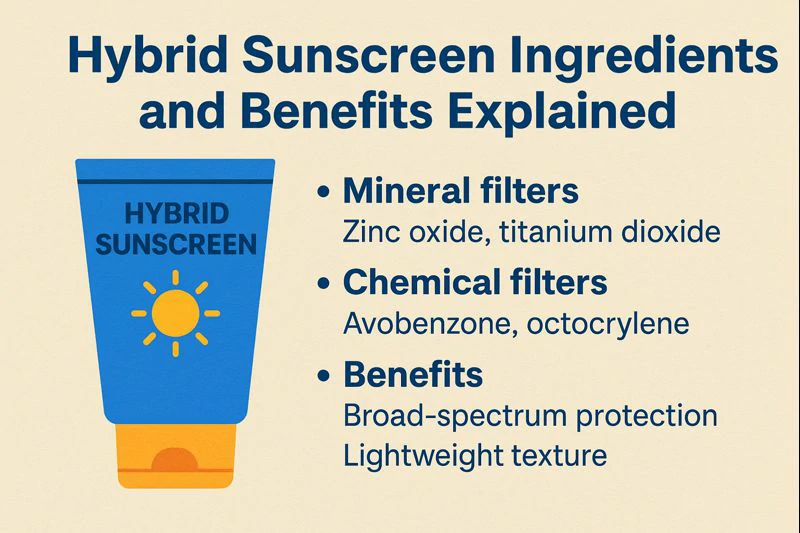
U.S. sunscreens rely on two main categories:
- Mineral filters: zinc oxide and titanium dioxide. They provide broad-spectrum protection but can leave a white cast, especially on deeper skin tones.
- Chemical filters: such as oxybenzone, avobenzone, and octinoxate. These absorb UV rays effectively, yet some formulas can feel greasy or heavy.
According to Dr. Hadley King, newer mineral technologies are improving, offering smoother textures than older, pastier versions. Still, many U.S. sunscreens lag behind European and Korean formulas in comfort, spreadability, and UVA protection.
Understanding these limitations helps explain why many skincare users seek international options for better everyday wearability.
The Global Sunscreen Glow-Up: What the U.S. Is Missing
In Europe and South Korea, sunscreens are regulated as cosmetics—not drugs—allowing faster approval of new UV filters. This flexibility empowers formulators to create lighter, more elegant sunscreens with stronger and more stable UVA protection.
International favorites such as Tinosorb S, Tinosorb M, and Mexoryl XL stand out in dermatology literature for their exceptional stability and broad-spectrum coverage without leaving a white cast. However, most of these filters are still unavailable in U.S. products.
Even formulas that do use advanced filters—like certain La Roche-Posay Anthelios products containing Mexoryl SX—remain limited because the ingredient does not have full FDA approval.
Dermatologist Dr. Adam Friedman explains that global sunscreens often outperform U.S. options not only because of ingredient advantages but also due to more modern formulation techniques. This results in lightweight, serum-like textures that people actually enjoy wearing every day—making consistent sun protection far easier.
Why Is the FDA Holding Out on New UV Filters?
The FDA has not approved a new UV filter since the late 1990s[2Breakell T, Kowalski I, Foerster Y, et al. Ultraviolet filters: dissecting current facts and myths. Journal of Clinical Medicine. 2024;13(10):2986.]—an enormous gap compared with Europe and Asia, where next-generation filters continue to launch regularly. The slowdown stems from the U.S. requirement for extensive human safety data and long-term studies, making the process costly and discouraging for manufacturers.
Although the Sunscreen Innovation Act (2014) aimed to streamline approvals, no additional filters reached the U.S. market by 2025. Dr. Adam Friedman notes that the financial and regulatory burden is often too high for companies to pursue.
Meanwhile, long-used filters like oxybenzone and octinoxate now face environmental scrutiny due to concerns about coral reef impact. States such as Hawaii have banned them. According to Dr. Hadley King, oxybenzone has also been linked to allergies and potential hormonal disruption, though more research is needed.
This regulatory bottleneck leaves U.S. consumers with fewer choices and older technologies—fueling demand for European and Korean sunscreens widely praised for their advanced protection and refined textures.
Are International Sunscreens Really Better?
Modern dermatology emphasizes one core principle: the best sunscreen is one you actually use daily. Comfort plays a key role—textures that feel sticky, greasy, or leave a white cast often reduce consistent application, limiting protection. Dr. Adam Friedman notes that users are less likely to apply sunscreens they find unpleasant, even if SPF is high.
On the other hand, Dr. Hadley King recommends non-nano mineral sunscreens available in the U.S. for their well-studied safety profiles. Yet she acknowledges that many patients prefer European and Korean options for their lightweight, easily absorbed textures.
This creates a unique dilemma: U.S. regulations prioritize long-term safety but restrict access to innovative UV filters. Meanwhile, consumers abroad enjoy advanced formulas that are both protective and pleasant to wear. Understanding this balance helps skincare beginners make informed choices about international versus local sunscreens.
Will the U.S. Ever Catch Up?
Although U.S. sunscreen innovation lags behind Europe and Asia, experts see opportunities for change. Health organizations, scientific communities, and skincare brands are pushing for more efficient UV filter approvals. Without significant regulatory reform, progress may remain slow.
In parallel, research explores alternative protective technologies, such as nano-encapsulated CBD (nCBD), which early studies suggest may reduce UVA-induced DNA damage. These innovations highlight the evolving science of sun protection, even as FDA approvals lag.[3McCormick E, Han H, Abdel Azim S, et al. Topical nanoencapsulated cannabidiol cream as an innovative strategy combating UV-A-induced nuclear and mitochondrial DNA injury: A pilot randomized clinical study. J Am Acad Dermatol. 2024;91(5):855-862.]
For consumers, this creates a gap between expectations and reality. Many desire lightweight, high-tech sunscreens like those common in Europe and Korea. Until U.S. regulations evolve, some users rely on imported products for daily protection.
This global context emphasizes that while the sunscreen industry is rapidly advancing worldwide, the U.S. still has substantial work to catch up.
How to Read SPF, PA, and UVA/UVB Ratings Correctly
Understanding sunscreen labels is essential for choosing truly effective products. SPF (Sun Protection Factor) measures UVB protection, the rays primarily responsible for sunburn. Dermatologists recommend SPF 30 for daily use, or SPF 50 for intense sun exposure.
PA ratings, common in Korea and Japan, indicate UVA protection. More “+” signs signify stronger defense against premature aging and DNA damage, with PA++++ being the highest. In Europe, the UVA Circle guarantees a minimal standard of UVA protection.
Knowing these ratings ensures balanced sun protection. Combining high SPF with PA++++ or the UVA Circle delivers comprehensive coverage, often found in European and Korean sunscreens that use stable, modern UV filters.
UVA vs UVB: Why the Difference Matters for Your Skin
Both UVA and UVB rays impact skin, but in different ways. UVA penetrates deeply, contributing to aging signs like wrinkles, pigmentation, and collagen damage. It remains consistent year-round, making daily protection crucial—even indoors near windows.
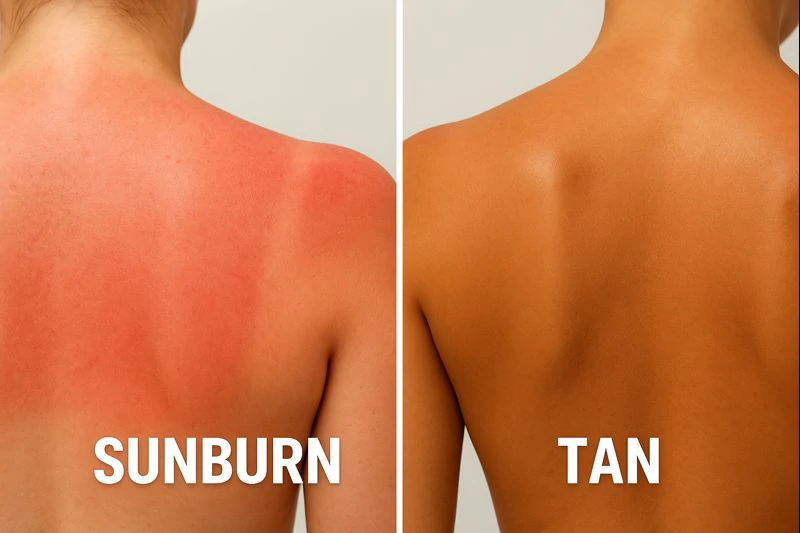
UVB affects the skin’s surface, causing sunburn and increasing skin cancer risk. SPF specifically measures UVB protection.
Dermatologists recommend sunscreens that balance UVA and UVB defense. Products labeled PA++++ or with the UVA Circle, commonly found in European and Korean sunscreens, provide this comprehensive protection. Understanding these differences helps you choose a sunscreen that protects your skin effectively from both sunburn and long-term damage.
Best International Sunscreens Worth Trying (Dermatologist Picks)
For high-performing, comfortable sunscreens praised worldwide, consider these dermatologist-approved options:
- Beauty of Joseon Relief Sun: Rice + Probiotics SPF 50+ PA++++ – Korean favorite with lightweight texture, fast absorption, and no white cast. Contains rice extract and probiotics to hydrate while protecting from UVA/UVB.
- ISDIN Eryfotona Actinica 100% Mineral SPF 50+ – European mineral option ideal for sensitive skin, offering maximum broad-spectrum protection without chemical filters.
- Anessa Perfect UV Sunscreen Skincare Milk SPF 50+ – Japan/Korea hybrid known for its lightweight feel, rapid absorption, and suitability for combination or oily skin, perfect for daily tropical wear.
Dermatologists stress that consistent use is key. These products combine broad-spectrum protection with pleasant textures, making them favorites among global skincare enthusiasts.
Final Thoughts
Global comparisons reveal that European and Korean sunscreens often excel in texture, comfort, and advanced UVA/UVB protection due to more flexible regulations and innovative UV filters. U.S. options remain limited by strict FDA approval processes, which slow the introduction of next-generation ingredients.
Dermatologists emphasize that the most effective sunscreen is one you apply consistently. Comfort, lightweight feel, and broad-spectrum coverage matter as much as SPF ratings. Understanding SPF, PA, and UVA/UVB labels helps you select products that truly protect against sunburn, premature aging, and DNA damage.
While the U.S. may eventually catch up, international sunscreens currently offer superior everyday wearability and high-performance protection. Incorporating these insights allows skincare beginners to make informed choices, balancing safety, efficacy, and enjoyable daily use.
ARTICLE SOURCES
You might also like
 Acne
Acne Anti-Aging
 Business
 Digital Marketing
 Economics
 Exfoliation
 Hair Removal
 Movies
 Personal Finance
 Websites