Filler for Acne Scars: What You Need to Know
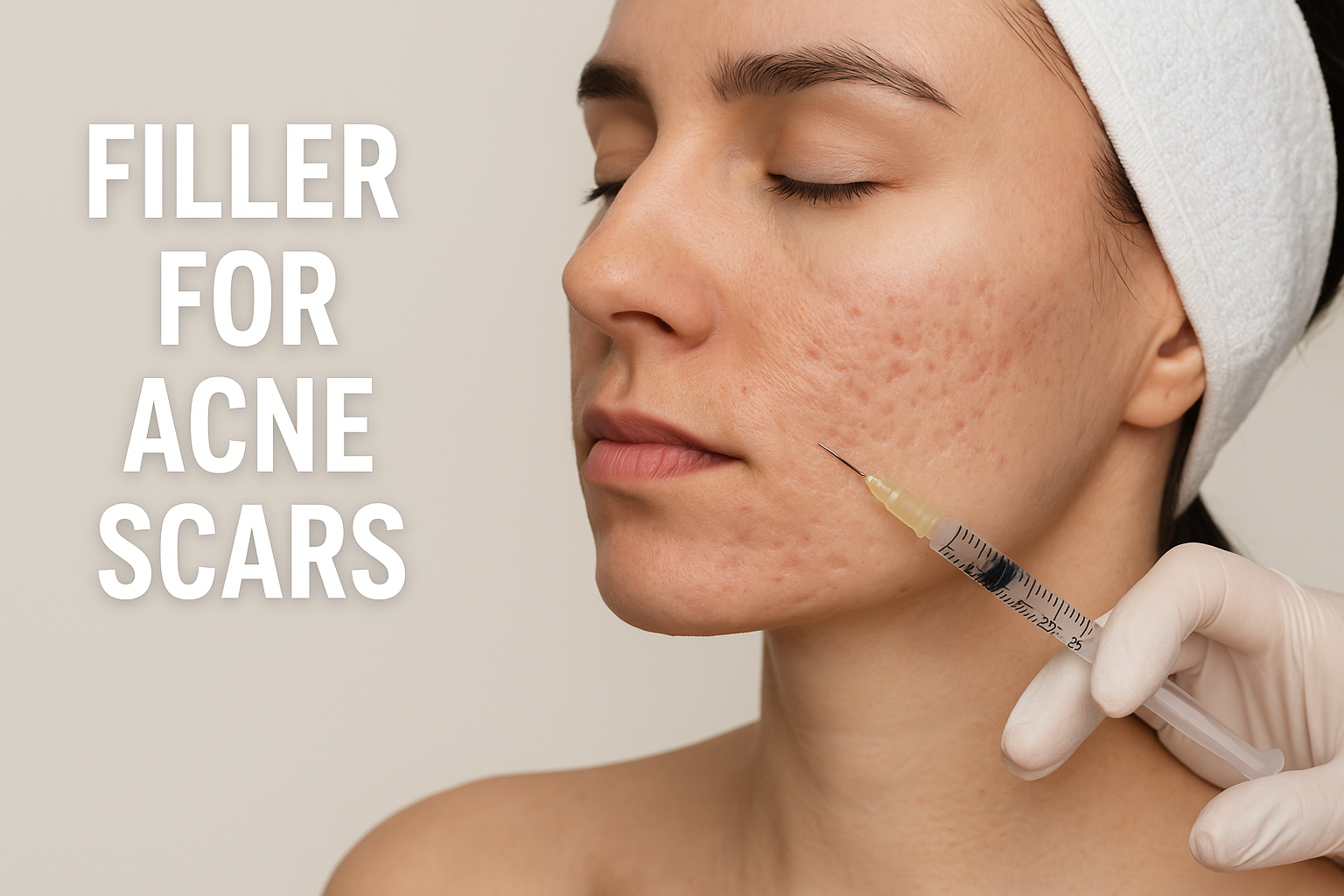
Acne scars are often a long-term skin issue that is difficult to treat. Even after acne heals, the skin does not always return to its original condition. In many cases, the remaining scars can appear as redness, raised scar tissue (hypertrophic scars), depressions (atrophic scars), or changes in skin color (post-inflammatory hyperpigmentation). One popular treatment option to improve the appearance of these scars is filler for acne scars, which can help lift depressed areas and create a smoother skin surface.
According to Dr. Saami Khalifian, a board-certified dermatologist and Mohs surgeon, this condition occurs due to the skin’s natural response to repair tissue damage. Unfortunately, this regenerative process doesn’t always go perfectly, resulting in scars that can be aesthetically bothersome.
What is Filler for Acne Scars?
Dermal fillers are substances injected into the skin’s layers to restore lost volume, including in the case of sunken acne scars. These fillers work by lifting the depressed areas caused by scar tissue, making the skin’s surface appear smoother and more even. Common materials used include hyaluronic acid, calcium hydroxylapatite, and poly-L-lactic acid.
This treatment is categorized as a minimally invasive aesthetic procedure with low risk, short recovery time, and relatively instant results.
Why are Fillers Effective for Acne Scars?
Atrophic acne scars, such as boxcar scars, rolling scars, and ice pick scars, are the types of scars that respond best to fillers. By filling in the depressions, fillers not only improve the appearance of the skin but can also stimulate natural collagen production, providing better long-term results.
Advantages of Fillers for Acne Scars
- Minimally invasive: No surgery or long recovery time required.
- Quick results: The filling effect is visible immediately after the procedure.
- Customizable: The type and amount of filler can be adjusted based on the type and depth of the scars.
- Minimal side effects: When performed by a professional, the risk of side effects is very low.
If you’re looking for a solution for stubborn acne scars, fillers can be a safe and effective treatment option. In the next section, we will discuss the best types of fillers for acne scars, how long the results last, and advice from dermatologists and plastic surgeons.
What Fillers Are Available to Treat Acne Scars?
Bellafill
Bellafill is a type of dermal filler that has been approved by the FDA (Food and Drug Administration) as a long-term treatment for moderate to severe atrophic acne scars.1https://www.asds.net/skin-experts/skin-treatments/soft-tissue-fillers-for-acne-scars These types of scars are typically seen as depressions or indentations on the skin’s surface due to collagen loss after acne inflammation.
Bellafill consists of two main components that work synergistically:
- Bovine collagen: This serves as an initial filler that provides immediate volume to the sunken areas of the skin. It offers an instant effect, smoothing the skin’s surface and reducing the appearance of scars
- Polymethyl methacrylate (PMMA) microspheres: These microscopic synthetic particles remain permanently under the skin. PMMA acts as a long-term support structure that continuously stimulates the body’s natural collagen production. This is what makes Bellafill different from other fillers, which are typically temporary.2https://pmc.ncbi.nlm.nih.gov/articles/PMC8120553/
Bellafill is approved for use only in individuals aged 21 and older. Because bovine collagen can cause allergic reactions in some people, a skin test is required prior to the procedure to ensure there is no allergic reaction to the product.
Hyaluronic Acid
Hyaluronic acid (HA)-based dermal fillers, such as Juvederm and Restylane, are effective non-surgical aesthetic treatments for atrophic acne scars (sunken scars). Hyaluronic acid is a natural compound found in the human body and has an extraordinary ability to bind water and maintain skin hydration.
According to certified dermatologist Dr. Ruth McTighe, dermal fillers work through two main mechanisms: first, they instantly fill in the sunken areas caused by acne scars; second, they stimulate natural collagen production in the area over time. Collagen is an important structural protein that maintains the skin’s firmness and elasticity. As collagen increases, the skin’s texture becomes smoother and more even.
This treatment is minimally invasive and requires only a short time. As explained by aesthetic expert Khalifian, the procedure is almost painless due to the use of topical anesthetic creams, and results can be seen immediately on the same day. Side effects are generally mild, such as temporary redness or swelling.
With quick results and minimal recovery time, HA-based dermal fillers are an ideal choice for those looking to eliminate acne scars instantly, safely, and without surgery. This treatment is also flexible and can be tailored to individual needs, making it one of the most popular solutions in modern aesthetic dermatology.
Poly-L-Lactic Acid (Sculptra)
Sculptra is a type of biostimulant dermal filler formulated with poly-L-lactic acid (PLLA), a synthetic substance that is absorbable by the body and has been used medically for many years. Unlike hyaluronic acid-based fillers, which provide instant results, Sculptra works gradually to improve skin texture, particularly for atrophic or sunken acne scars.
According to certified dermatologist Dr. Ruth McTighe, Sculptra works by stimulating the natural production of collagen in the skin tissue. After injection, the PLLA particles trigger a biological response that encourages fibroblasts in the dermis to increase type I collagen synthesis. This collagen is essential for strengthening the skin’s structure, filling in depressions, and smoothing uneven skin surfaces caused by acne scars.
Because Sculptra relies on natural tissue regeneration, the results are not immediately visible. The process takes several weeks to months, depending on skin condition and individual response. However, the results tend to be more long-lasting, even up to two years after a series of treatments.
Sculptra is an ideal choice for individuals seeking a progressive and natural improvement in acne scars, with a final result that appears smooth, even, and blends seamlessly with the skin’s original structure. This makes it an important part of the long-term regenerative skin rejuvenation trend in aesthetic dermatology.
Radiesse
Radiesse is a dermal filler with the active ingredient calcium hydroxylapatite (CaHA), a natural mineral also found in human bones. This formula works through dual action, providing immediate filling effects for sunken skin areas while stimulating long-term collagen and elastin production.
According to certified dermatologist Dr. Ruth McTighe, Radiesse is highly effective for treating atrophic acne scars, as the CaHA forms microsphere structures that act as a temporary “scaffold” to stimulate fibroblast activity. The result is firmer, smoother, and more elastic skin as collagen production increases.
Interestingly, as explained by aesthetic expert Khalifian, when Radiesse is diluted in a specific ratio (a process known as “hyperdiluted Radiesse”), its filling effects can become visible more quickly than Sculptra. This is due to the combination of instant volumizing effects and tissue regeneration activation, which occurs more evenly, especially in areas of acne scars that require subtle and gradual texture improvement.
With the ability to both fill and improve skin quality from within, Radiesse is a leading solution for treating sunken acne scars, ideal for those seeking quick results that still last. This treatment reflects the modern regenerative dermatology trend that prioritizes natural results and long-term functionality.
Price of Fillers for Acne Scars
Filler treatments for acne scars are considered an aesthetic investment, with costs typically ranging from $600 to $1,200 per injection. The price is influenced by factors such as the type of filler used, the practitioner’s experience, and the clinic’s location. Premium fillers like Sculptra, Juvederm, Restylane, or Radiesse tend to be on the higher end of the price range.
According to Dr. Ruth McTighe, the number of injections and sessions required depends on the individual’s skin condition—particularly the number, depth, and distribution of acne scars. In mild cases, one or two sessions may suffice, while more extensive and deeper acne scars may require gradual treatments over several sessions for optimal results.
Most dermal fillers are temporary, with durability ranging from 6 months to 2 years. Factors such as the type of filler, the treated area, and the patient’s metabolism will determine how quickly the filler material is broken down by the body. For example, hyaluronic acid-based fillers tend to last shorter than those based on poly-L-lactic acid (Sculptra) or calcium hydroxylapatite (Radiesse).
With the right product and technique, fillers offer an effective, flexible, and personalized solution for improving sunken acne scars while enhancing overall skin quality and texture.
Filler Procedure for Acne Scars
Before undergoing filler treatment for acne scars, patients must have a medical consultation with an experienced professional, such as a certified dermatologist or aesthetic doctor. This consultation is crucial, as filler treatment for acne scars is considered an off-label use—meaning it is used outside the officially approved indications by regulatory agencies like the FDA. As Khalifian explains, due to its off-label nature, not all doctors are comfortable or experienced in performing this procedure, so it is important to choose a practitioner with specific expertise in treating acne scars with fillers.
Unlike typical filler injections used to add volume to areas like the cheeks or lips, fillers for acne scars require a more precise and focused injection technique, as the treated areas are often narrow and uneven. Therefore, this procedure should be performed by a medical professional experienced in handling atrophic acne scar cases.
During the consultation, the doctor will conduct a thorough evaluation of the type, depth, and distribution of acne scars and discuss expected results, cost estimates, potential side effects, and alternative therapies such as microneedling or laser treatments.
On the treatment day, the skin will be thoroughly cleaned, and a topical anesthetic cream will be applied to minimize discomfort. The filler will then be injected using a fine needle or cannula, with the procedure lasting approximately 30 to 60 minutes, depending on the complexity and the doctor’s expertise. This minimally invasive procedure requires little recovery time.
Side Effects of Fillers for Acne Scars
After undergoing filler injection treatment for acne scars, patients may experience mild side effects such as redness, swelling, bruising, or light pain at the injection site. These reactions are temporary and generally subside within a few days. However, it is important to follow all post-procedure care instructions provided by the doctor to minimize the risk of complications and speed up skin recovery.
Dr. Ruth McTighe notes that while fillers are generally well-tolerated, there are still risks to be aware of. Possible side effects include lumps under the skin, skin discoloration (such as bruising), infection, allergic reactions, or even blood vessel complications if the procedure is not performed correctly.
Therefore, it is essential for the treatment to be performed by an experienced practitioner, particularly one with specific expertise in evaluating acne scars and precise injection techniques. A skilled practitioner will not only minimize risks but also create a personalized treatment plan based on the patient’s unique skin characteristics and needs.
Certified plastic surgeon Dr. Steven Dayan emphasizes that while fillers are considered safe, choosing the right practitioner is key to ensuring the procedure’s success and safety. Be sure to inform the doctor of any allergy history, skin sensitivities, or medications you are taking. If signs of a serious reaction occur after the procedure, contact your doctor immediately for further evaluation.
Alternatives to Fillers for Acne Scars
While fillers are effective for treating sunken acne scars, it is important to understand that they are not the only option. Dermatologists or aesthetic experts often recommend a variety of alternative or combination therapies based on budget, skin type, and the severity of acne scars.
Some commonly recommended treatments include:
- Microneedling: A technique using tiny needles to stimulate collagen production and improve skin texture.
- Microdermabrasion: A mechanical exfoliation procedure that helps smooth the skin surface and reduce mild scarring.
- Chemical Peels: Using chemical solutions to exfoliate the outer layer of skin, promoting new, smoother skin growth.
- Laser Resurfacing: Using laser technology to stimulate collagen formation and remove damaged skin layers.
- Fat Transfer: Taking fat from another part of the body and injecting it into acne scar areas to fill in tissue gaps.
- Subcision: A minor surgical procedure that cuts through scar tissue pulling the skin downward, effective for deep, tethered acne scars.
Dr. Steven Dayan notes that combining multiple procedures often results in more optimal outcomes. “Laser resurfacing or dermabrasion combined with fat transfer has been proven to significantly improve skin texture and elasticity,” he explains.
An individualized approach and proper consultation are essential to create a comprehensive treatment plan best suited to the patient’s specific needs.
Conclusion
For those seeking acne scar treatment with minimal pain and without surgery, dermal fillers are a worthwhile option to consider. Fillers work by restoring lost skin volume caused by atrophic (depressed) acne scars, while also stimulating collagen production to repair the skin’s structure from within.
Although not all uses of dermal fillers for acne scars are officially approved by the FDA, this procedure is often performed as an off-label treatment—meaning it is used outside its approved indications but is still considered safe and effective by experienced medical professionals. Fillers such as hyaluronic acid offer immediate results, while poly-L-lactic acid-based fillers (such as Sculptra) or calcium hydroxylapatite-based fillers (such as Radiesse) may take several weeks to months to achieve their full effect, as they work by stimulating the skin’s natural collagen production.
As with any cosmetic procedure, it is essential to consult a certified dermatologist or aesthetic practitioner before proceeding with treatment. A professional evaluation will help determine the most suitable type of filler and injection technique based on your skin type and the condition of your acne scars.
With the right approach, dermal fillers can offer an effective, safe, and low-downtime solution for improving skin texture and boosting confidence.
Frequently Asked Questions (FAQ)
What are dermal fillers for acne scars?
Dermal fillers are injectable treatments designed to lift and smooth depressed acne scars by adding volume beneath the skin.
Which types of fillers are commonly used for acne scars?
Common fillers for acne scars include hyaluronic acid (HA) fillers like Juvederm, as well as collagen-stimulating fillers such as Bellafill and Sculptra.
Are fillers a permanent solution for acne scars?
Most dermal fillers provide temporary improvement; maintenance treatments are usually needed for sustained results.
ARTICLE SOURCES
You might also like

 Acne
Acne Anti-Aging
 Business
 Digital Marketing
 Economics
 Exfoliation
 Hair Removal
 Movies
 Personal Finance
 Websites