How to De-Bloat a Puffy Face: Ultimate Guide
Feeling like your face looks swollen or puffy? You’re not alone. While it’s rarely serious, facial bloating can impact your confidence—especially when the puffiness feels internal. Thick concealers and pricey moisturizers might mask the issue temporarily, but they won’t solve it.
Mild facial swelling is often caused by short-term factors like salty foods, alcohol, or lack of sleep. Thankfully, with simple lifestyle adjustments and the right skincare steps, you can reduce that puffiness naturally.
Experts recommend a holistic approach:
- Apply a cold compress to calm inflamed tissue
- Try gentle facial massages to support lymphatic drainage
- Cut back on salty snacks and drink more water
- Use products with caffeine or niacinamide to tighten skin
Most dermatologists agree: getting good-quality sleep is one of the best things you can do for your skin’s overall health.
What Causes a Puffy Face?
Wondering why your face looks puffier than usual? It’s often a result of fluid retention—where excess water builds up in your facial tissues. This can be triggered by lifestyle habits or bodily changes.
Common causes include:
- Dehydration: Your body retains water when it senses low hydration
- High salt intake: Too much sodium disrupts fluid balance
- Mild allergies: These can inflame facial tissue
- Hormonal shifts: Especially during menstruation or pregnancy
- Poor sleep: A tired body distributes fluids less efficiently
- Sleep position: Lying flat can prevent lymph flow, leading to puffiness
While facial bloating is usually harmless, small lifestyle changes can make a noticeable difference—fast.
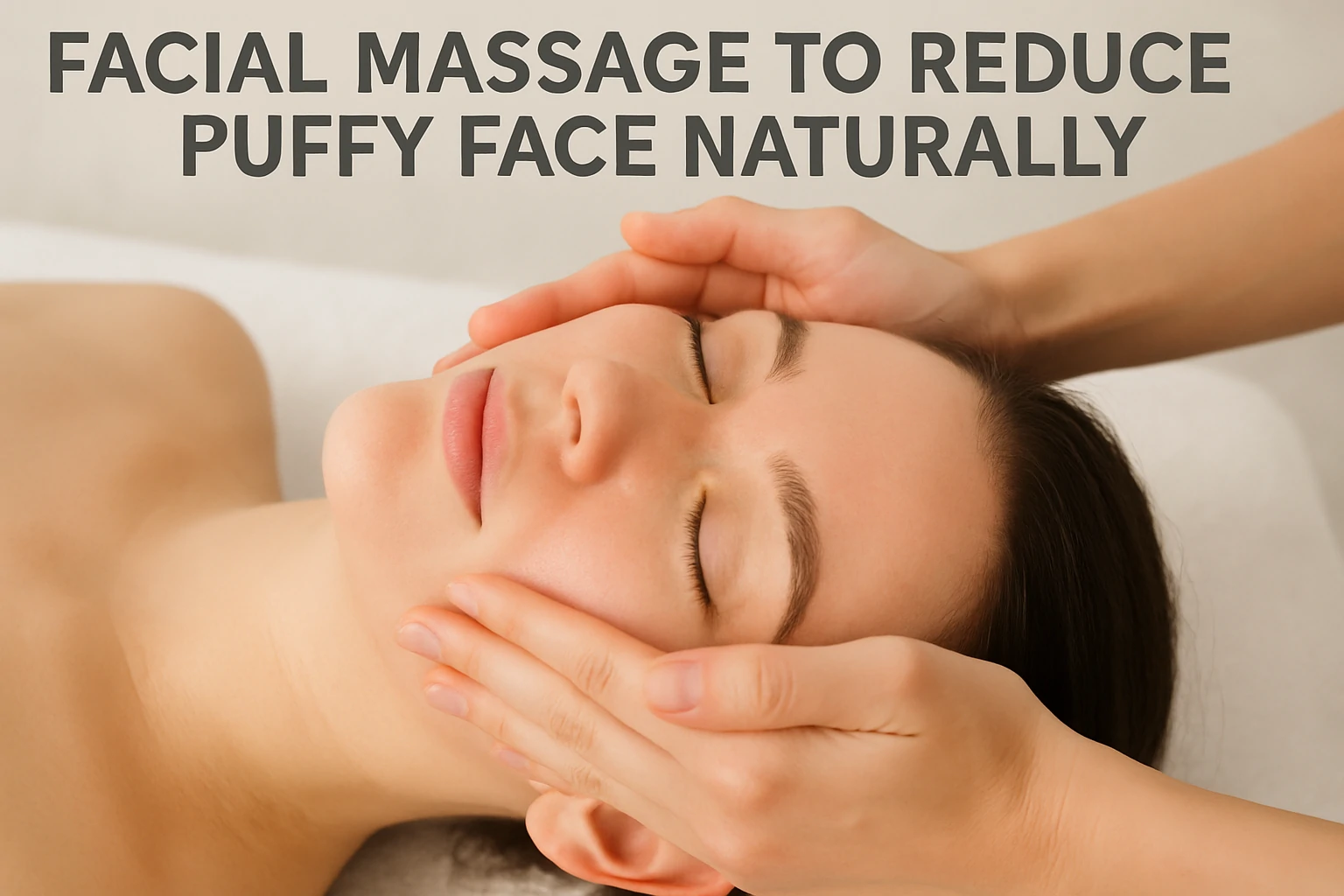
Try a Facial Massage to Deflate Your Face
A good facial massage is more than just relaxing—it’s a proven way to reduce puffiness. Lymphatic drainage massage, a technique widely used in modern skincare, helps release trapped fluid and promotes natural detoxification.
Start by using gentle, circular motions from your forehead and under-eye area, moving down toward your jawline and neck. The downward motion supports proper lymph flow, which can visibly reduce swelling.
Many skincare pros recommend using tools like a jade roller or gua sha. These help improve circulation and relax facial muscles for a more lifted, refreshed look.
Also Read: Bio-Oil: The Secret to Radiant, Glowing Skin
Add facial massage to your routine a few times a week, and you might notice firmer, more radiant skin—no expensive treatments needed.
Load Up on Caffeine—Yes, Really
Think caffeine causes puffiness? Think again. Caffeine acts as a natural diuretic, helping your body flush out excess water. Sipping coffee or green tea in the morning may help reduce facial swelling.
Green tea is a great alternative if you’re sensitive to coffee. It hydrates, is rich in antioxidants, and helps reduce fat buildup in facial tissues.
Don’t love drinking caffeine? You can still benefit from it topically. Many eye creams contain caffeine because it helps tighten skin and reduce under-eye bags. According to skincare experts, caffeine’s vasoconstrictive properties shrink blood vessels, easing puffiness and dark circles.
Whether sipped or applied, caffeine can be your go-to secret for a de-puffed face.
Best Skincare Ingredients to Reduce Face Puffiness
Choosing the right skincare ingredients can make a big difference in calming a puffy face. Dermatologists often recommend looking for products with soothing, anti-inflammatory compounds.
Top ingredients to try:
- Aloe vera: Known for its cooling, anti-inflammatory effect
- Chamomile: Packed with antioxidants, ideal for calming sensitive skin
- Arnica: Often used for bruising, it also reduces facial swelling
- Hydroxysuccinimide: Found in eye creams, it improves circulation and helps drain fluid under the eyes
Incorporating products with these ingredients into your daily routine can help depuff and refresh your skin—no filters or fancy treatments needed.
Eat Your Greens to De-Bloat Naturally
Yes, your mom was right—eating greens really does make a difference. Leafy vegetables like spinach, kale, and beet greens are rich in fiber, minerals, and antioxidants that support your body’s natural detox system.
According to skincare and nutrition experts, these nutrients help the liver and kidneys flush out excess fluids and toxins—common causes of a puffy face. Leafy greens also reduce inflammation, improve hydration, and support healthy cell turnover, leaving your skin looking clearer and more radiant.
You don’t need to overhaul your entire diet—just small servings of greens at each meal can make a real impact. Try adding spinach to your smoothies or toss some kale into your eggs or salad.
Eating green is a low-effort, high-reward habit that helps your face look fresher—naturally.
Sleep on Your Back With Head Elevated
The way you sleep plays a big role in how your face looks in the morning. Sleeping on your back with your head slightly elevated helps prevent fluid buildup—especially under the eyes.
Dermatologists explain that when you lie flat or sleep on your side or stomach, gravity can’t drain fluids efficiently. The result? Puffiness when you wake up. By propping your head up with one or two pillows, you let gravity assist lymphatic drainage overnight.
Choose a supportive pillow that aligns your neck and head comfortably. A well-designed pillow can also reduce wrinkle formation caused by sleep pressure.
Making this small change to your sleep routine can make a visible difference—your morning face will thank you.
Gentle Morning Exercise to De-Puff Fast
Light exercise is a simple yet powerful way to reduce morning puffiness. During sleep, lying still for hours can cause fluid buildup in the face—especially around the eyes.
A quick morning routine like stretching, walking, or doing light yoga helps kickstart circulation and activate your lymphatic system. This movement gently pushes retained fluid out of facial tissues.
According to dermatologists, regular physical activity also helps balance hormones. High cortisol levels from stress can lead to fluid retention, making your face appear puffier. Staying active keeps both stress and puffiness in check.
You don’t need a hardcore workout. Just 10–15 minutes of movement each morning can give your skin a healthier, more sculpted look—naturally.
Start with a Healthy Lifestyle
A puffy face is often a sign of what’s going on inside your body—not just a skincare issue. Experts recommend a full-body approach to reduce facial swelling for good.
Start with these foundational habits:
- Cut back on salt to prevent water retention
- Limit alcohol, which dehydrates and inflames the skin
- Stay hydrated—water helps flush out toxins
- Get quality sleep, which regulates hormones and supports skin repair
This holistic method helps your body manage fluid balance more efficiently. Over time, your skin will appear less bloated, more even-toned, and naturally radiant—without quick fixes or harsh treatments.
Consistency is key. When you take care of your whole body, your face reflects it.
Embrace the Cold: Chill Your Way to a Slimmer Face
Cold therapy is one of the simplest and fastest ways to reduce facial puffiness. Classic methods like chilled cucumber slices, ice cubes, or even walking in cool air still work wonders—because they trigger vasoconstriction, helping tighten blood vessels and reduce swelling.
Cucumbers are more than just a spa cliché. They’re rich in silica, which supports skin elasticity and soothes inflamed areas.
For a modern upgrade, try tools like cold masks, cooling eye patches, or a chilled jade roller. These options offer targeted relief and a refreshing sensation, especially around tired eyes.
Whether it’s a cold spoon from the freezer or a high-tech cooling wand, embracing the cold can instantly awaken your skin and visibly reduce puffiness. It’s a timeless trick for a reason.
Use a Daily Serum for Balanced, Calm Skin
Facial serums aren’t just trendy—they’re highly effective. These lightweight formulas deliver active ingredients deep into the skin, making them ideal for reducing puffiness and restoring skin balance.
Apply serum daily, preferably at night, when skin repair is at its peak. Look for serums containing caffeine, green tea extract, peptides, and antioxidants—all known to reduce inflammation and boost skin resilience.
Want to level up? Use a chilled jade roller after applying serum to enhance absorption and stimulate lymphatic flow.
A good serum doesn’t just hydrate—it supports skin regeneration and strengthens your skin barrier. With regular use, your face will look smoother, less puffy, and more radiant.
Try a Multipurpose Eye Cream That Does It All
The skin around your eyes is thin, delicate, and prone to puffiness and fatigue. That’s why a targeted eye cream can be a game changer—especially if it offers multiple benefits.
The best eye creams contain ingredients like caffeine to deflate under-eye bags, peptides to firm skin, and hyaluronic acid to lock in moisture. When used consistently, these formulas help reduce dark circles, prevent fine lines, and minimize puffiness.
Apply your eye cream morning and night, using gentle tapping motions. For extra impact, pair it with a cool roller or chilled eye tool.
A well-formulated, multitasking eye cream can streamline your routine and give you a fresh, awake look—no concealer required.
Try a Buccal Massage for Deep Facial Sculpting
Want a natural face-lift? Try buccal massage—a unique facial technique performed from inside the mouth. While it sounds unconventional, it’s gaining attention for its powerful sculpting and de-puffing effects.
This method targets the inner cheek muscles, promoting lymphatic drainage, improving blood flow, and relieving facial tension. It’s often used by facialists to naturally lift the mid-face and reduce jawline puffiness.
However, this technique should only be done by trained professionals. If done incorrectly, it can irritate the skin or worsen inflammation.
Always consult a licensed esthetician or dermatologist before trying buccal massage. When done right, it can leave your face feeling lighter, more defined, and deeply relaxed.
What to Avoid to Prevent a Puffy Face
Want lasting results? Start by avoiding everyday habits that make facial puffiness worse. Dermatologists say even small missteps can trigger fluid retention and inflammation.
Here’s what to steer clear of:
- Too much salt, which causes water retention
- Alcohol, which dehydrates and inflames skin
- Poor sleep, disrupting hormone balance and skin repair
- Sleeping face-down, which traps fluid in facial tissues
- Excess heat, like hot showers or saunas, which dilate blood vessels
Being mindful of these triggers can greatly improve your skin’s natural balance. Avoiding them helps your skincare routine work better—giving you smoother, more refreshed skin every day.
Quick Fixes to De-Bloat a Puffy Face Instantly
Need a fast solution for a swollen face? These expert-approved tricks can help reduce puffiness in minutes—perfect before work, a meeting, or a selfie.
- Cold compress: Apply ice cubes wrapped in cloth or a chilled mask to shrink blood vessels and soothe inflamed skin.
- Gentle massage: Use clean fingers or a cool jade roller, moving outward and downward to boost lymphatic flow.
- Hydrate: Drink a full glass of water—your body may be holding onto fluid due to dehydration.
- Sip green tea or coffee: Both have mild diuretic effects that help flush out excess water.
These quick fixes aren’t just temporary—they kickstart your skin’s natural healing and detox process. Use them anytime you need to look instantly refreshed.


 Acne
Acne Anti-Aging
 Business
 Digital Marketing
 Economics
 Exfoliation
 Hair Removal
 Movies
 Personal Finance
 Websites