How to Safely Dermaplane at Home: Tips from Dermatologists
Dermaplaning, also known as facial shaving, is becoming popular on social media for removing fine facial hair (peach fuzz). More and more people are choosing to dermaplane at home as a way to enjoy the benefits of this treatment without visiting a clinic. However, its benefits go beyond just hair removal. This non-invasive cosmetic treatment uses a sterile surgical blade to gently exfoliate the skin, removing dead skin cells and fine hairs. This helps reveal smoother, brighter skin with a more even texture. It can also improve how well your skincare products absorb and create a smoother base for makeup.
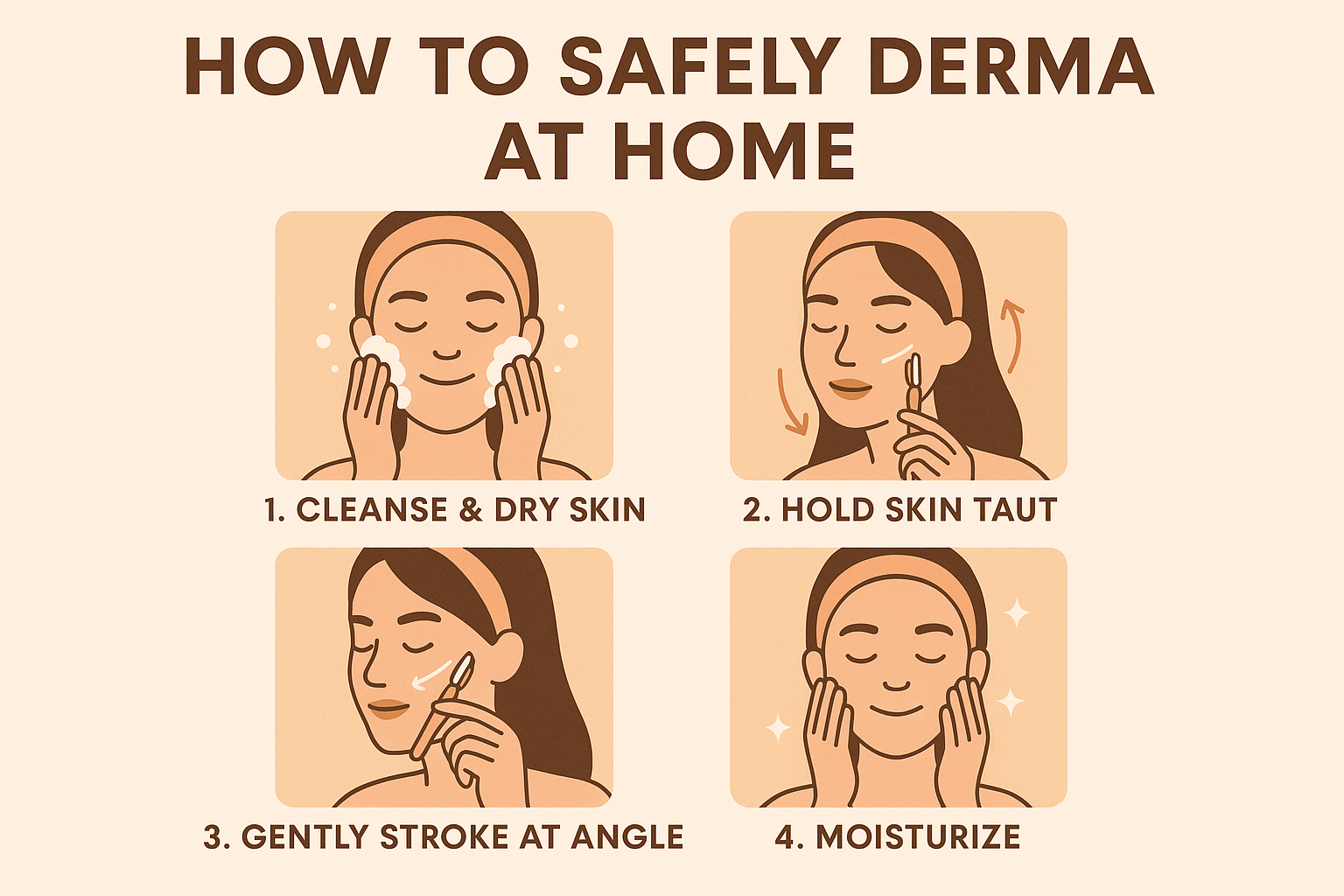
Although dermaplaning seems simple, it must be done correctly to avoid irritation or injury. If you plan to dermaplane at home, start by washing your face thoroughly to remove makeup and dirt. Then, apply a gentle exfoliant or toner to prepare the skin. Make sure your skin is dry before starting. Hold the blade at a 45-degree angle and gently scrape the skin in short strokes. Avoid areas with active acne or irritation.
You can dermaplane once a month to keep your skin smooth. However, it’s very important to use clean tools and proper technique to reduce the risk of cuts or infection. Before trying it yourself, it’s a good idea to speak with a dermatologist or skincare professional to see if dermaplaning at home is right for your skin type.
What Is Dermaplaning?
Dermaplaning is a beauty treatment that uses a small, specially designed blade to remove the top layer of the skin. This layer often contains dirt, oil, dead skin cells, and fine facial hair (known as peach fuzz). The goal is to exfoliate the surface of the skin, revealing smoother, brighter, and healthier-looking skin underneath. While dermaplaning can benefit many people, those with sensitive skin, active acne, eczema, or other skin conditions should avoid it to prevent further irritation.
In essence, dermaplaning is similar to shaving the face, but it has a more targeted purpose—improving skin texture. Aside from removing fine hairs, it also clears away dead skin cells that can make the skin look dull or uneven. The procedure can be done at a salon by a skincare professional or at home using a special dermaplaning tool.
According to Dr Brendan Camp, a board-certified dermatologist, although dermaplaning is similar to shaving, its primary goal is to improve skin quality, not just remove hair. Dermaplaning tools are designed to exfoliate the skin gently and effectively, not simply cut hair. As a result, dermaplaning offers not only cosmetic benefits but also contributes to better skin health overall.
How to Dermaplane at Home
Dermaplaning is an exfoliation method that removes dead skin cells and fine facial hair (vellus hair) using a dermaplaning blade. To perform dermaplaning at home, be sure to use a tool specifically designed for facial use, not a regular razor. These tools have a comfortable grip and a tapered edge, allowing for better control and smoother results. Always ensure the blade is clean and sharp to avoid irritation or infection.
Also Read: How Long Does Retinol Take to Work On Skin?
Start by making sure your face is clean and completely dry. Avoid using active ingredients like retinol or AHA/BHA acids for 2–3 days before and after dermaplaning, as they can increase skin sensitivity. If you have breakouts or open wounds, skip those areas to avoid worsening the condition.
Next, gently pull the skin taut to create a flat surface, which helps reduce irritation. Hold the blade at a 45-degree angle and make light, short strokes across the skin. Begin with the jawline and check how your skin reacts. Mild redness afterward is normal, but stop if you notice irritation or a rash.
Continue across other areas of the face, such as the cheeks, jawline, and forehead—avoiding the hairline, eyelids, and nose. Dermaplaning can also be done on the neck, but since this area is more sensitive, proceed with extra care. This technique leaves your skin feeling smoother, brighter, and free of fine hair.
Is Dermaplaning at Home Safe?
Dermaplaning is generally considered safe to do at home, especially when compared to more aggressive treatments like laser or chemical peels, which can irritate sensitive skin. According to Dr Camp, dermaplaning is safe for most skin types, including for pregnant women or those with sensitive skin who cannot use chemical exfoliants.
Although most people can safely dermaplane at home, there is still a small risk of minor cuts or scratches. Dr Camp advises using a new, clean blade every time to reduce the risk of infection or irritation. If you accidentally cut yourself, mild irritation or infection may occur. Signs like redness, pus-filled bumps, or yellowish crusts should be checked by a dermatologist.
A common myth is that shaving or dermaplaning causes peach fuzz to grow back thicker or darker. Both Dr Camp and Dr Kunin confirm this is false. Shaving only cuts hair at the surface and does not affect the hair follicle deep under the skin. Hair will grow back with the same thickness, speed, and texture as before.
Aftercare
Proper aftercare is essential to maintain healthy skin and get the most benefit from dermaplaning. Once you’ve finished, the first step is to apply a hydrating serum. Serums with ingredients like hyaluronic acid or vitamin C help to moisturise and refresh newly exfoliated skin, as recommended by Benjamin.
To lock in moisture from the serum, Dr Kunin suggests applying a moisturiser immediately after. This not only keeps the skin hydrated but also provides a protective barrier for the fresh skin underneath. Moisturising is important to maintain soft, healthy skin after exfoliation.
Both experts agree that using sunscreen (SPF) is a must after dermaplaning. Freshly exfoliated skin is more sensitive to UV rays, making it more vulnerable to sun damage. Benjamin recommends using sunscreen with at least SPF 30 to protect the skin from harmful UV exposure.
Lastly, avoid using strong active ingredients like acne treatments, peels, or exfoliating products for 2–3 days after dermaplaning. Newly exfoliated skin is more sensitive, so giving it time to recover is important for avoiding irritation.

 Acne
Acne Anti-Aging
 Business
 Digital Marketing
 Economics
 Exfoliation
 Hair Removal
 Movies
 Personal Finance
 Websites