What Are Hybrid Sunscreens? Uses, Benefits & Effectiveness
Dermatologists consistently highlight one essential message: daily sunscreen is non-negotiable. Yet, choosing a formula that feels comfortable and works well for your skin can be surprisingly challenging. With so many options—mineral, chemical, and now hybrid sunscreens—each type offers unique advantages that influence user experience, protection level, and skin compatibility.
Hybrid sunscreens are gaining attention for combining the best of both worlds. They pair the stability and gentleness of mineral filters with the lightweight, easy-to-blend feel of chemical filters. The result is a sunscreen that typically absorbs quickly, leaves a more natural finish, and still delivers broad-spectrum protection against UV rays—making it an appealing choice for everyday wear.
To better understand how hybrid formulas work, why they are becoming a popular option, and what they feel like on the skin, board-certified dermatologists Dr. Kristina Collins and Dr. Timothy Tran share insights grounded in clinical experience. Their explanations provide a science-based foundation for the guide below, helping you make a confident and informed decision—especially if you’re new to sunscreen or still searching for one that truly fits your daily routine.
What Are Hybrid Sunscreens?
A hybrid sunscreen is a sun protection product formulated with both chemical and mineral UV filters. According to board-certified dermatologist Dr. Timothy Tran, this dual-filter approach allows the formula to reflect part of the UV radiation (via mineral ingredients like zinc oxide) while also absorbing UV rays (through chemical filters) before they can penetrate deeper into the skin.
This balanced mechanism offers several user-friendly benefits:
- Broad-spectrum protection against UVA and UVB rays
- Lightweight, smoother textures that spread easily and feel comfortable
- A more natural finish, often without the heavy or pasty look typical of some mineral formulas
Dermatologist Dr. Kristina Collins notes that hybrid sunscreens aim to maximize strengths from both categories while minimizing drawbacks. Pure mineral sunscreens can be thick or leave a white cast, while pure chemical formulas may irritate sensitive skin. By blending the two, hybrid sunscreens create a more universal option—ideal for beginners, daily commuters, and anyone seeking reliable protection that feels pleasant enough for consistent use.
What Ingredients Are Usually Found in Hybrid Sunscreens?
Hybrid sunscreens combine mineral and chemical UV filters to create a balanced, user-friendly formula. According to the American Academy of Dermatology, this dual approach helps deliver reliable protection while maintaining a texture that feels comfortable for daily use—especially for beginners or those with sensitive skin.
Mineral Filters
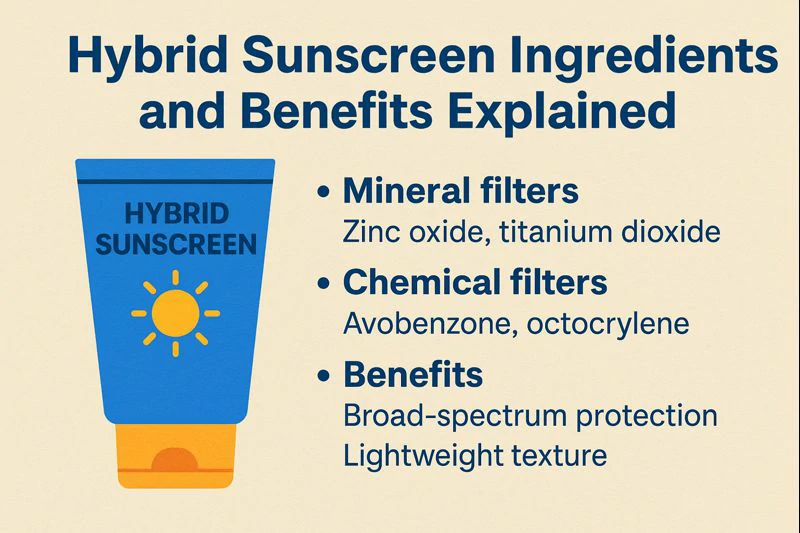
Common mineral ingredients include zinc oxide and titanium dioxide.
How they work: These filters sit on the skin’s surface and physically block or reflect UVA and UVB rays.
Benefits: Gentle, non-comedogenic, and naturally broad-spectrum—making them ideal for sensitive or acne-prone skin.
Drawbacks: They can feel heavier and may leave a visible white cast, especially on deeper skin tones.
Chemical Filters
Frequently used ingredients include avobenzone, octocrylene, octinoxate, homosalate, and oxybenzone.
How they work: They absorb UV rays and release the energy as heat.
Benefits: Lightweight, non-greasy textures that absorb quickly and blend seamlessly.
Drawbacks: May trigger irritation or allergy in very sensitive skin.
Dermatologist Dr. Kristina Collins emphasizes that hybrid formulas aim to blend these strengths—offering dependable UV protection with a smoother, more pleasant application experience.
Are Hybrid Sunscreens More Effective?
The effectiveness of hybrid sunscreens is a common question, especially for users exploring sunscreen for the first time. According to Dr. Timothy Tran, hybrid formulas are not automatically “stronger” than pure mineral or chemical sunscreens. Instead, their advantage lies in improved comfort, which encourages consistent, daily use—an essential factor in real-world protection.
What Hybrid Sunscreens Offer
- Broad-spectrum coverage: They protect against both UVA and UVB rays, even when certain chemical-only formulas vary in coverage.
- Enhanced wearability: Hybrid textures are typically lighter than pure mineral sunscreens and help minimize white cast.
- Balanced performance: They pair mineral-based physical defense with the smooth, easy application of chemical filters.
However, a well-formulated mineral or chemical sunscreen with broad-spectrum labeling can be just as protective. The “best” option ultimately depends on your skin type, sensitivity level, and texture preference.
In short, hybrid sunscreens excel in user experience and everyday practicality, making them a strong choice for anyone seeking protection that feels good enough to apply consistently.
Choosing Between Sunscreen Ingredients
Choosing the right sunscreen is not only about comfort—it’s about understanding your skin’s needs and daily lifestyle. Dermatologists Dr. Kristina Collins and Dr. Timothy Tran emphasize several key factors to guide your decision.
- Skin sensitivity: Mineral sunscreens are often recommended for sensitive skin because they’re gentle, soothing, and less likely to trigger irritation.
- Skin type: If you have oily or acne-prone skin, chemical formulas may feel more suitable thanks to their lightweight, quick-absorbing, and non-comedogenic textures.
- Skin tone: To avoid the white cast often associated with mineral filters, chemical or hybrid sunscreens tend to provide a more natural, blendable finish.
- Sun exposure: For outdoor activities, broad-spectrum protection is essential. Both mineral and hybrid sunscreens typically offer reliable UVA and UVB coverage.
- Environmental concerns: Certain chemical filters may harm marine ecosystems. Mineral sunscreens without chemical UV filters are generally more reef-friendly. Many hybrid products are now formulated to be reef-safe as well—always check the label to be sure.[1US Department of Commerce NO and AA. Sunscreen chemicals and marine life.]
By evaluating these factors, you can choose a sunscreen that fits your skin type, daily habits, and personal values—making sun protection easier and more consistent.
Safety & Environmental Impact of Hybrid Sunscreens
Beyond effectiveness, users are increasingly mindful of the safety and environmental footprint of hybrid sunscreens. According to Dr. Kristina Collins, most hybrid formulas are safe for daily use, including for sensitive skin, as long as there are no allergies to specific chemical filters.
Skin Safety
Hybrid sunscreens are generally:
- Suitable for sensitive skin, thanks to calming mineral components like zinc oxide
- Comfortable for daily wear due to their lightweight, non-pore-clogging textures
- Broad-spectrum, offering protection from both UVA and UVB rays
Environmental Considerations
Some chemical filters—especially oxybenzone and octinoxate—have been shown to damage coral reefs. As a result, many brands now create reef-safe hybrid sunscreens that avoid these ingredients. Popular dermatology-backed lines such as Supergoop! and EltaMD offer hybrid options formulated with marine safety in mind.
Dermatologist Dr. Timothy Tran encourages reading product labels carefully to confirm both skin compatibility and environmental safety.
In summary, hybrid sunscreens can be a safe and eco-conscious choice when selected thoughtfully—protecting your skin while supporting environmental sustainability.
Best Hybrid Sunscreens: Dermatologist-Recommended & Consumer Favorites
Choosing a hybrid sunscreen can feel overwhelming because the market is packed with options. To simplify your search, here are dermatologist-recommended picks and consumer favorites that consistently earn high global ratings.
Dermatologist Recommendations
- EltaMD UV Clear Broad-Spectrum SPF 46
Ideal for sensitive and acne-prone skin, combining zinc oxide with octinoxate for balanced protection. - La Roche-Posay Anthelios Mineral & Chemical Blend SPF 50
Lightweight and broad-spectrum, frequently recommended by U.S. dermatologists. - Shiseido Urban Environment Oil-Free UV Protector SPF 42
A long-wearing hybrid formula suitable for outdoor activities.
Consumer Favorites
- Supergoop! Unseen Sunscreen SPF 40
Clear, weightless, and zero white cast—extremely popular worldwide. - Wardah UV Shield Active Protection Hybrid SPF 50
An affordable local option with a mineral–chemical blend. - Azarine Hydrasoothe Sunscreen Gel SPF 45
Lightweight gel texture that absorbs quickly, great for oily skin.
Tips for Choosing
Check your skin type, look for “broad-spectrum” labeling, and confirm reef-safe formulas when sustainability matters.
These recommendations help you find a hybrid sunscreen that delivers both effective protection and comfortable daily wear.
How to Apply Hybrid Sunscreens Correctly
Using sunscreen correctly is just as important as choosing the right formula. According to dermatologist Dr. Timothy Tran, the most common mistakes include applying too little product and forgetting to reapply. Hybrid sunscreens provide excellent protection, but only when applied properly.
How to Apply
- Use enough product: Apply two full finger lengths for the face and neck to ensure adequate coverage.
- Spread evenly: Cover all areas, including ears, hairline, and the front and sides of the neck.
- Reapply every 2 hours: Especially after sweating, swimming, or direct sun exposure.
- Apply before makeup: Sunscreen should be your final skincare step before foundation or powder.
- Don’t forget the body: Protect hands, arms, and any area exposed to sunlight.
Dermatologist Dr. Kristina Collins emphasizes that consistency is key. Even with its more comfortable texture, hybrid sunscreen must be worn daily—including on cloudy days. Correct application ensures optimal protection and supports long-term skin health.
Benefits of Hybrid Sunscreens
Hybrid sunscreens offer an innovative solution for anyone seeking strong UV protection without sacrificing comfort. By combining mineral and chemical filters, they provide a versatile and user-friendly option for everyday sun defense.
Key Benefits
- Broad-spectrum protection: Shields against UVA (premature aging) and UVB (sunburn).
- Lightweight texture: Chemical filters help create a smooth, fast-absorbing formula that feels comfortable for daily use.
- Reduced white cast: Mineral coverage remains, but the finish appears more natural than many pure mineral sunscreens.
- Suitable for various skin types: Zinc oxide supports sensitive skin, while the non-comedogenic texture suits oily or acne-prone skin.
- Eco-friendlier options: Many hybrid formulas now avoid reef-harming ingredients, supporting marine conservation.
Added Value
Dermatologist Dr. Kristina Collins notes that hybrid sunscreens offer “the best of both worlds”—the reliable physical protection of mineral filters with the wearable comfort of chemical filters.
In essence, hybrid sunscreens not only protect your skin but also enhance the overall experience, making daily sun care easier, more pleasant, and more sustainable.
ARTICLE SOURCES
You might also like
 Acne
Acne Anti-Aging
 Business
 Digital Marketing
 Economics
 Exfoliation
 Hair Removal
 Movies
 Personal Finance
 Websites