Is Avobenzone Sunscreen Safe? What Experts Actually Say
Concerns about the safety of avobenzone sunscreen have grown as more people pay attention to what’s inside their SPF. While new sunscreen textures feel lighter and more elegant, many users are still curious: Is this popular UVA filter actually safe for daily use?
Avobenzone is one of the most common chemical filters found in modern sunscreens. Public discussion increased after a 2019 FDA report suggested that several chemical filters—including avobenzone—may be absorbed into the bloodstream at detectable levels.[1Sunscreen drug products for over-the-counter human use. Federal Register.] This finding led some users to question whether their everyday sunscreen might influence hormonal activity.
Dermatology experts emphasize that absorption does not equal harm. Scientific data is still evolving, and current findings do not show proven health risks in humans. According to dermatologist Anna Karp, MD, and cosmetic chemist Lily Guavera, the real conversation should focus on updated research, formulation stability, and realistic exposure levels.
For now, experts consistently agree on one thing: the proven benefits of daily sunscreen use far outweigh theoretical risks. Understanding how avobenzone works—and what current studies show—helps consumers make informed choices without unnecessary fear.
What Is Avobenzone? Understanding This Key UVA Filter
Avobenzone is a chemical UV filter designed to absorb UVA radiation before it can damage skin cells. When UVA hits the skin, avobenzone captures that energy and releases it as heat—a process dermatologist Anna Karp, MD, describes as “absorbing UVA rays and safely converting them into heat.”
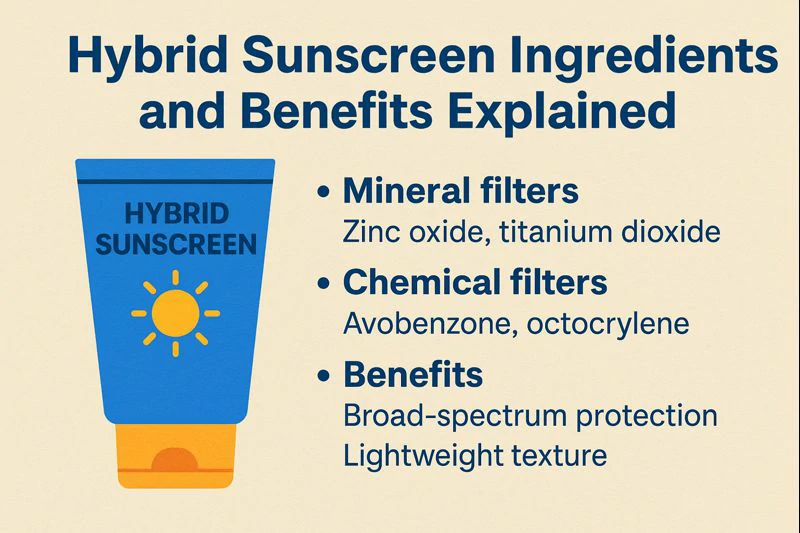
This mechanism differs from mineral sunscreens such as zinc oxide or titanium dioxide, which sit on the surface of the skin and reflect UV light instead of absorbing it. Because avobenzone is transparent and blends easily, it’s widely used in lightweight, non-chalky formulas.
A major reason avobenzone remains essential is that it is the only FDA-approved chemical filter that offers broad and strong UVA protection in the U.S. Since UVA rays penetrate deeper into the skin and contribute to premature aging, pigmentation, and long-term damage, a reliable UVA filter is critical.
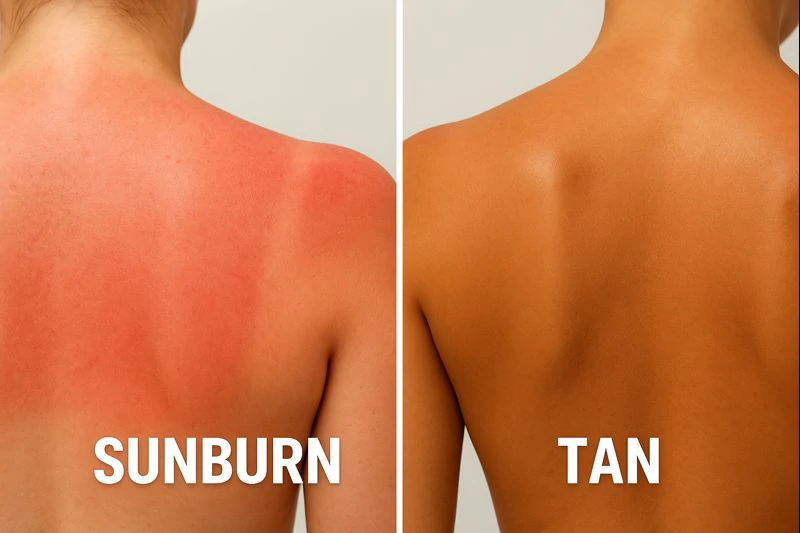
If you need a quick reminder: UVA = aging, UVB = burning.
This makes avobenzone a key ingredient for anyone looking to prevent wrinkles, sun spots, and cumulative sun damage—especially if you prefer elegant, non-mineral sunscreen textures.
How Avobenzone Works in Sunscreen Formulations
Modern sunscreens often use avobenzone because it applies transparently and avoids the white cast associated with many mineral filters. This cosmetic elegance, combined with strong UVA absorption, makes it a favorite among formulators and consumers.
Cosmetic chemist Lily Guavera explains that avobenzone is usually paired with UVB filters such as homosalate, octinoxate, or even mineral filters, depending on the formulation goals. This combination helps ensure balanced UVA–UVB protection, which is essential because each type of radiation causes different forms of skin damage.
The main challenge: avobenzone is naturally photosensitive. Without support, it can degrade when exposed to sunlight. To solve this, formulators add stabilizing ingredients—commonly antioxidants like vitamins C and E, or ubiquinone. These not only maintain avobenzone’s structure but also help neutralize free radicals, providing a boost in overall skin protection.
Research shows that sunscreens enriched with antioxidants may improve long-term defense against UV-induced oxidative stress. For users, this means a more stable, more effective daily sunscreen—especially beneficial for people concerned about premature aging.
The Controversy: Why Avobenzone Raises Questions
Although the FDA has approved avobenzone as a safe UVA filter since 1988, the ingredient resurfaced in public debate following a 2019 FDA study. The report revealed that several chemical sunscreen filters—including avobenzone and oxybenzone—can be absorbed into the bloodstream at levels higher than previously expected.
Importantly, this does not mean these ingredients are harmful. The study called for more research, not product recalls. Still, the findings sparked concern about potential hormonal effects, leading many consumers to question the long-term safety of chemical sunscreens.
Cosmetic chemist Lily Guavera notes that these worries stem from the assumption that detectable absorption automatically influences hormonal pathways. However, current evidence has not demonstrated harmful endocrine effects in humans using avobenzone-based sunscreens.
Dermatology experts emphasize that chemical absorption is not the same as toxicity. Regulatory bodies require extensive toxicology testing before an ingredient is approved, and so far, avobenzone has passed these standards.
For now, dermatologists advise focusing on well-formulated sunscreens and consistent daily use—because the dangers of UV exposure are clear, while the outlined concerns about avobenzone remain theoretical and unproven.
So, Is Avobenzone Safe?
While concerns about avobenzone’s potential hormonal effects are understandable, current scientific evidence has not shown that this UV filter poses proven health risks in humans. Researchers still recommend ongoing studies, but available data does not classify avobenzone as harmful.
The American Academy of Dermatology reiterates that simply detecting a sunscreen ingredient in the bloodstream does not mean it is unsafe. The organization also emphasizes that skipping sunscreen carries far greater risks, including accelerated skin aging and higher chances of skin cancer.[2American Academy of Dermatology comments on follow-up study on absorption of sunscreen ingredients.]
According to dermatologist Anna Karp, MD, avobenzone remains safe for most people. Cosmetic chemist Lily Guavera agrees, while highlighting one important exception: pregnancy. Because UV-exposure studies on pregnant individuals are not ethically permitted, potential hormonal interactions cannot be fully evaluated. For that reason, mineral sunscreens are generally recommended during pregnancy and for young children before puberty.
Environmental impact is another part of the conversation. Some laboratory studies suggest potential toxicity to marine organisms, though these findings do not yet represent real-world ocean conditions.
In the end, there is no definitive “safe” or “unsafe” verdict. The best sunscreen is the one you can apply consistently, aligns with your comfort level, and fits your skin’s needs.
Does Avobenzone Break Down in Sunlight?
Photostability plays a crucial role in how well sunscreen protects your skin throughout the day. Avobenzone is an effective UVA filter, but one known drawback is its sensitivity to light. When exposed to UV radiation, its chemical structure can gradually break down, reducing its ability to absorb UVA rays.
Dermatologists note that without proper stabilizers, avobenzone may lose part of its effectiveness within a relatively short time. This breakdown process can also generate reactive oxygen species (ROS), which is why the stability of the formulation matters.
To prevent degradation, sunscreen brands pair avobenzone with stabilizing ingredients such as octocrylene or incorporate antioxidants like vitamins C and E, or ubiquinone. These additions help maintain avobenzone’s integrity and offer extra protection by neutralizing free radicals.
The good news: most modern sunscreens are specifically engineered to keep avobenzone stable under sunlight, ensuring reliable UVA protection. Choosing products from reputable, research-driven brands increases your chances of getting a formula that stays effective throughout daily sun exposure.
Avobenzone vs. Other UV Filters: Which One Is Better?
When comparing avobenzone to other UV filters, there is no universal “best” option. Each filter has strengths and limitations, and the ideal choice depends on your skin type, lifestyle, and texture preference.
Avobenzone excels at broad-spectrum UVA protection and is widely used in chemical sunscreens for its lightweight, invisible finish. Its main challenge is photostability—meaning it can degrade under sunlight unless paired with stabilizers or antioxidants.
Mineral filters such as zinc oxide and titanium dioxide offer more stable protection and are less likely to cause irritation, making them popular for sensitive skin, pregnancy, and children. Meanwhile, advanced European and Asian filters like Tinosorb S, Tinosorb M, and Uvinul A Plus provide strong UVA–UVB coverage and exceptional stability, although they are not FDA-approved in the United States.
Skincare formulators often combine multiple filters to achieve balanced, long-lasting protection. Ultimately, the best UV filter is the one you enjoy applying daily—because consistency matters more than ingredient categories.
Is Avobenzone Safe During Pregnancy and for Kids?
Pregnancy and childhood require special consideration when choosing sunscreen because both groups can be more sensitive to biological changes. Based on current scientific evidence, avobenzone is not classified as harmful. However, limited data means some experts still recommend caution.
Since UV-exposure studies cannot be ethically conducted on pregnant individuals, potential hormonal interactions of chemical filters—including avobenzone—cannot be fully assessed. For this reason, dermatologists often prefer mineral sunscreens (zinc oxide or titanium dioxide) during pregnancy. These filters sit on top of the skin, show minimal absorption, and are generally well-tolerated.
For children, especially before puberty, many dermatology professionals advise the same approach. Their thinner, more delicate skin may better tolerate physical filters, which are stable, gentle, and less likely to cause irritation.
Overall, avobenzone remains safe for the general population. But for pregnant individuals and young children, mineral sunscreens offer a more conservative and reassuring option. Most importantly, ensure sunscreen is applied generously and regularly to protect against long-term sun damage.
ARTICLE SOURCES
You might also like
 Acne
Acne Anti-Aging
 Business
 Digital Marketing
 Economics
 Exfoliation
 Hair Removal
 Movies
 Personal Finance
 Websites