Is Nose Hair Waxing Safe? Types, Risks, and Better Solutions
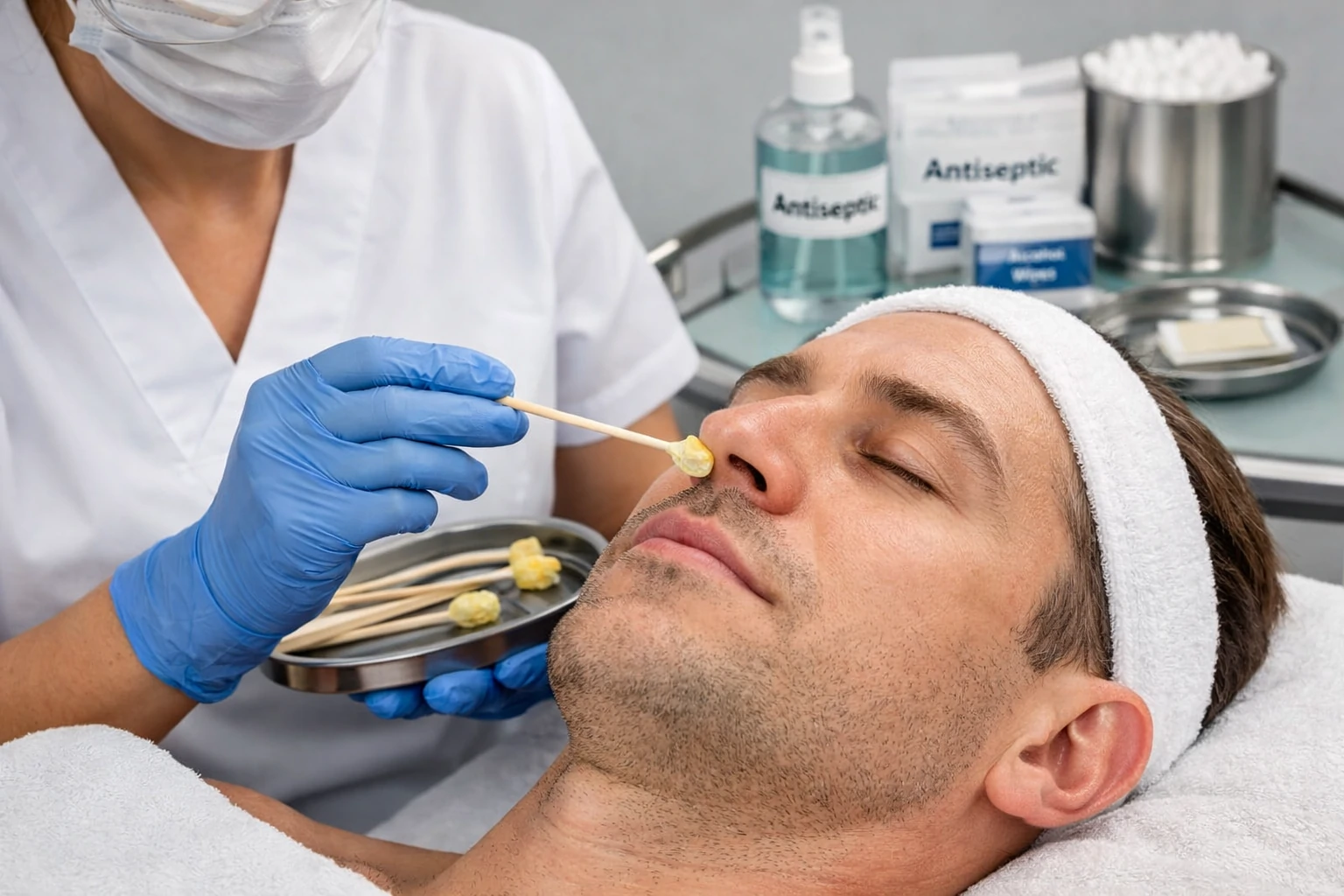
Nose hair waxing videos have taken over social media, offering oddly satisfying visuals that spark curiosity. However, before trying this trend for aesthetic reasons, it’s important to understand the biology behind nose hair and its role in overall health.
Unlike trimming, which only cuts hair at the surface, nose hair waxing removes hair from the root, resulting in a cleaner and longer-lasting appearance. That said, this method should only be used on hairs visibly extending outside the nostrils—not to clear the entire nasal passage.
From a medical standpoint, nose hair plays a critical role as a natural filtration system, trapping dust, bacteria, and airborne pathogens before they enter the respiratory tract. Removing it aggressively may increase certain health risks.[1Cleveland Clinic. Nose. Updated Desember 11, 2025.]
According to clinical insights from dermatologists Dr. Lauren Penzi and Dr. Marisa Garshick, along with aesthetic expert Deidra Green, several key considerations should not be ignored:
- Protective Function: Nose hair is the first line of defense for your respiratory system.
- Infection Risk: Forceful removal can cause micro-injuries or irritation to the nasal lining.
- Proper Technique: Correct method and hygiene are essential to reduce side effects.
Interested in safer, expert-approved alternatives for grooming this sensitive area? Read on to explore better solutions.
The Importance of Seeing an Expert
Choosing nose hair waxing requires serious safety consideration. Aesthetic expert Deidra Green emphasizes that selecting a licensed professional is not about comfort—it’s a medical safety standard. Wax quality and precise technique matter greatly, especially given the nose’s unique and delicate anatomy compared to other body areas.
Clinically, dermatologists strongly warn against DIY nose hair waxing at home. Dr. Lauren Penzi explains that the inner nostrils are lined with fragile mucosal tissue rich in blood vessels. Performing waxing without proper training significantly increases the risk of deeper tissue injury and complications.
Echoing this concern, Dr. Marisa Garshick notes that while nose hair waxing can be relatively safe when done in a reputable clinic, medical risks still exist, including:
- Mucosal Irritation: Inflammation of the nose’s protective inner lining.
- Thermal Burns: Caused by wax temperatures that are not properly controlled.
- Extreme Sensitivity: Mechanical trauma that heightens skin vulnerability.
Understanding these risks allows you to make smarter, health-conscious aesthetic decisions. Want to know how to identify a salon that meets proper medical and hygiene standards for this procedure?
What To Expect During a Full Nose Hair Wax
Understanding how nose hair waxing works can ease concerns about safety in the nasal area. The procedure begins by applying wax to the tip of a small applicator, forming a stable bead. According to aesthetic expert Deidra Green, safety is maintained by limiting the applicator strictly to the edge of the nostrils—never deep inside the sensitive nasal cavity.
Once the wax reaches an optimal temperature, the applicator is removed with a quick, controlled motion to extract the hair from the follicle. At European Wax Center, professionals use Exclusive Comfort Wax, a specially formulated hard wax designed to remove hair effectively while protecting the delicate nasal lining. Clients may choose to wax both nostrils at once or one side at a time, depending on personal comfort levels.
Although the process may look painful, Green notes that most clients experience only brief, mild discomfort. The results are often considered worthwhile, offering benefits such as:
- Cleaner Appearance: Removes visible nose hair extending beyond the nostrils.
- Longer-Lasting Results: Effects last significantly longer than trimming.
- Improved Comfort Over Time: Slower regrowth reduces frequent grooming needs.
What Is a Partial Nose Hair Wax?
For those who want a cleaner look without compromising the nose’s natural defense system, a partial nose hair wax offers a more conservative option. This technique targets only hair follicles located at the outer edge of the nostrils. Because it avoids the deeper nasal cavity, it is considered anatomically safer while still removing visibly protruding hair.
In addition to traditional wax, this outer nasal area can also be treated with sugaring. Made from natural ingredients, sugaring is often seen as a gentler alternative for sensitive skin. Key benefits of partial nose hair waxing include:
- Mucosal Safety: Reduces the risk of trauma to internal tissue responsible for air filtration.
- Added Comfort: Many people report less pain with sugaring compared to standard waxing.
- Targeted Results: Focuses only on hair that affects outward appearance.
This approach is especially suitable for first-time clients or those with low pain tolerance, while preserving the nose’s essential protective function.
Potential Side Effects of Nose Hair Waxing
Nose hair waxing requires extra caution due to its potential health risks. Dr. Lauren Penzi warns that this procedure can increase the likelihood of tissue injury and infection. Biologically, nose hair functions as a natural filtration system, blocking pathogens and harmful particles from entering the respiratory tract. Removing this barrier may leave the body more vulnerable to germs and environmental irritants.
Aesthetic expert Deidra Green emphasizes that waxing should only be performed on completely healthy skin. If irritation, cuts, or inflammation are present, the procedure should be postponed until full recovery. Due to the high sensitivity of the nasal mucosa, several side effects are commonly reported:[2Cleveland Clinic. Shaving vs. waxing: what’s better for your skin? Updated 8, 2024.]
- Inflammatory Reactions: Redness, significant pain, or swelling around the nostrils.
- Folliculitis Risk: Increased chance of ingrown hairs developing over time.
- Skin Trauma: Potential burns from unstable wax temperatures, especially with at-home kits.
DIY nose hair waxing is strongly discouraged, as retail wax products tend to be harsher than professional-grade formulas. Repeated pulling on the same area can permanently damage the skin barrier. For both respiratory safety and skin integrity, professional treatment remains the safest option.
Estimated Cost of the Procedure
From a pricing perspective, nose hair waxing is generally considered an affordable grooming treatment. Globally, the average cost is around $20, or the local equivalent depending on currency and market standards.
That said, pricing can vary based on several clinical and commercial factors, including:
- Geographic Location: Salons in major cities often charge more due to higher operational costs.
- Facility Reputation: Clinics or studios staffed by licensed professionals typically set prices that reflect stricter medical and hygiene standards.
- Material Quality: Premium products, such as specialized hard wax formulated for sensitive skin, may increase the overall cost.
While it may be tempting to choose the cheapest option available, safety should always take priority—especially when treating an area directly connected to the respiratory system. Investing in a reputable provider helps reduce the risk of post-procedure irritation or infection, which could lead to additional medical expenses later on.
Post-Procedure Aftercare Protocol
After nose hair waxing, the skin and nasal lining often enter a short period of sensitivity or mild irritation. To protect the skin barrier, it’s essential to keep facial temperature stable for the first 48 hours. Avoid direct heat exposure such as saunas, cooking steam, or prolonged hot showers. When cleansing your face, use lukewarm water only to prevent further inflammation.
To maintain comfort and hydration around the nose area, soothing topical products may be applied externally. Key guidelines include:
- Non-Comedogenic Formula: Choose lotions that won’t clog pores.
- Gentle, Natural Ingredients: Pure aloe vera gel is effective for calming redness and irritation.
- No Internal Application: Never apply any product inside the nostrils.
This precaution is critical, as inserting products into the nasal cavity can increase the risk of internal infection or respiratory irritation if particles are inhaled. By following proper aftercare protocols, tissue recovery can occur more smoothly while preserving the nose’s essential role in protecting the respiratory system.
How Often Should You Wax Your Nose?
The ideal interval for nose hair waxing depends on individual hair growth cycles. In general, aesthetic expert Deidra Green recommends a standard timeline of three to four weeks for most body areas. However, because facial areas like the nose are highly visible, many clients prefer more frequent maintenance.
For those seeking a consistently polished appearance, waxing may be scheduled every two weeks. From a skin health perspective, it’s essential to allow the nasal tissue to fully recover before the next session. Several factors influence how often waxing should be done, including:
- Natural Hair Growth Rate: Follicle regeneration varies from person to person.
- Skin Sensitivity: How quickly the skin and mucosa recover after mechanical pulling.
- Aesthetic Preference: Personal tolerance for visible hair around the nostrils.
Following a professional, well-timed schedule helps hair grow back finer over time while reducing trauma to the sensitive nasal area.
Nose Hair Waxing Alternatives
If you have sensitive skin or a low pain tolerance, safer alternatives to nose hair waxing can deliver clean results without unnecessary risk. Manually trimming nose hair with tools designed specifically for the nasal area is widely recommended by medical professionals, as it avoids pulling hair from the root or disrupting the nose’s natural respiratory defense.
Modern grooming technology allows precise and safe trimming inside the nostrils. Well-regarded options include:
- Remington Nose, Ear, and Detail Trimmer: Features both vertical and rotary heads, making it versatile for nose hair, eyebrows, and ear grooming.
- Conair True Glow Discreet Nose & Ear Trimmer: Uses a three-sided diamond-shaped blade system designed to cut hair cleanly without tugging or irritating the skin.
Clinically, trimming is considered safer because it maintains nose hair at an optimal length to filter dust and airborne particles. Electric trimmers also significantly reduce the risk of infection, irritation, and micro-injuries commonly associated with forceful hair removal methods like waxing.
Nose Waxing vs. Trimming: Which Is Medically Superior?
In personal grooming, nose waxing versus trimming is a common debate. From a medical and respiratory health perspective, trimming is widely considered the safer and superior option. Trimming shortens the hair shaft without damaging the follicle or injuring the delicate nasal mucosa.
Dermatology experts, including Dr. Lauren Penzi, emphasize that preserving nose hair is essential for filtering microscopic particles, allergens, and bacteria from the air we breathe. Waxing, on the other hand, can create micro-trauma in the skin, increasing the risk of infection and inflammation.
Key medical reasons trimming is preferred include:
- Preserved Filtration Function: Maintains enough hair length to trap dust and airborne irritants.
- Lower Infection Risk: Helps prevent conditions like nasal vestibulitis.
- Tissue Safety: Avoids burns, tearing, or damage to fragile blood vessels inside the nose.
While waxing may offer a cleaner visual result, tools such as a Philips Nose Trimmer provide a healthier balance between neat appearance and long-term nasal protection.
The Danger Zone: Risk of Nasal Vestibulitis
Nose hair waxing carries more serious medical risks than many people realize. One of the most concerning is nasal vestibulitis, a bacterial infection that develops in the front part of the nostrils. Clinically, forceful hair removal can create microscopic breaks in the nasal mucosa, providing an entry point for bacteria—most commonly Staphylococcus aureus.
Dermatologists such as Dr. Marisa Garshick warn that this area is especially sensitive due to its rich blood supply and close connection to critical facial structures. What may start as mild irritation can escalate into a more severe infection if left untreated.
Common symptoms of nasal vestibulitis include:
- Swelling and Redness: Acute inflammation around the nostrils.
- Throbbing Pain: Noticeable discomfort, especially when the area is touched.
- Crusting or Bumps: Painful pustules forming around affected hair follicles.
Understanding this risk highlights why preserving nasal skin integrity is essential. If nose hair waxing is still considered, it should only be performed by trained professionals using sterile tools to minimize infection risk in this high-danger zone.
The Relationship Between Nose Hair and Allergies
For people with allergic rhinitis or asthma, nose hair is more than a cosmetic concern—it’s a frontline immune defense. Biologically, these fine hairs act as a mechanical filter, trapping environmental allergens such as pollen, mold spores, and air pollution before they reach the lungs.
Public health experts warn that completely removing nose hair through waxing may worsen allergy symptoms. Without adequate filtration, microscopic particles can more easily irritate the airways, triggering frequent sneezing, nasal congestion, or even shortness of breath. Maintaining a normal density of nose hair is therefore especially important for individuals with environmental sensitivities.
Key points on the connection between nose hair and allergies include:
- Allergen Filtration: Helps block larger particles from irritating the inner nasal lining.
- Airway Moisture Control: Supports proper humidity of inhaled air, reducing irritation in allergy sufferers.
- Dual Protection: Works alongside nasal mucus to trap bacteria and airborne pollutants.
Considering these factors, trimming—using tools like a Panasonic Facial Hair Trimmer—is medically preferred. It preserves the nose’s protective function while still keeping visible hair neat and well-groomed.
Can Nose Hair Waxing Cause Long-Term Damage?
Concerns about the long-term effects of nose hair waxing are clinically valid. Anatomically, repeated and forceful hair removal can damage hair follicles and the surrounding connective tissue. Ongoing exposure to hot wax on the thin nasal mucosa may also trigger structural changes within the nasal lining over time.
Experts such as Dr. Lauren Penzi explain that chronic mechanical trauma can lead to microscopic scarring. This may interfere with natural skin regeneration and impair delicate nerve sensitivity inside the nose. In addition, permanently removing the nose’s natural barrier can leave the airways more vulnerable to ongoing irritation from unfiltered pollutants.
Potential long-term consequences include:
- Follicular Atrophy: Permanent follicle damage that prevents hair regrowth, eliminating filtration function.
- Mucosal Thinning: A weakened nasal lining that becomes more prone to nosebleeds.
- Chronic Sensitivity: Increased reactivity to changes in air temperature and humidity.
Understanding these risks reinforces that while nose hair waxing may offer instant cosmetic results, protecting long-term respiratory health is far more important.
Final Thoughts
Deciding to wax nose hair requires a careful balance between cosmetic goals and the body’s natural protective functions. Medically, nose hair serves as a crucial filtration system, helping block allergens, bacteria, and airborne pollutants. While nose hair waxing can deliver a cleaner, longer-lasting appearance, it also carries risks such as nasal vestibulitis, mucosal irritation, and reduced respiratory protection.
Experts including Dr. Lauren Penzi and Dr. Marisa Garshick advise that nose hair waxing should only be performed by licensed professionals to minimize tissue trauma and infection risk. However, for individuals with sensitive skin, allergies, or respiratory concerns, trimming with specialized tools remains the clinically safer and more sustainable option.
Ultimately, preserving the integrity of the nasal mucosa is an investment in long-term respiratory health. A neat appearance should never come at the expense of the body’s first line of defense—making informed, health-focused grooming choices is always the wiser approach.
ARTICLE SOURCES
You might also like
 Acne
Acne Anti-Aging
 Business
 Digital Marketing
 Economics
 Exfoliation
 Hair Removal
 Movies
 Personal Finance
 Websites