Why NAD+ Is Trending in Skincare—and Whether It Actually Works
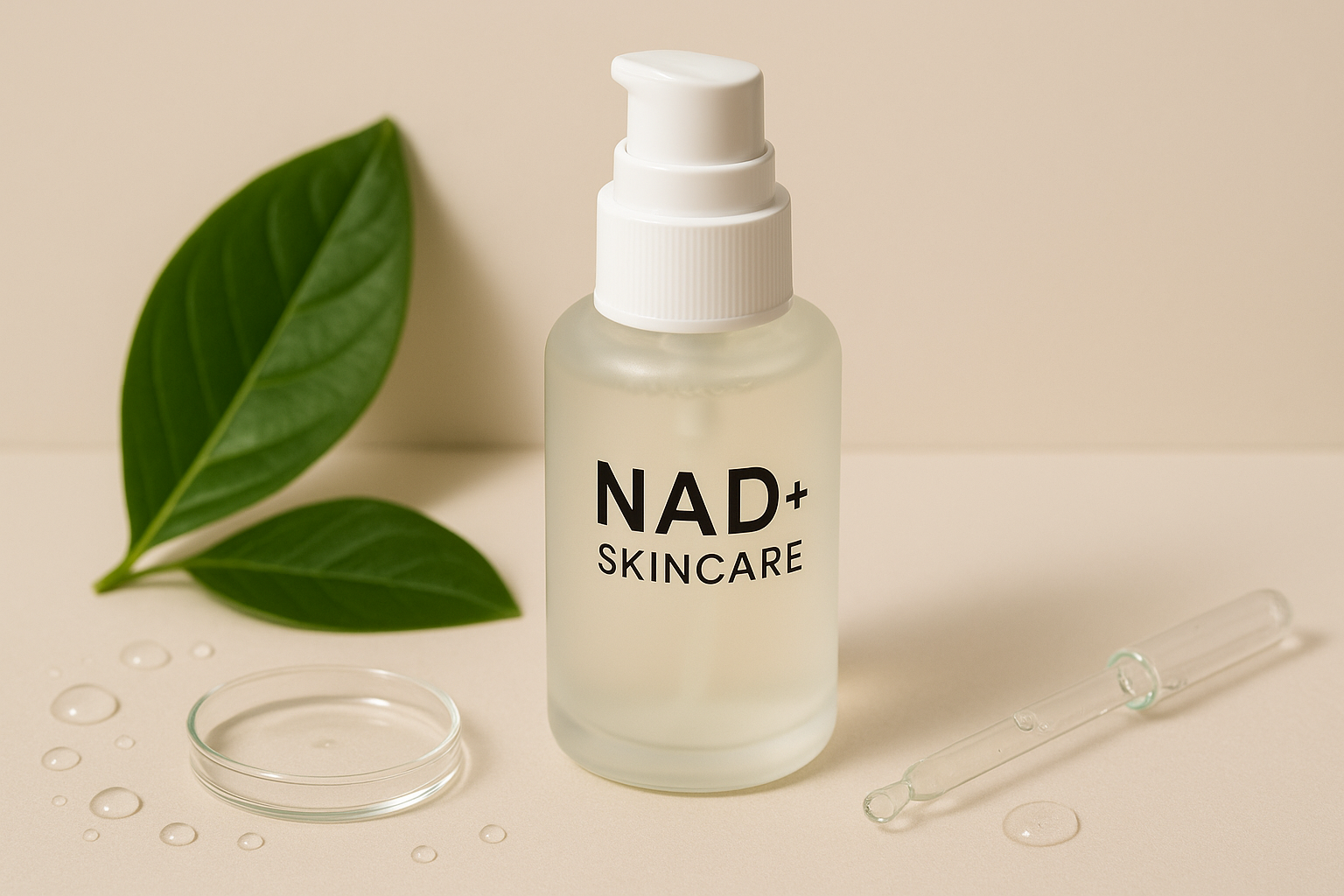
Nicotinamide adenine dinucleotide (NAD+) is an essential coenzyme naturally found in every cell of the human body. In skincare, NAD+ is gaining attention for its potential to repair DNA damage and support cell regeneration — two key factors in the ageing process. Scientifically, NAD+ acts as a cofactor in redox reactions, helping to reduce oxidative stress, boost cellular metabolism, and activate sirtuins — enzymes linked to longer cell lifespan. What makes NAD+ unique is its ability to target ageing at the molecular level, rather than just masking signs of ageing on the skin’s surface like many other active ingredients.
In the beauty industry, NAD+ is seen as a breakthrough because it not only slows down ageing, but may also reverse visible signs such as wrinkles and dull skin.1Conlon N. J. (2022). The Role of NAD+ in Regenerative Medicine. Plastic and reconstructive surgery, 150(4 Suppl ), 41S–48S. https://doi.org/10.1097/PRS.0000000000009673 This makes NAD+ a highly sought-after ingredient, both in skincare products and in general wellness therapies like supplements and intravenous infusions.
However, dermatologists such as Dr Brendan Camp, Dr Blair Murphy-Rose, and Dr Dara Spearman caution that research on the effectiveness of topical NAD+ is still in its early stages. While initial results are promising, more clinical studies are needed to confirm its long-term benefits and safety.
What Is NAD+?
NAD+ is a support molecule involved in various enzymatic reactions within cells. Dr Brendan Camp explains that NAD+ plays a key role in cellular metabolism, helping to maintain healthy physiological functions. As we age, the body’s natural levels of NAD+ decline — a change believed to be a major factor in accelerating signs of ageing, both at the cellular and systemic level.
Dr Blair Murphy-Rose adds that NAD+ supports mitochondrial energy production, repairs damaged DNA, protects cells from oxidative stress, and helps regulate internal balance (homeostasis). With these functions, NAD+ is seen as a strong candidate for anti-ageing therapies that aim not just at skin improvement, but also at overall health and longevity.
Various NAD+ therapies are currently being developed — from topical creams and oral supplements to intravenous injections. Public interest in NAD+ has grown rapidly due to its potential to slow ageing and extend healthy lifespan. However, experts warn that research into its full benefits and risks is still ongoing. Overuse without medical supervision could lead to side effects that are not yet fully understood.2Covarrubias, A. J., Perrone, R., Grozio, A., & Verdin, E. (2021). NAD+ metabolism and its roles in cellular processes during ageing. Nature reviews. Molecular cell biology, 22(2), 119–141.
What Are the Benefits of NAD+ for Skin?
NAD+ plays an important role in maintaining overall health, including skin health. Scientific studies show that a decrease in NAD+ levels contributes to skin ageing, especially due to ultraviolet (UV) exposure. UV rays can damage DNA and reduce the skin’s natural repair ability. In this context, NAD+ supplementation in skincare products may help slow skin damage and strengthen repair mechanisms.3Conlon N. J. (2022). The Role of NAD+ in Regenerative Medicine. Plastic and reconstructive surgery, 150(4 Suppl ), 41S–48S. https://doi.org/10.1097/PRS.0000000000009673
Also Read: How Long Does Retinol Take to Work On Skin?
Dr Brendan Camp notes that NAD+ has anti-inflammatory and antioxidant properties, helping to protect skin from oxidative stress and maintain cellular integrity. This makes it relevant in modern skincare formulations targeting early ageing, environmental damage, and chronic skin inflammation.
However, the effectiveness of topical NAD+ depends heavily on how the product is formulated. Dr Blair Murphy-Rose highlights that NAD+ has limited ability to penetrate the skin. As a result, systemic effects like increased energy or improved brain function cannot be achieved through topical use. Still, if NAD+ is formulated to penetrate effectively, it can act as an antioxidant and support cell regeneration.
Which Skincare Products Contain NAD+?
According to Dr Brendan Camp, NAD+ is an unstable molecule and has difficulty penetrating the skin barrier. This makes it challenging for skincare products to deliver NAD+ effectively. For this reason, many products use NAD+ precursors like niacinamide, which are more stable and easily absorbed by the skin, where they are converted into NAD+ through enzymatic processes.
Niacinamide, also known as vitamin B3, is widely used in skincare due to its ability to naturally increase NAD+ levels in the skin. Dr Dara Spearman explains that niacinamide and other NAD+ precursors are found in nearly all types of skincare products, each offering specific benefits.
Niacinamide serums can help even out skin tone, reduce fine lines, and provide anti-ageing effects. Moisturisers and creams containing NAD+ aim to repair skin cells, maintain hydration, and strengthen the skin barrier. Eye creams with niacinamide target fine lines and puffiness by boosting skin cell turnover. Face masks with NAD+ precursors energise the skin and support rejuvenation. Niacinamide cleansers maintain skin health, and acne treatments with it help reduce inflammation and speed up healing.
Does NAD+ Skincare Work?
While NAD+ shows promise in skincare, Dr Brendan Camp stresses that the scientific evidence supporting its effectiveness is still limited and evolving. Its use in skincare products is not yet backed by strong clinical data. Therefore, Camp recommends relying on well-established active ingredients such as retinol, vitamin C, and alpha and beta hydroxy acids — all of which have a clearer track record in improving skin health, slowing ageing, and addressing issues like hyperpigmentation and rough texture.
Research on NAD+ in skincare is still in early stages, and its long-term effects need further study. However, over time, more data may help dermatologists and consumers understand who benefits most from topical NAD+ and which treatment methods are most effective. For now, ingredients with proven efficacy offer more reliable results for users.
Potential Side Effects
Like any new ingredient, the use of NAD+ in skincare carries potential side effects despite its promising benefits. Dr Brendan Camp explains that topical NAD+ products may cause skin irritation or contact dermatitis in some individuals. It’s important to perform a spot test — applying the product to a small area of skin — before full use to identify any possible allergic reactions or irritation.
Dermatologists advise consulting a skin specialist or dermatologist before using new skincare products, especially those containing active ingredients like NAD+. Since every individual’s skin reacts differently, a cautious approach can help minimise risks and ensure the product is safe and appropriate for your skin’s needs.
Conclusion
In summary, while NAD+ shows great promise in skincare and overall health, more research is needed to fully understand its effectiveness and risks. As studies progress, NAD+ may prove to be a valuable ingredient for skin rejuvenation and bodily function improvement. Still, Dr Brendan Camp reminds us that despite growing popularity, NAD+ in skincare remains a developing area of research without definitive scientific backing.
If, after consulting a doctor, NAD+ is found to suit your skincare needs, Dr Blair Murphy-Rose emphasises that ageing is a complex process, and no single solution can stop it. A healthy lifestyle — including enough sleep, proper hydration, a balanced diet, physical activity, and avoiding harmful habits — remains the foundation of good health and well-being. NAD+ can be a helpful addition, but it should be combined with a holistic healthy lifestyle.

 Acne
Acne Anti-Aging
 Business
 Digital Marketing
 Economics
 Exfoliation
 Hair Removal
 Movies
 Personal Finance
 Websites