Underarm Botox: How It Stops Excessive Sweating
Botox has long been established as a pioneer in medical aesthetics. As the first botulinum toxin approved by the FDA, it works by precisely blocking nerve signals. While most people associate Botox with smoothing facial wrinkles, its medical benefits extend far beyond cosmetic results.
Clinically, Botox is a highly versatile treatment. Dermatology experts, including Dr. Sheila Farhang, frequently rely on this neuromodulator to manage a range of medical conditions. Beyond skincare, Botox is clinically proven to help treat:
- Hyperhidrosis: Excessive, uncontrollable sweating
- Chronic Migraines: Reducing the frequency and severity of migraine attacks
- Musculoskeletal Disorders: Including neck stiffness, muscle spasms, and TMJ issues
- Bladder Dysfunction: Managing symptoms of overactive bladder
When it comes to the underarms, Botox is considered the gold standard treatment. It works by temporarily deactivating the eccrine sweat glands, effectively reducing sweat production at its source without affecting the rest of the body.
Understanding how underarm Botox works on a biological level is essential before starting treatment. With the right medical guidance, this procedure offers a safe, effective, and confidence-boosting solution for excessive sweating.
What Is Underarm Botox?
Underarm Botox is a medical procedure that involves injecting botulinum toxin into the dermal layer of the underarm (axillary) area. According to Dr. Smithee, this treatment is specifically designed to manage hyperhidrosis, a medical condition where sweat glands are overactive. Botox works by blocking nerve signals that normally instruct the sweat glands to produce sweat, effectively reducing excessive perspiration at the source.
Identifying the right candidates for this procedure is essential. Dr. Greco explains that underarm Botox is best suited for individuals who experience chronic excessive sweating and no longer respond to traditional antiperspirants, including prescription-strength formulas.
From a clinical perspective, hyperhidrosis goes far beyond mild dampness. Dr. Greco highlights data showing that nearly 70% of patients with severe hyperhidrosis need to change clothes multiple times a day due to extreme sweating. This condition can significantly impact daily comfort and self-confidence, making medical-grade treatments like underarm Botox a more precise and effective solution than standard deodorants.
Efficacy and Benefits of Underarm Botox
The primary benefit of underarm Botox is a dramatic reduction in sweat production. However, its impact goes well beyond physical comfort. By controlling excessive sweating, this treatment significantly improves quality of life and helps restore confidence in social and professional settings. Many patients report feeling mentally relieved, free from the daily anxiety caused by hyperhidrosis.
Clinical data supports its strong efficacy. Dr. Greco notes that Botox can reduce sweat production in approximately 85%–94% of patients with severe hyperhidrosis. Similarly, Dr. Smithee confirms that most patients experience an 80%–90% decrease in underarm moisture after treatment.
These results are further reinforced by a 2020 clinical study showing up to a 90% reduction in sweat volume within just two weeks post-injection. This rapid and targeted response highlights how Botox effectively suppresses eccrine gland activity, making it a reliable medical solution for individuals who need visible, fast-acting results from their hyperhidrosis treatment.[1Stuart ME, Strite SA, Gillard KK. A systematic evidence-based review of treatments for primary hyperhidrosis. J Drug Assess. 10(1):35-50.]
Procedure and Injections
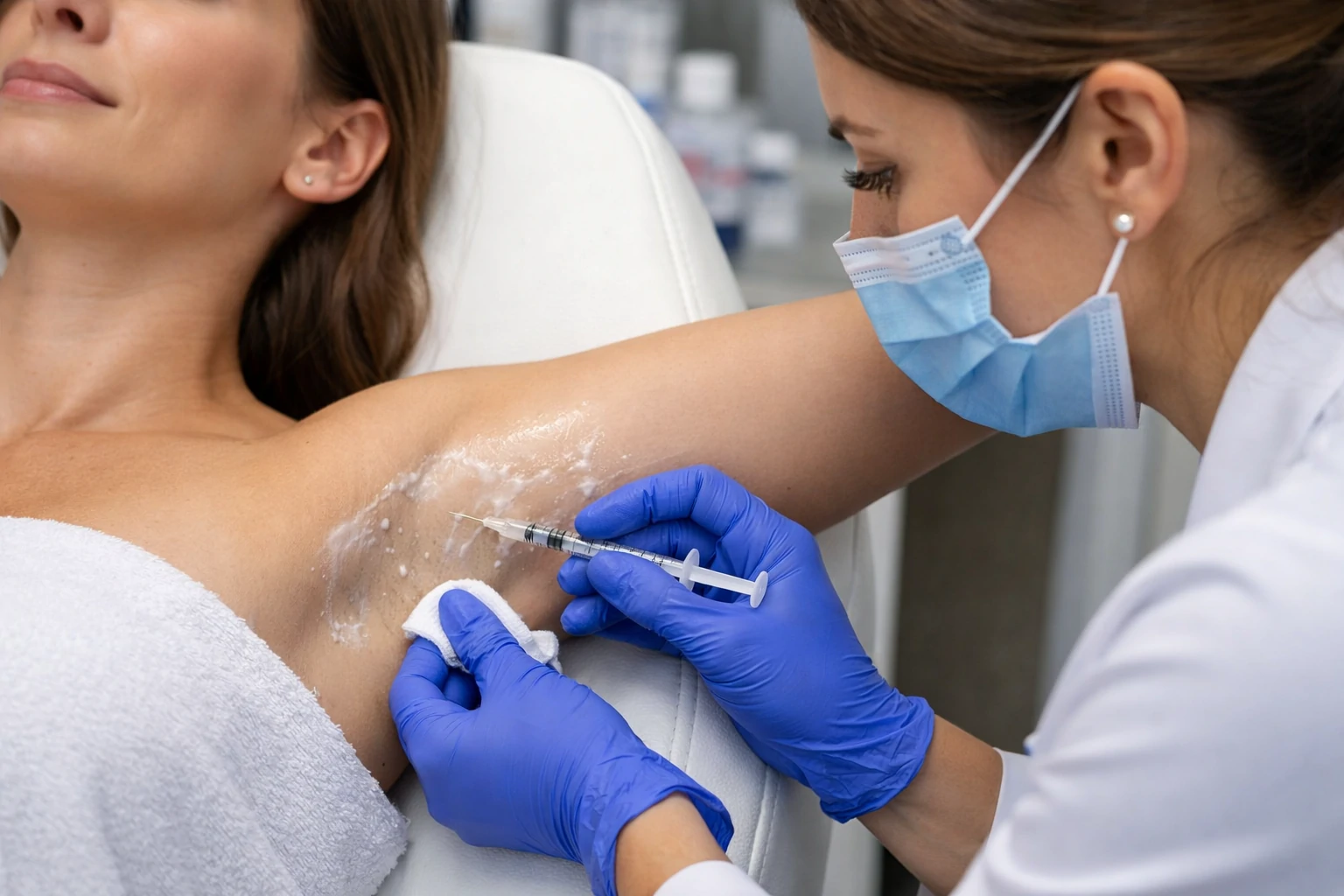
The most critical factor in underarm Botox treatment is ensuring the procedure is performed by a licensed medical professional. Proper technique and precise placement are essential for both safety and optimal results. The treatment involves a series of small intradermal injections evenly distributed across the underarm area to effectively target the sweat glands.
In terms of dosage, Dr. Smithee and Dr. Greco explain that the standard clinical protocol typically uses around 50 units of Botox per underarm, totaling 100 units. However, this dosage is not rigid. Physicians may adjust the amount based on the severity of hyperhidrosis or how the patient responds to the initial treatment.
Patient comfort is generally well managed. According to Dr. Greco, most individuals tolerate the procedure very well. While mild pinching sensations may occur, a topical numbing cream can be applied to reduce discomfort. One of the key advantages of underarm Botox is its efficiency—the injection process usually takes only a few minutes and requires little to no downtime afterward.
Results and Timeline
Understanding the treatment timeline is key to setting realistic expectations. According to Dr. Greco, most patients begin to notice a reduction in underarm sweating within 4 to 7 days after the procedure. Dr. Smithee adds that optimal results typically develop around the two-week mark, although some individuals with faster biological responses may see improvements sooner.
One major advantage of underarm Botox is its long-lasting effect. Unlike facial Botox, which wears off more quickly, Botox for hyperhidrosis tends to remain effective for a longer period. Dr. Greco notes that results usually last around seven months, with some clinical studies showing continued effectiveness for up to one year. Duration can vary depending on individual metabolism and sweat gland activity.
To maintain consistent results, Dr. Greco advises patients to monitor their sweat levels over time. If symptoms begin to return, a follow-up consultation is recommended to plan maintenance treatment. In most cases, repeat injections every 6 to 12 months help keep excessive sweating well controlled.
Safety and Risks
From a clinical standpoint, underarm Botox is considered a highly safe medical procedure with a low risk profile when performed by a licensed professional. That said, as with any injectable treatment, patients should be informed about potential side effects related to needle insertion and the body’s natural response to botulinum toxin.
According to Dr. Smithee, the most common side effects are localized and temporary, including:
- Skin reactions: Mild redness or irritation at injection sites
- Vascular effects: Small bruises caused by minor capillary damage
- Sensory discomfort: Temporary soreness or tenderness in the underarm area
Serious systemic side effects—such as difficulty swallowing or breathing—are extremely rare but remain documented in medical literature. Dr. Greco emphasizes that while he has not encountered these reactions in his practice, transparent patient education is essential. Patients are advised to report any unusual symptoms promptly.
When administered correctly by an experienced medical provider, underarm Botox remains a safe, controlled, and effective solution for managing excessive sweating with minimal risk.
Costs and Availability
When it comes to cost, Dr. Smithee explains that some health insurance providers may cover underarm Botox, as it is a medically approved treatment for hyperhidrosis—not a cosmetic procedure. However, coverage is not guaranteed. Patients are strongly advised to verify benefits in advance, as insurers typically require prior authorization and clinical documentation proving that other treatments, such as prescription-strength topical therapies, were ineffective.
If insurance coverage is not available, pricing is based on the number of Botox units used. Costs can vary depending on the clinic, provider expertise, and individual dosage needs. Dr. Smithee estimates the average out-of-pocket cost ranges between $1,200 and $1,400 per treatment, while Dr. Greco cites a broader range of $1,000 to $2,000 per session.
Price differences largely reflect the total units required to achieve optimal sweat reduction. While the upfront investment may seem substantial, many patients consider underarm Botox cost-effective due to its long-lasting results and meaningful improvement in daily comfort and quality of life.
Alternative Treatments
It’s important to understand that injectable treatments are not the only option for managing excessive sweating. Modern dermatology offers a wide range of solutions, from non-invasive therapies to more permanent procedures, allowing treatment to be tailored to each patient’s clinical needs.
Several alternative options include:
- Topical Treatments: Prescription-strength antiperspirants with higher aluminum salt concentrations designed to reduce sweat production.
- Pharmacological Options: Medicated treatments such as Qbrexza, a topical cloth that helps block sweat gland activation at the skin’s surface.
- miraDry Technology: An advanced procedure that uses controlled thermal energy to target and destroy sweat glands. Unlike Botox, miraDry offers a more permanent reduction in underarm sweating.
Experts strongly recommend consulting a board-certified dermatologist before choosing any treatment. Proper diagnosis and professional evaluation are essential to determine which approach best suits your health profile and lifestyle. Each option has distinct benefits and medical considerations, and expert guidance ensures safe, effective, and personalized results.
Preparation and Aftercare: Tips for Optimal Results
Successful underarm Botox treatment isn’t only about the injector’s skill—it also depends on proper preparation and aftercare. Following these steps helps minimize side effects and allows the neuromodulator to work precisely on the targeted sweat glands.
Pre-Treatment Guidelines:
- Hygiene Management: Avoid shaving the underarm area for at least 2–3 days before treatment. This reduces the risk of micro-cuts or skin irritation that can increase sensitivity during injections.
- Product Evaluation: Refrain from using strong active skincare ingredients or exfoliating products on the underarms shortly before the procedure.
Post-Treatment Care:
- Physical Activity: Experts recommend avoiding intense exercise, saunas, or excessive heat exposure for the first 24 hours. Increased blood flow may affect how Botox settles in the treated area.
- Area Care: Keep the underarms clean and dry. Deodorant use is usually safe after 12–24 hours, or as directed by your physician.
By following these aftercare protocols consistently and honestly, you create the ideal conditions for underarm Botox to deliver effective, long-lasting control over excessive sweating.
Botox vs. miraDry: Which One Is Right for You?
Choosing the right medical treatment for hyperhidrosis starts with understanding the key differences between underarm Botox and miraDry. Both are highly effective, but they work in very different ways and deliver different long-term outcomes.
Underarm Botox
- How it works: Chemically blocks nerve signals that trigger sweat gland activity
- Duration: Temporary results, typically lasting 6–12 months
- Why choose it: Fast procedure, minimal discomfort, virtually no downtime, and a lower upfront cost. Ideal if you want flexibility or are not ready for a permanent solution.
miraDry
- How it works: Uses controlled microwave energy to permanently destroy sweat and odor glands
- Duration: Permanent results, as treated glands do not regenerate
- Why choose it: Long-term reduction in sweating, though it usually involves a higher initial cost and mild swelling for a few days post-treatment.
The right choice depends on your lifestyle, budget, and long-term goals. A consultation with a board-certified dermatologist is essential to determine whether the temporary control of Botox or the permanent results of miraDry better suit your needs.
The Hygiene and Odor Factor: Does It Stop Body Odor?
A common question is whether reducing sweat with Botox also helps control body odor. Biologically, sweat produced by eccrine glands is nearly odorless. Unpleasant odor—medically known as bromhidrosis—develops when bacteria on the skin break down organic components in sweat.
By blocking nerve signals, underarm Botox significantly decreases sweat production. This creates a drier skin environment that is far less favorable for bacterial growth. Without sufficient moisture, bacteria struggle to thrive, and the breakdown process that causes strong odor is greatly reduced.
While Botox is not a deodorant, experts consistently observe notable hygiene improvements after treatment. Many patients report feeling not only drier, but also cleaner throughout the day. Reduced moisture also lowers the risk of clothing stains and lingering odors.
In short, underarm Botox helps manage body odor indirectly but effectively—by addressing the root cause. The result is improved comfort, better hygiene, and increased confidence in daily activities and social interactions.
ARTICLE SOURCES
You might also like



 Acne
Acne Anti-Aging
 Business
 Digital Marketing
 Economics
 Exfoliation
 Hair Removal
 Movies
 Personal Finance
 Websites